
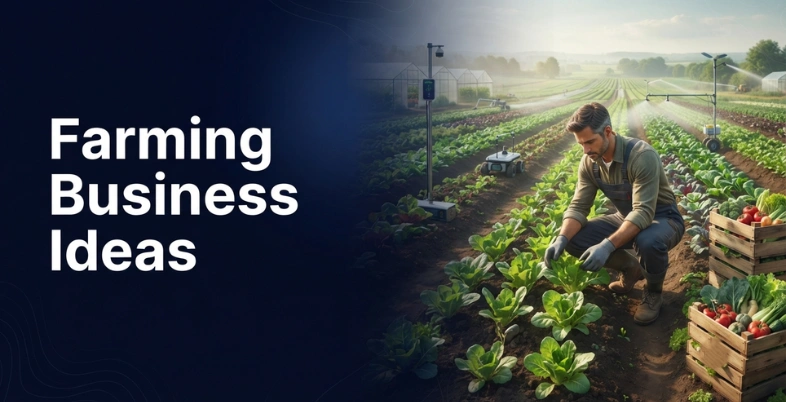
Farming is evolving beyond traditional crop cultivation, with entrepreneurs exploring specialised and value-added agricultural businesses to meet changing consumer demand. From organic farming and dairy production to mushroom cultivation, poultry, beekeeping, and aquaculture, modern farming business ideas offer diverse opportunities for generating income.
Advances in agricultural technology, increasing awareness of healthy food, and growing demand for quality farm products are creating new possibilities for both small and large-scale entrepreneurs. With suitable land, proper planning, knowledge, and access to markets, farming can become a sustainable business. Choosing the right farming model based on investment, climate, resources, and local demand is essential for profitability.
Why Start A Farming Business?
Starting a farming business can provide opportunities to generate income while contributing to food production and the growing agricultural value chain. India’s agriculture sector continues to expand, with horticulture, livestock, fisheries, and other allied activities creating opportunities for diversification and entrepreneurship.
Modern farming also benefits from technologies such as precision agriculture, digital advisory services, improved irrigation, and better market access. Government initiatives support farmers through credit, insurance, infrastructure, market platforms, and schemes promoting high-value agriculture and value addition.
Entrepreneurs can choose from various models, including organic farming, dairy farming, mushroom cultivation, poultry, beekeeping, aquaculture, and hydroponics, making these suitable business for housewives. With suitable resources, proper planning, market research, and efficient production practices, farming can become a sustainable business while offering opportunities for diversification and long-term growth.
List Of 12 Best Farming Business Ideas
1. Organic Farming

- Initial Investment: ₹1 lakh–₹5 lakh per acre
- Profit Potential: ₹1 lakh–₹4 lakh+ annually per acre
- Land Required: 1 acre or more
- Market Demand: High, particularly for vegetables, fruits, grains and herbs
- Best For: Farmers interested in sustainable cultivation and direct-to-consumer sales
Organic farming focuses on producing crops using natural inputs and practices while reducing dependence on synthetic fertilisers and pesticides. Farmers can cultivate vegetables, fruits, grains, herbs and other high-value crops depending on soil and climate.
Direct sales through local markets, retailers, restaurants, subscription boxes and ecommerce business channels can improve market access. The business requires knowledge of soil management, pest control, crop rotation and post-harvest handling.
Building customer trust through consistent quality and appropriate certification or verification can strengthen the business. Organic farming can also be integrated with livestock and vermicomposting to recycle farm resources.
Key Advantages:
- Growing interest in naturally produced food
- Multiple crop options
- Scope for direct selling
- Can be integrated with livestock
- Supports soil-health management
Challenges:
- Certification and compliance requirements
- Potentially higher labour requirements
- Pest and disease management
- Finding reliable premium markets
How It Works:
Select suitable crops, prepare the soil, use approved organic inputs, manage pests naturally, harvest carefully, and sell produce through suitable local or direct markets.
2. Dairy Farming
- Initial Investment: ₹5 lakh–₹20 lakh+
- Profit Potential: ₹50,000–₹2 lakh+ monthly at commercial scale
- Land Required: 1–5 acres, depending on herd size and fodder arrangements
- Market Demand: Consistently high for milk and dairy products
- Best For: Entrepreneurs interested in livestock management and recurring agricultural income
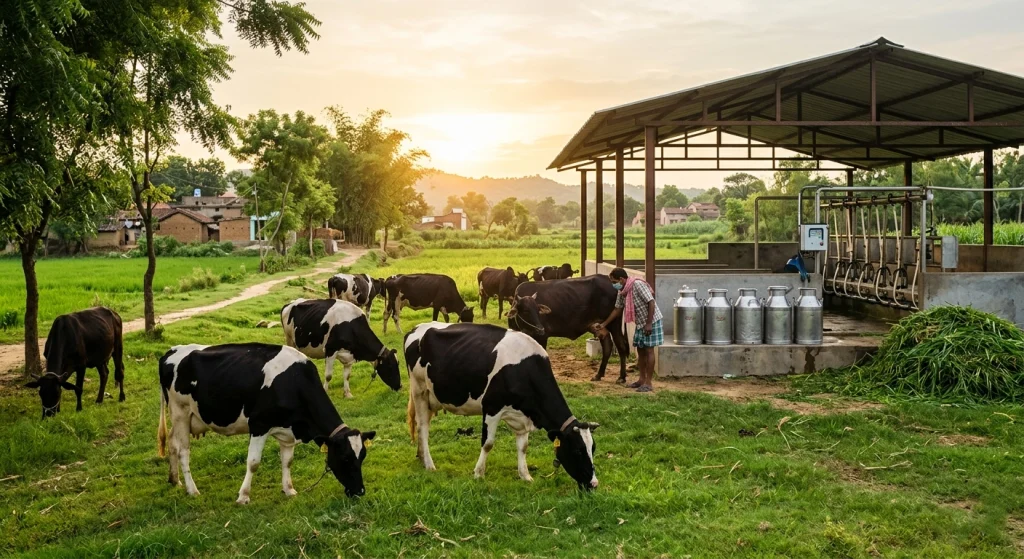
Dairy farming involves raising milk-producing animals such as cows or buffaloes and selling milk or value-added dairy products. A small enterprise can begin with a few animals and gradually expand the herd.
Proper animal housing, balanced feeding, veterinary care, breeding management and hygiene are essential for maintaining productivity. Farmers can also cultivate fodder to reduce feed expenses and use animal waste for compost or vermicompost.
Milk can be sold to cooperatives, local households, retailers, restaurants or wholesale business processors. ICAR examples demonstrate that scientific dairy management, appropriate fodder production and local marketing can contribute significantly to farm income.
Key Advantages:
- Regular milk income
- Strong everyday demand
- Manure can be reused
- Scope for value-added products
- Can integrate with crop farming
Challenges:
- High feed expenses
- Animal health risks
- Labour requirements
- Milk price fluctuations
How It Works:
Purchase suitable animals, establish hygienic housing, provide balanced feed and veterinary care, collect milk hygienically, and sell it through reliable buyers.
3. Poultry Farming

- Initial Investment: ₹2 lakh–₹10 lakh+
- Profit Potential: ₹40,000–₹2 lakh+ per cycle/month depending on scale
- Land Required: 0.25–1 acre for a small commercial setup
- Market Demand: High for eggs and poultry meat
- Best For: Entrepreneurs seeking relatively quick livestock production cycles
Poultry farming involves raising chickens primarily for eggs or meat. Entrepreneurs can choose between broiler farming, layer farming, backyard poultry or specialised breeds depending on their investment and target market.
The business requires suitable housing, quality chicks, balanced feed, vaccination, disease prevention, temperature management and proper hygiene. Poultry can generate relatively quick returns compared with some longer-duration agricultural activities.
Farmers can sell eggs or birds to wholesalers, retailers, restaurants and local consumers. ICAR notes poultry as an important component of integrated farming because it can provide quick returns and supplement household income.
Key Advantages:
- Relatively short production cycles
- Strong egg and meat demand
- Can start on limited land
- Multiple poultry models
- Manure can be reused
Challenges:
- Disease outbreaks
- Feed-price fluctuations
- Temperature management
- Market-price volatility
How It Works:
Choose a poultry model, prepare housing, purchase healthy chicks, provide feed and healthcare, monitor growth, and sell birds or eggs through selected markets.
4. Mushroom Cultivation
- Initial Investment: ₹50,000–₹3 lakh
- Profit Potential: ₹30,000–₹1.5 lakh+ per cycle
- Land Required: 500–2,000 sq. ft. indoor space initially
- Market Demand: Growing demand for fresh and processed mushrooms
- Best For: Small entrepreneurs with limited land and controlled growing spaces
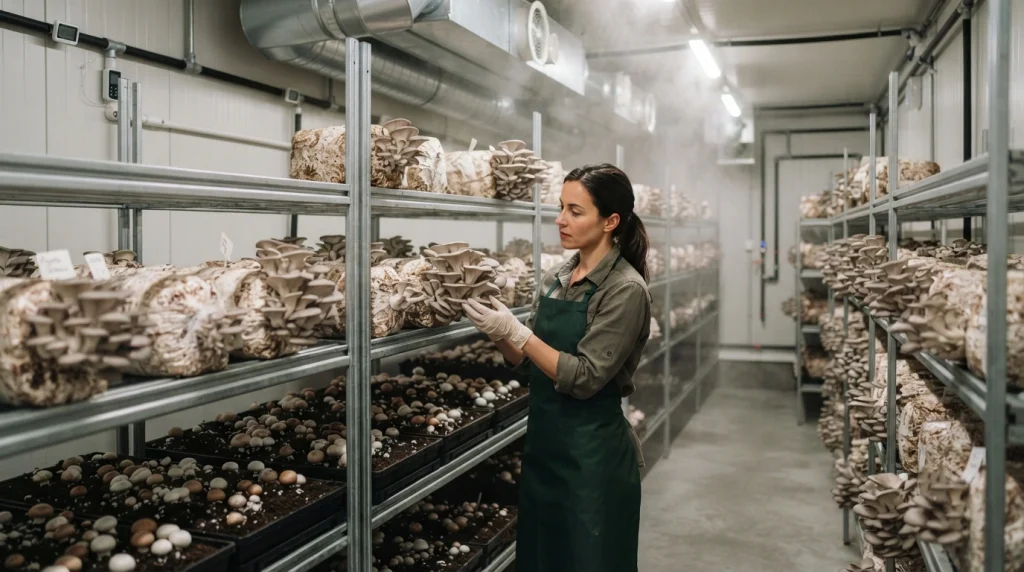
Mushroom cultivation is a low investment business that can be conducted indoors under controlled conditions. Oyster, button and other varieties can be selected according to climate, infrastructure and market demand.
Entrepreneurs generally require growing rooms, suitable substrate, spawn, humidity management, ventilation and hygiene controls. Production can begin on a relatively small scale and expand as market demand develops.
Fresh mushrooms can be supplied to households, restaurants, retailers and wholesalers, while dried or processed products offer additional value-added opportunities. ICAR specifically highlights mushroom cultivation as an enterprise with potential for additional farm income and value addition.
Key Advantages:
- Requires limited land
- Can be started indoors
- Relatively short production cycle
- Multiple varieties available
- Scope for value addition
Challenges:
- Requires technical knowledge
- Temperature and humidity control
- Contamination risks
- Perishable produce
How It Works:
Prepare the growing space, obtain quality spawn and substrate, maintain suitable environmental conditions, harvest mushrooms at the appropriate stage, and sell them quickly.
5. Beekeeping and Honey Production
- Initial Investment: ₹50,000–₹3 lakh
- Profit Potential: ₹50,000–₹2 lakh+ annually at small scale
- Land Required: Small area; apiaries can be placed near suitable flowering crops
- Market Demand: Strong demand for honey and bee-related products
- Best For: Farmers seeking an additional income stream alongside crop cultivation
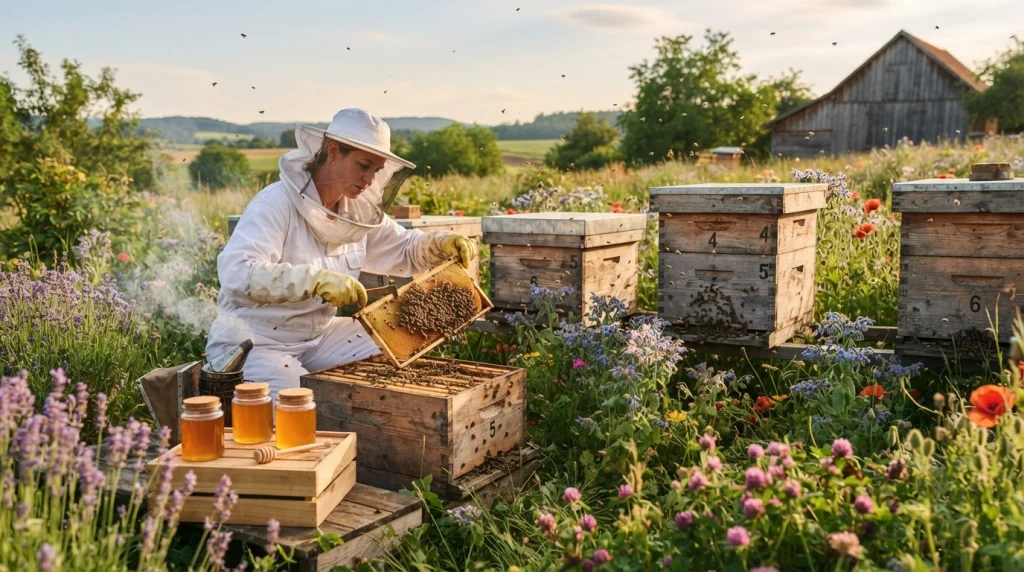
Beekeeping involves maintaining honeybee colonies for honey and other bee-derived products while also supporting crop pollination. Entrepreneurs can establish apiaries using suitable bee species and place colonies near flowering crops and plants.
Revenue can come from honey, beeswax, propolis, bee colonies and other products. Beekeeping can complement horticulture because bees contribute to pollination and can therefore support agricultural productivity.
Proper hive management, seasonal planning, disease monitoring and safe honey extraction are important. ICAR identifies apiculture as a supplementary enterprise that provides honey while enhancing pollination, making it suitable for diversified farming systems.
Key Advantages:
- Requires relatively little land
- Multiple income sources
- Supports pollination
- Can complement crop farming
- Scalable through additional colonies
Challenges:
- Weather dependency
- Colony diseases and pests
- Requires specialised knowledge
- Honey prices vary by quality and market
How It Works:
Purchase healthy colonies and equipment, place hives near suitable flowering resources, manage colonies throughout the seasons, harvest honey safely, and market the products.
6. Fish Farming
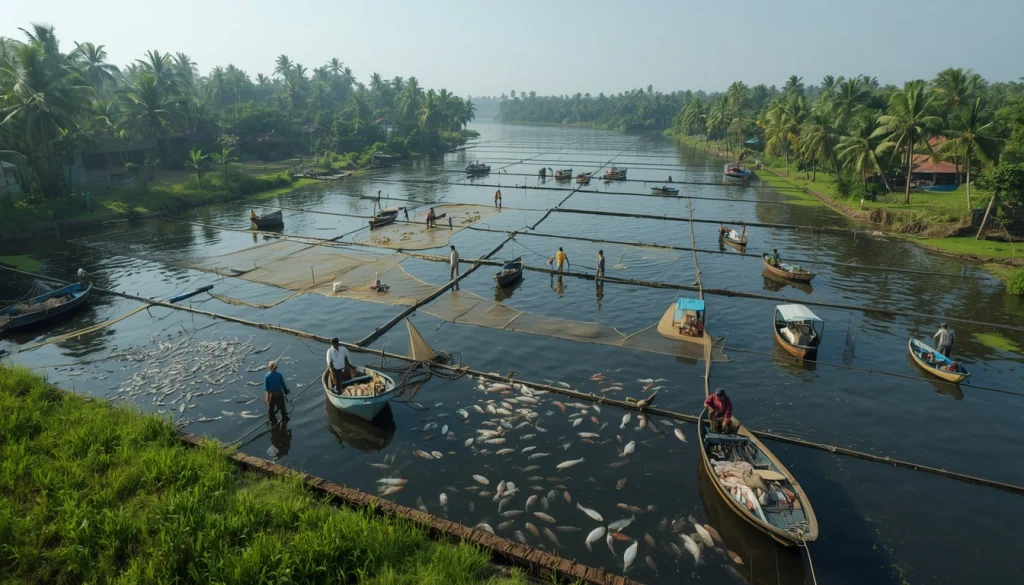
- Initial Investment: ₹3 lakh–₹15 lakh+
- Profit Potential: ₹1 lakh–₹5 lakh+ per production cycle
- Land Required: Approximately 0.5–2 acres of suitable pond area
- Market Demand: High for freshwater fish in many Indian markets
- Best For: Entrepreneurs with access to suitable water resources and pond infrastructure
Fish farming involves raising fish in managed ponds or other aquaculture systems for commercial sale. Species can be selected according to local climate, water conditions and market demand.
Composite fish culture can combine species occupying different feeding zones, improving the use of available pond resources. Entrepreneurs need suitable water quality, pond preparation, quality fingerlings, appropriate stocking, feed management and disease monitoring.
Fish can be sold to wholesalers, retailers, restaurants or directly to consumers. ICAR notes that fisheries can be particularly useful in water-rich regions and can also be integrated with other farming activities.
Key Advantages:
- Strong consumer demand
- Can use existing ponds
- Multiple fish species
- Can integrate with farming
- Good value-added potential
Challenges:
- Water-quality management
- Disease risks
- Initial pond-development costs
- Feed and market-price fluctuations
How It Works:
Prepare the pond, ensure suitable water quality, stock healthy fingerlings, provide appropriate feed and management, monitor growth, and harvest fish for sale.
7. Goat Farming
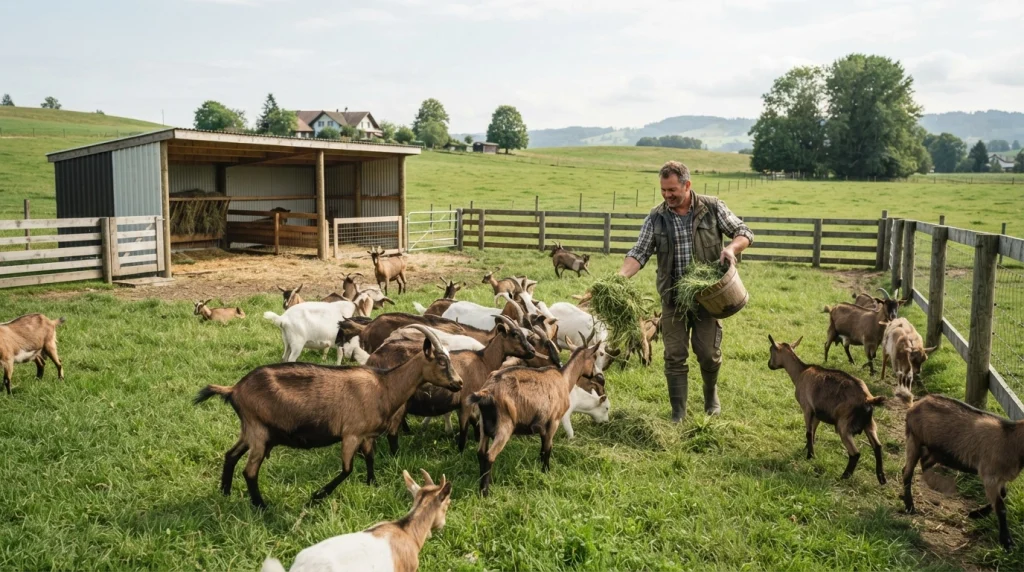
- Initial Investment: ₹2 lakh–₹10 lakh+
- Profit Potential: ₹50,000–₹3 lakh+ annually depending on herd size
- Land Required: 0.5–2 acres, with additional grazing or fodder arrangements where available
- Market Demand: Strong demand for goat meat and breeding animals
- Best For: Farmers looking for livestock diversification with comparatively manageable herd sizes
Goat farming involves raising goats primarily for meat, breeding, milk or a combination of purposes. Farmers can select breeds according to local climate, production objectives and market requirements.
A successful operation requires suitable housing, nutritious feed, clean drinking water, vaccination, parasite control and careful breeding management. Goats can also be integrated with crop production, with manure being recycled as organic fertiliser.
ICAR identifies goat rearing as a useful component of integrated farming, particularly where grazing resources and suitable livestock-management systems are available.
Key Advantages:
- Strong meat demand
- Suitable for diversified farming
- Manure provides additional value
- Multiple breeds available
- Can start relatively small
Challenges:
- Disease management
- Feed and fodder costs
- Breeding management
- Market-price fluctuations
How It Works:
Select suitable breeds, construct clean housing, purchase healthy animals, provide feed and healthcare, manage breeding, and sell mature goats or offspring.
8. Hydroponic Farming
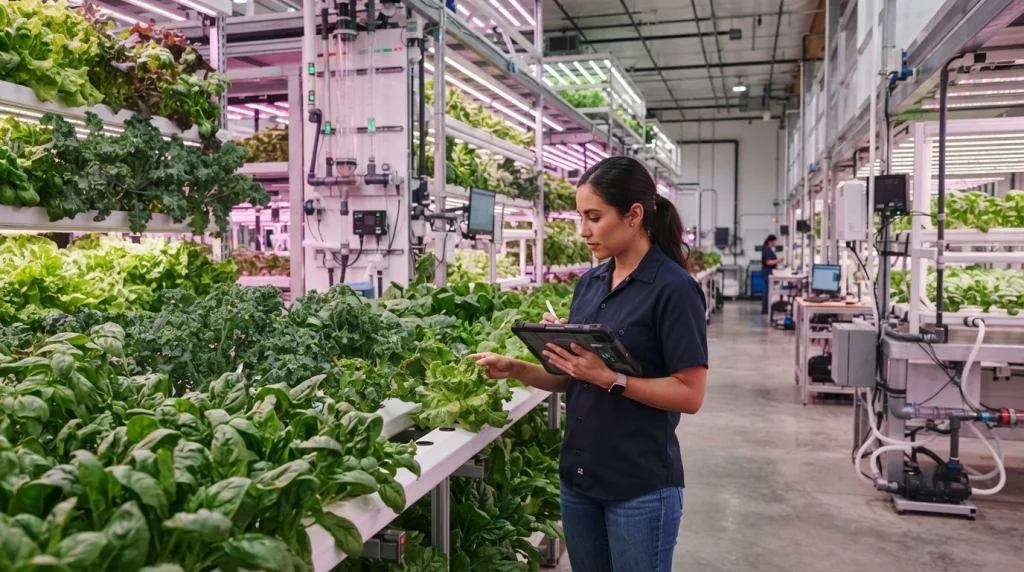
- Initial Investment: ₹5 lakh–₹25 lakh+
- Profit Potential: ₹1 lakh–₹5 lakh+ annually or higher at commercial scale
- Land Required: 500–5,000 sq. ft. depending on system and production scale
- Market Demand: Growing interest in premium fresh vegetables and herbs
- Best For: Entrepreneurs interested in technology-driven farming with limited land
Hydroponic farming grows plants without conventional soil by supplying nutrients through a controlled water-based system. It can be used for leafy vegetables, herbs and selected high-value crops.
Because production takes place in controlled environments, entrepreneurs can potentially operate on smaller plots and manage water and nutrients more precisely. However, the business requires technical knowledge, suitable infrastructure, reliable electricity and close monitoring.
Products can be marketed directly to restaurants, premium retailers, households and health-conscious consumers. Technology-led horticulture, protected cultivation, efficient irrigation and resource management are increasingly important areas in modern agricultural development.
Key Advantages:
- Requires comparatively less land
- Controlled production environment
- Efficient resource management
- Potential for premium crops
- Suitable for urban and peri-urban markets
Challenges:
- High initial infrastructure cost
- Requires technical expertise
- Electricity dependence
- Equipment maintenance
How It Works:
Install a suitable hydroponic system, select appropriate crops, provide nutrient-rich water, control environmental conditions, monitor plant health, harvest, and sell directly to customers.
9. Floriculture
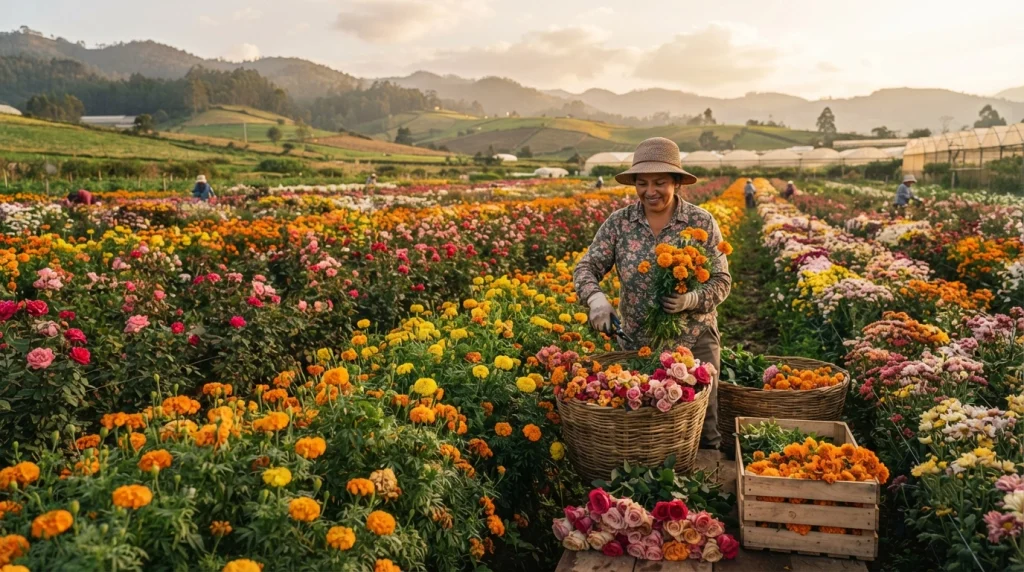
- Initial Investment: ₹2 lakh–₹10 lakh+ per acre depending on crop and infrastructure
- Profit Potential: ₹1 lakh–₹5 lakh+ annually per acre depending on crop and market
- Land Required: 0.5–2 acres initially
- Market Demand: Strong for weddings, festivals, decoration, gifting and religious uses
- Best For: Farmers near urban markets and entrepreneurs interested in high-value horticulture
Floriculture involves the commercial cultivation of flowers and ornamental plants for markets such as weddings, festivals, religious activities, decoration, gifting and landscaping. Farmers can select crops based on local climate, market demand and available infrastructure.
Marigold, rose, chrysanthemum and other flowers can provide opportunities, while protected cultivation can support certain premium varieties. Because flowers are highly perishable, harvesting, grading, packaging, transportation and market timing are crucial.
Direct relationships with florists, decorators, event planners, retailers and wholesalers can improve market access. ICAR classifies ornamental plants and cut flowers within the broader horticulture sector.
Key Advantages:
- High-value horticultural activity
- Diverse flower varieties
- Strong seasonal demand
- Scope for direct sales
- Suitable for value addition
Challenges:
- Highly perishable products
- Weather sensitivity
- Price fluctuations
- Requires careful post-harvest handling
How It Works:
Select suitable flowers, prepare the land or protected structure, cultivate and maintain plants, harvest at the correct stage, grade and package flowers, then sell quickly.
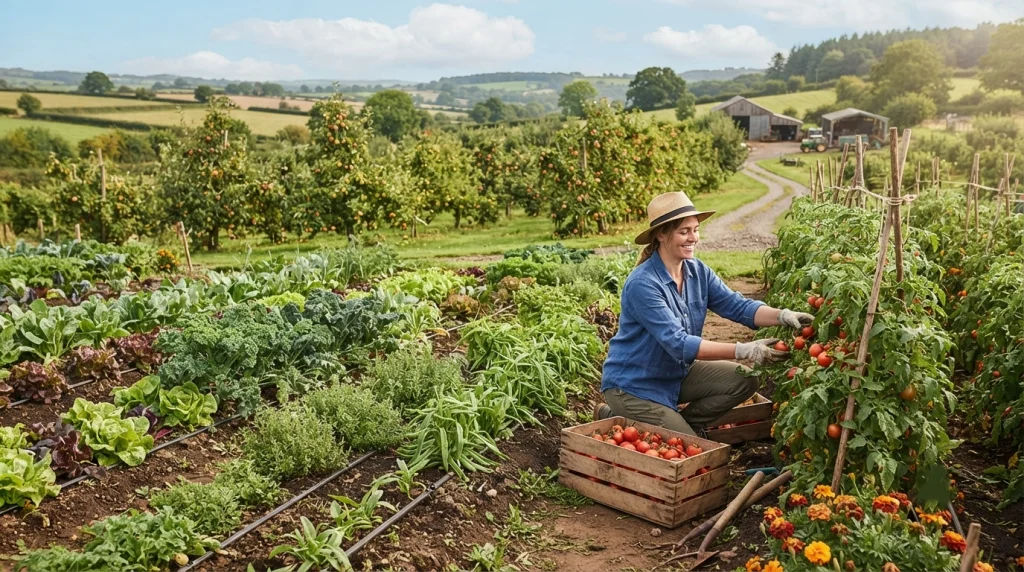
10. Fruit and Vegetable Farming
- Initial Investment: ₹1 lakh–₹5 lakh+ per acre
- Profit Potential: ₹1 lakh–₹5 lakh+ annually per acre depending on crop
- Land Required: 1 acre or more
- Market Demand: Consistently high for fresh fruits and vegetables
- Best For: Farmers with suitable land, irrigation and access to local markets
Fruit and vegetable farming involves cultivating crops for wholesale, retail, processing or direct consumer markets.
Entrepreneurs can select seasonal vegetables, leafy greens, fruits or high-value horticultural crops according to climate, soil, irrigation and local demand. Growing multiple crops can spread production and market risks while providing opportunities for income across different seasons.
ICAR highlights horticulture as an important contributor to agricultural income and notes that vegetables and fruits can improve both nutritional and economic outcomes. Farmers can improve returns through grading, packaging, cold-chain access, processing and direct marketing.
Key Advantages:
- Everyday consumer demand
- Wide range of crops
- Multiple seasonal opportunities
- Scope for direct marketing
- Can integrate with livestock
Challenges:
- Weather risks
- Perishability
- Price fluctuations
- Pest and disease pressure
How It Works:
Select market-oriented crops, prepare the land, sow suitable varieties, manage irrigation and nutrients, control pests, harvest at maturity, and sell through chosen channels.
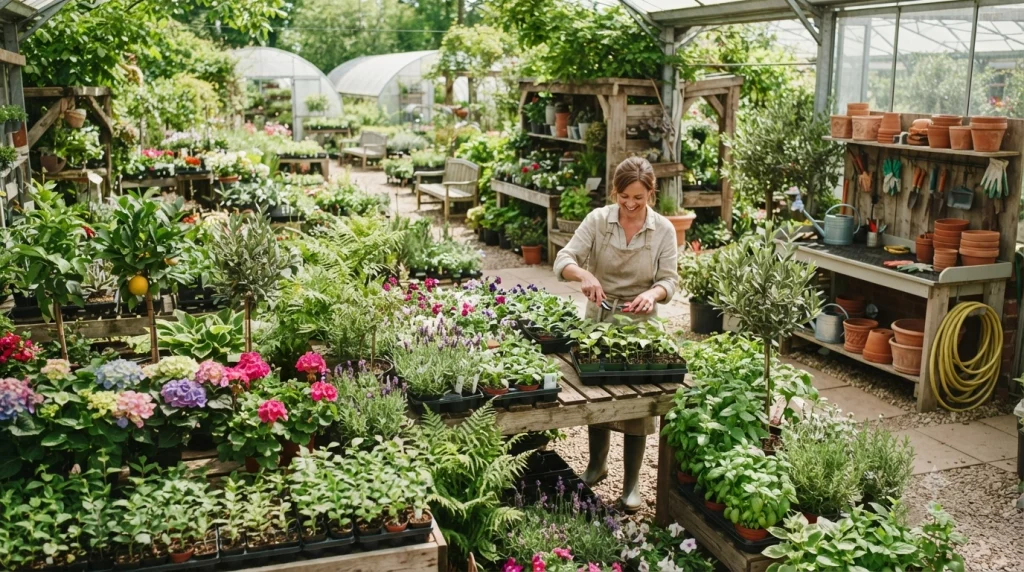
11. Plant Nursery Business
- Initial Investment: ₹1 lakh–₹5 lakh
- Profit Potential: ₹50,000–₹2 lakh+ monthly at established scale
- Land Required: 0.25–2 acres depending on nursery type
- Market Demand: Growing demand for fruit plants, ornamentals, landscaping plants and gardening products
- Best For: Entrepreneurs interested in horticulture, gardening and plant sales
A plant nursery produces and sells seedlings, saplings, ornamental plants, fruit plants, flowering plants, herbs and landscaping material. Entrepreneurs can supply individual gardeners, farmers, landscapers, housing societies, institutions and commercial projects.
The business can start on a small plot and expand by increasing plant varieties and production capacity. Good nursery management requires knowledge of propagation, soil mixtures, watering, pest control, plant nutrition and seasonal demand.
Online sales and home delivery can expand the customer base beyond the immediate locality. ICAR also highlights nursery management, gardening and landscaping as agricultural enterprise opportunities.
Key Advantages:
- Wide customer base
- Multiple plant categories
- Can start relatively small
- Plants can be sold at different stages
- Scope for landscaping services
Challenges:
- Plant mortality
- Seasonal demand
- Requires regular maintenance
- Space and water requirements
How It Works:
Choose plant categories, establish propagation and growing areas, raise healthy plants, maintain them properly, display or list them for sale, and supply customers.
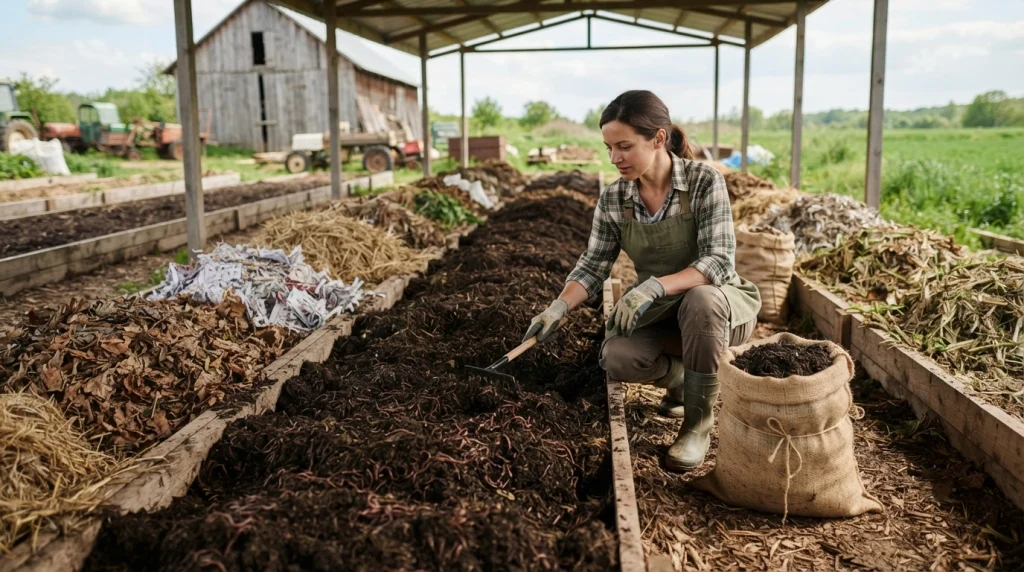
12. Vermicomposting Business
- Initial Investment: ₹50,000–₹3 lakh
- Profit Potential: ₹30,000–₹2 lakh+ annually at small scale
- Land Required: 500–2,000 sq. ft. initially
- Market Demand: Growing among farmers, nurseries, gardeners and organic-farming businesses
- Best For: Entrepreneurs interested in low-cost agricultural waste recycling
Vermicomposting converts biodegradable organic materials into nutrient-rich organic manure with the help of earthworms. Entrepreneurs can use agricultural residues, suitable organic waste and other biodegradable materials to produce vermicompost for farmers, nurseries, gardeners and horticultural businesses.
The business can begin with a limited number of beds and expand as demand develops. Proper moisture, temperature, shade, feedstock preparation and earthworm management are essential for consistent production.
ICAR describes vermicompost as an environmentally friendly recycled biological product that can improve soil properties and serve as an organic nutrient source.
Key Advantages:
- Relatively low startup cost
- Uses organic waste
- Requires limited space
- Can complement crop farming
- Multiple packaging sizes possible
Challenges:
- Requires moisture management
- Earthworm health must be maintained
- Quality consistency is important
- Local demand may vary
How It Works:
Prepare shaded vermicompost beds, add suitable biodegradable material and earthworms, maintain moisture and temperature, allow decomposition, harvest the finished compost, and package it for sale.
Government Schemes And Support For Farming Businesses
The Government of India provides several schemes and programmes to support farmers, agricultural entrepreneurs, Farmer Producer Organisations (FPOs), and rural businesses. The support covers areas such as income assistance, affordable credit, crop insurance, irrigation, infrastructure, mechanisation, marketing, technology, and value addition. Agriculture-related businesses can explore schemes according to their activities, eligibility, and investment requirements.
- PM-KISAN: Provides eligible landholding farmer families with annual income support of ₹6,000 through three direct-benefit installments.
- Pradhan Mantri Fasal Bima Yojana (PMFBY): Provides crop insurance against specified risks such as drought, floods, pests, diseases, and certain post-harvest losses.
- Agriculture Infrastructure Fund (AIF): Supports financing for post-harvest infrastructure, warehouses, cold storage, processing facilities, and community farming assets, with interest subvention and credit-guarantee support.
- Kisan Credit Card (KCC): Provides short-term, revolving credit support for crop cultivation as well as animal husbandry and fisheries activities.
- Formation of Farmer Producer Organisations: The government supports FPOs to help farmers aggregate produce, improve bargaining power, reduce production costs, and access better markets.
- Mission for Integrated Development of Horticulture (MIDH): Supports horticulture development, including activities related to fruits, vegetables, flowers, plantation crops, and other horticultural production.
- National Beekeeping and Honey Mission (NBHM): Supports beekeeping and honey-related activities as an avenue for agricultural diversification and additional income.
- Sub-Mission on Agricultural Mechanisation (SMAM): Promotes access to agricultural machinery and mechanisation to improve farm efficiency and reduce cultivation costs.
- Per Drop More Crop (PDMC): Promotes efficient irrigation technologies, particularly micro-irrigation, to improve water-use efficiency in agriculture.
- Agri Fund for Start-Ups & Rural Enterprises (AgriSURE): Supports the development of agricultural startups and rural enterprises, creating opportunities for innovation and entrepreneurship in the agri-sector.
How To Choose The Right Farming Business Idea?
Choosing the right farming business requires evaluating available resources, local conditions, market demand, investment capacity, skills, and potential profitability carefully.
- Assess Available Land: Consider land size, soil quality, ownership costs, and suitability for your preferred farming activity.
- Study Market Demand: Research local demand, customer preferences, competition, seasonal trends, and prevailing prices before selecting products.
- Evaluate Investment: Calculate expenses for land preparation, equipment, livestock, seeds, labour, irrigation, feed, and infrastructure.
- Consider Climate: Choose crops, livestock, or farming systems that are compatible with your region’s climate and weather conditions.
- Check Water Availability: Ensure adequate and reliable water availability throughout production seasons before investing in water-intensive farming activities.
- Evaluate Skills: Select a farming model matching your knowledge, experience, available labour, and willingness to acquire specialised skills.
- Plan Your Sales: Identify reliable buyers, markets, processors, retailers, or direct customers before beginning large-scale production to reduce marketing risks.
How To Make A Farming Business Profitable?
A profitable farming business requires careful planning, efficient resource use, suitable crop selection, cost control, market knowledge, and consistent attention to productivity and quality.
- Choose High-Demand Products: Select crops, livestock, or agricultural products with strong demand and attractive market prices throughout the year.
- Control Production Costs: Monitor spending on seeds, feed, fertilisers, labour, equipment, electricity, transportation, and other operational expenses.
- Use Modern Technology: Adopt suitable irrigation systems, farm machinery, precision tools, and digital technologies to improve productivity and efficiency.
- Reduce Wastage: Store, handle, process, and transport agricultural products properly to minimise spoilage and unnecessary financial losses.
- Diversify Income Sources: Combine complementary activities such as crop cultivation, livestock, beekeeping, processing, or direct farm sales.
- Build Direct Markets: Sell directly to consumers, retailers, restaurants, processors, or institutions to potentially improve margins and customer relationships.
- Maintain Product Quality: Follow appropriate production, hygiene, grading, packaging, and storage practices to build customer trust and achieve better prices.
- Track Financial Performance: Regularly monitor production costs, sales, profit margins, cash flow, and returns to identify improvement opportunities.
Conclusion
Farming offers diverse business opportunities beyond traditional crop cultivation, with models such as organic farming, mushroom cultivation, dairy, poultry, beekeeping, hydroponics, and value-added agricultural businesses gaining attention. Modern farming increasingly combines technology, market research, efficient resource management, and direct customer access to improve earning potential.
However, profitability depends on factors including location, investment, climate, production costs, market demand, and effective selling strategies. Entrepreneurs should evaluate their available land, resources, skills, and budget before selecting a farming business. With proper planning, diversification, and sustainable practices, farming can become a scalable and commercially viable source of income.
FAQs
What are some of the best farming business ideas?
Some profitable farming ideas include organic farming, dairy farming, poultry farming, mushroom cultivation, beekeeping, fish farming, hydroponic farming, and nursery businesses.
Which farming business requires the least investment?
Mushroom cultivation, beekeeping, vermicomposting, and small-scale nursery businesses can generally be started with relatively lower investment than large livestock or commercial farming operations.
Is farming a profitable business?
Yes, farming can be profitable when entrepreneurs select suitable crops or livestock, control production costs, understand market demand, and establish reliable sales channels.
Can farming be started without owning large amounts of land?
Yes. Businesses such as mushroom cultivation, hydroponics, beekeeping, poultry farming, and vermicomposting can be started on comparatively smaller spaces.
What factors should be considered before starting a farming business?
Consider land availability, climate, water supply, initial investment, production costs, local demand, labour requirements, government regulations, and access to markets before choosing a farming business.