

Kerala is known for tourism, traditional industries, agriculture, and a highly educated population. But the state’s business opportunities now extend far beyond these familiar sectors. From home-based food businesses and online services to tourism experiences, specialty retail, and digital businesses, entrepreneurs can build businesses for both local customers and buyers outside Kerala.
The growing entrepreneurial ecosystem also makes the state more attractive for first-time business owners. Under Kerala’s Year of Enterprises initiative, more than 3.49 lakh enterprises had been registered between 2022 and March 17, 2025, with reported investment of over ₹22,437 crore and more than 7.42 lakh employment opportunities. This shows that entrepreneurship is becoming an important part of Kerala’s economic activity.
The best business ideas in Kerala are not necessarily the ones requiring the highest investment. A small food brand, digital service, online store, home-based training business, or specialized local service can also become profitable when it solves a clear customer problem. The key is to match the business model with local demand, your skills, available capital, and the location in which you plan to operate.
Why Start a Business in Kerala?
Kerala offers a combination that can benefit both traditional and modern businesses. The state has a large domestic consumer market, a strong tourism industry, established service sectors, and access to a growing startup ecosystem. Its large Malayali diaspora also creates opportunities for businesses selling Kerala-specific food, fashion, handicrafts, wellness products, and cultural experiences to customers outside the state.
Tourism is particularly important. Kerala recorded 2.58 crore tourist visits in 2025, including more than 2.50 crore domestic visits and 8.21 lakh foreign tourist visits. Domestic tourist visits were 36.3% higher than the 2019 level, while foreign tourist visits increased by 11.3% compared with 2024. This creates opportunities not only for hotels and travel agencies, but also for food, transport business, local experiences, souvenirs, photography, wellness, and other tourist-focused services.
The state is also developing a strong technology and startup ecosystem. Kerala Startup Mission currently reports more than 8,000 technology startups, over 550 incubators/IEDCs, and startup activity across areas such as IT, food and agritech, healthtech, consumer products, education, climate and energy, and fintech. This gives technology-oriented entrepreneurs access to incubation, mentoring, networking, and funding opportunities.
List Of 10 Best Business Ideas in Kerala
The following business ideas in Kerala have been divided into five categories so that entrepreneurs can choose an opportunity based on their skills, investment capacity, and preferred business model.
A. Food & Catering Business Ideas
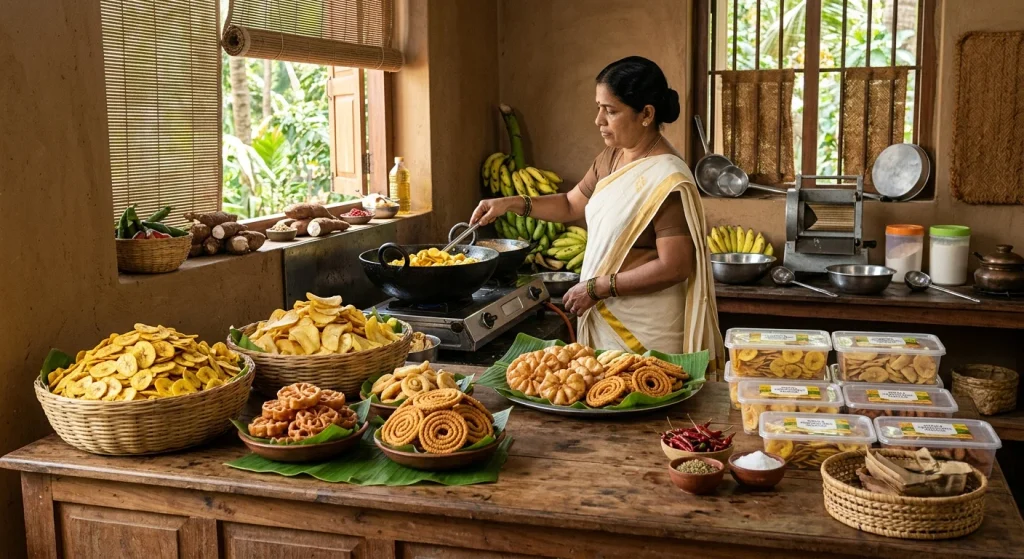
1. Kerala Snacks and Packaged Food Business
- Estimated Investment: ₹1.5 lakh–₹5 lakh
- Potential Monthly Profit: ₹30,000–₹1.2 lakh after stabilising operations
- Why It Works in Kerala: Strong local food culture, tourism and demand for Kerala-specific snacks
- Who Should Start This Business: Home cooks, food entrepreneurs, homemakers, and people with access to traditional recipes
Kerala snacks such as banana chips, tapioca chips, achappam, murukku, sharkara varatti, and other traditional products can be turned into a packaged-food business. Among the promising Business Ideas in Kerala, this offers an opportunity to reach customers beyond the local market through supermarkets, specialty stores, online marketplaces, your own website, and Malayali communities outside the state. The biggest opportunity is not simply selling another packet of snacks but building a trusted regional food brand with consistent taste, hygienic packaging, attractive labels, and products designed for gifting and online shipping.
Skills Required
- Food preparation and quality control
- Basic costing and inventory management
- Packaging and product presentation
- Digital marketing and order management
How to Start
- Select 3–5 products instead of launching a large product range.
- Standardise recipes, quantities, shelf life, and packaging.
- Complete the required food-business registrations and approvals.
- Test sales through local stores and online channels.
- Track repeat purchases before expanding the product range.
Tips to Make It Profitable
- Create premium gift boxes for festivals and tourists.
- Sell combination packs instead of only individual products.
- Build a strong brand around authentic Kerala flavours.
- Keep packaging suitable for courier transportation.
- Use customer reviews and repeat-order offers to increase retention.
2. Home-Based Catering Business
- Estimated Investment: ₹75,000–₹3 lakh
- Potential Monthly Profit: ₹30,000–₹1 lakh
- Why It Works in Kerala: Regular demand for home-style food, functions, offices, and small gatherings
- Who Should Start This Business: Experienced cooks, homemakers, family-run businesses, and food enthusiasts
A home-based catering business can be a practical option for entrepreneurs who want to enter the food industry without paying restaurant-level rent. You can specialise in Kerala meals, vegetarian catering, biryani, breakfast packages, snacks, or small event menus. Rather than accepting every type of order, focusing on a specific customer group can make operations easier. For example, you could supply lunch to nearby offices on weekdays and cater to small family functions on weekends.
Skills Required
- Cooking and menu planning
- Food hygiene and portion control
- Customer service
- Cost calculation and purchasing
How to Start
- Choose a focused menu.
- Calculate the cost per meal before setting prices.
- Start with small orders and family functions.
- Build relationships with local suppliers.
- Create WhatsApp and social media ordering channels.
Tips to Make It Profitable
- Offer fixed-price meal packages.
- Charge separately for delivery when appropriate.
- Create weekly corporate lunch subscriptions.
- Avoid excessive menu variety in the beginning.
- Maintain consistent portion sizes to control food costs.
3. Cloud Kitchen
- Estimated Investment: ₹2 lakh–₹6 lakh
- Potential Monthly Profit: ₹40,000–₹1.5 lakh
- Why It Works in Kerala: Online food ordering makes a full dine-in restaurant unnecessary for many concepts
- Who Should Start This Business: Food entrepreneurs who want to operate with a smaller physical setup
A cloud kitchen is one of the practical Business Ideas in Kerala, allowing you to focus on food preparation and delivery without maintaining a large dining area. This can reduce costs related to furniture, interiors, front-of-house staff, and customer seating. The concept works particularly well when the menu is designed around food that travels well. Kerala biryani, meals, wraps, snacks, breakfast items, desserts, and regional specialities can all be developed into delivery-focused brands.
Skills Required
- Cooking and kitchen management
- Food costing
- Online order management
- Digital promotion
How to Start
- Research delivery demand in your target locality.
- Select one strong food concept.
- Set up a compliant commercial or approved kitchen.
- List products on suitable food-delivery platforms.
- Develop packaging that maintains food quality during delivery.
Tips to Make It Profitable
- Keep the menu compact.
- Identify your best-selling items every month.
- Create meal combinations to increase average order value.
- Use professional food photographs.
- Encourage direct repeat orders where legally and operationally appropriate.
4. Kerala Meal Subscription Service
- Estimated Investment: ₹1 lakh–₹4 lakh
- Potential Monthly Profit: ₹35,000–₹1.2 lakh
- Why It Works in Kerala: Working professionals and students can value regular home-style meals
- Who Should Start This Business: Home cooks, caterers, and small food-service operators
A meal subscription business can create more predictable revenue than depending entirely on individual orders. The business can offer weekday lunch, dinner, or both, with plans for students, office workers, bachelors, senior citizens, or small families. The focus should be consistency rather than an oversized menu. Customers should know what they are receiving, when it will arrive, and how much they will pay each month.
Skills Required
- Cooking and batch preparation
- Delivery coordination
- Customer management
- Food costing
How to Start
- Identify one locality instead of serving an entire city.
- Create weekly and monthly plans.
- Test the service with a small customer group.
- Establish fixed delivery routes.
- Track cancellations and food wastage.
Tips to Make It Profitable
- Use subscription payments for predictable cash flow.
- Offer different portion sizes.
- Keep delivery routes geographically compact.
- Introduce add-ons such as snacks or desserts.
- Use customer feedback to improve the weekly menu.
5. Bakery and Traditional Dessert Business
- Estimated Investment: ₹2 lakh–₹8 lakh
- Potential Monthly Profit: ₹40,000–₹1.5 lakh
- Why It Works in Kerala: Strong bakery culture and demand for traditional and modern desserts
- Who Should Start This Business: Bakers, pastry specialists, home bakers, and food entrepreneurs
A specialised bakery is one of the promising Business Ideas in Kerala, as it can compete more effectively than a general bakery by focusing on a clear product category. Traditional Kerala cakes and snacks can be combined with modern products such as customised cakes, dessert boxes, brownies, and celebration hampers. This model also gives home bakers an opportunity to start small and move into a commercial kitchen as order volume increases. Seasonal demand around weddings, festivals, birthdays, and corporate gifting can further support sales.
Skills Required
- Baking and recipe development
- Decoration and presentation
- Packaging
- Order management
How to Start
- Select a product category.
- Test recipes with potential customers.
- Calculate ingredient and packaging costs.
- Build an online portfolio.
- Accept pre-orders before investing in larger equipment.
Tips to Make It Profitable
- Focus on high-margin customised products.
- Offer festival and wedding packages.
- Introduce advance-order discounts.
- Use attractive packaging for gifting.
- Avoid producing large quantities without confirmed demand.
B. Online & Digital Business Ideas
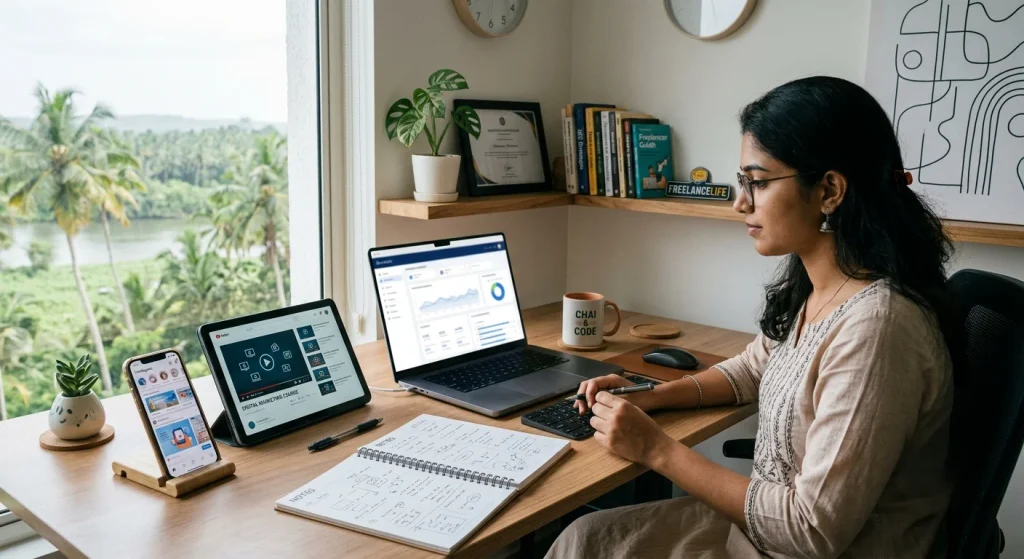
6. Digital Marketing Agency
- Estimated Investment: ₹50,000–₹2 lakh
- Potential Monthly Profit: ₹40,000–₹2 lakh+
- Why It Works in Kerala: Low physical infrastructure requirements and access to local and national clients
- Who Should Start This Business: Digital marketers, SEO professionals, content creators, and social media specialists
A digital marketing agency can provide SEO, social media management, content creation, paid advertising, email marketing, and website services. Instead of trying to serve every business, specialise in a niche such as hotels, restaurants, clinics, real-estate companies, education providers, or local retailers. Specialisation makes it easier to develop relevant case studies and create repeatable service packages. Kerala-based agencies can also sell services to businesses in other Indian cities and overseas markets, while offering SEO services for small businesses to help local companies improve their online visibility.
Skills Required
- SEO and content marketing
- Social media management
- Advertising platforms
- Analytics and reporting
How to Start
- Select one or two services.
- Choose a target industry.
- Create sample work and case studies.
- Build a simple professional website.
- Start with small clients and develop recurring retainers.
Tips to Make It Profitable
- Sell monthly packages instead of one-off services.
- Focus on measurable outcomes.
- Automate repetitive reporting tasks.
- Build industry-specific service packages.
- Gradually add higher-value services such as paid advertising and analytics.
7. Website and Software Development Services
- Estimated Investment: ₹1 lakh–₹5 lakh
- Potential Monthly Profit: ₹75,000–₹3 lakh+
- Why It Works in Kerala: Strong technology talent and a growing startup ecosystem
- Who Should Start This Business: Developers, software professionals, technical founders, and small technology teams
Website development, business software, mobile applications, automation systems, and maintenance services are promising Business Ideas in Kerala that can be sold to businesses across India. The opportunity becomes stronger when the business solves a specific problem instead of simply selling generic development hours. For example, a company could specialise in booking systems for tourism businesses, inventory software for retailers, or workflow tools for small service businesses.
Kerala Startup Mission’s ecosystem includes thousands of technology startups and incubation facilities across the state, reflecting the depth of the state’s technology-oriented entrepreneurial environment.
Skills Required
- Programming or no-code development
- UI/UX understanding
- Project management
- Client communication
How to Start
- Select a specific business problem.
- Build a portfolio or demonstration product.
- Target small and medium businesses.
- Offer development plus maintenance.
- Build recurring revenue through support contracts.
Tips to Make It Profitable
- Develop reusable templates and systems.
- Charge separately for maintenance.
- Avoid competing only on hourly rates.
- Build expertise in one industry.
- Create subscription-based software where possible.
8. Online Tutoring and Skill Training
- Estimated Investment: ₹30,000–₹1.5 lakh
- Potential Monthly Profit: ₹30,000–₹1.5 lakh
- Why It Works in Kerala: Strong education culture and demand for academic and professional skills
- Who Should Start This Business: Teachers, subject experts, language trainers, and professionals
Online tutoring can begin with a laptop, reliable internet connection, and a focused subject. The business can cover school subjects, entrance preparation, spoken English, Malayalam language learning, coding, digital marketing, design, accounting, or professional software. The most scalable model is not simply selling individual classes. Recorded lessons, group batches, study materials, and subscription programs can allow one trainer to serve more students without increasing working hours at the same rate.
Skills Required
- Subject expertise
- Teaching and communication
- Presentation skills
- Online classroom management
How to Start
- Select a specific learner segment.
- Conduct a small pilot batch.
- Collect feedback and testimonials.
- Create structured course material.
- Introduce group classes before recorded courses.
Tips to Make It Profitable
- Offer monthly rather than single-session packages.
- Create advanced courses after basic courses.
- Record frequently repeated lessons.
- Build a referral program.
- Use free educational content to attract students.
9. Freelance Content and Creative Services
- Estimated Investment: ₹25,000–₹1 lakh
- Potential Monthly Profit: ₹30,000–₹1.5 lakh+
- Why It Works in Kerala: Can be operated remotely with clients across India and overseas
- Who Should Start This Business: Writers, graphic designers, video editors, photographers, and creative professionals
Freelancing is one of the flexible Business Ideas in Kerala that can grow into a full business when an individual moves from selling personal time to building a small service operation. Content writing, graphic design, video editing, presentation design, translation, product photography, and social media content are possible specialisations. Kerala’s tourism, hospitality, education, healthcare, and retail businesses can provide local clients, while remote platforms and direct outreach can bring customers from other markets.
Skills Required
- One specialised creative skill
- Client communication
- Portfolio development
- Basic sales and negotiation
How to Start
- Select one core service.
- Build five to ten strong portfolio samples.
- Approach local businesses directly.
- Create standard service packages.
- Develop recurring monthly clients.
Tips to Make It Profitable
- Avoid offering every creative service initially.
- Charge based on project value rather than only hours.
- Build templates to reduce production time.
- Outsource repetitive work as demand grows.
- Create retainers for predictable income.
10. Online Kerala Products Store
- Estimated Investment: ₹1 lakh–₹4 lakh
- Potential Monthly Profit: ₹30,000–₹1.5 lakh
- Why It Works in Kerala: Local products can be sold to customers outside the state and to the Malayali diaspora
- Who Should Start This Business: Retailers, product curators, digital sellers, and entrepreneurs with supplier networks
An online store can bring together products associated with Kerala under one brand. Depending on the model, this could include snacks, spices, handicrafts, traditional clothing, coconut-based products, wellness products, or gifting items. The key is curation. Instead of competing with large marketplaces on price, build a store around authenticity, regional identity, premium packaging, and gifting. This can make the business attractive to customers who have moved away from Kerala but still want familiar products.
Skills Required
- E-commerce management
- Product sourcing
- Digital marketing
- Packaging and logistics
How to Start
- Select a narrow product category.
- Find reliable local suppliers.
- Build an e-commerce website or marketplace presence.
- Test demand with a small inventory.
- Develop shipping and return processes.
Tips to Make It Profitable
- Create curated gift boxes.
- Focus on products with reasonable shelf life.
- Negotiate wholesale rates as volumes increase.
- Use high-quality product photography.
- Target customers outside Kerala through digital advertising.
C. Creative & Skill-Based Business Ideas
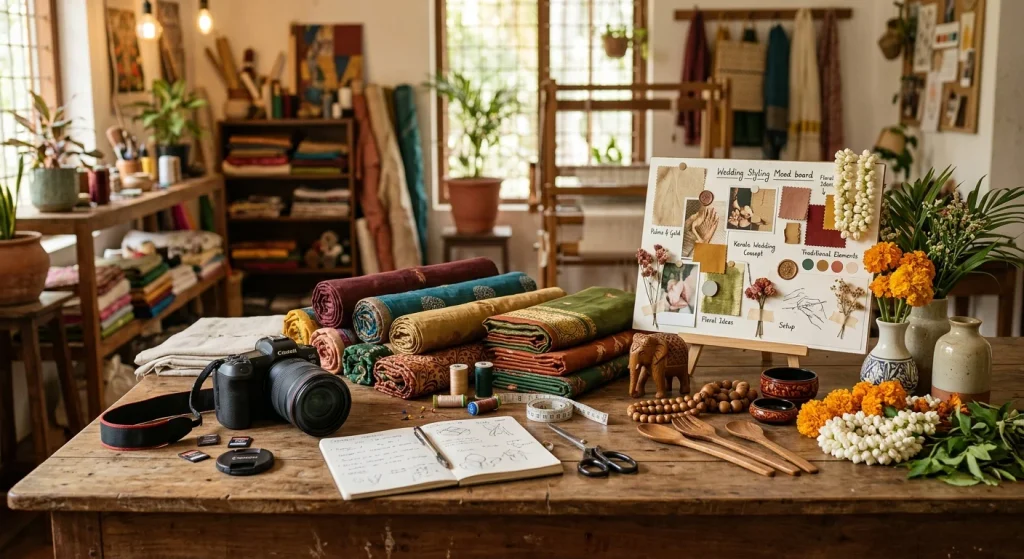
11. Handicrafts and Kerala Souvenir Business
- Estimated Investment: ₹1 lakh–₹5 lakh
- Potential Monthly Profit: ₹30,000–₹1.2 lakh
- Why It Works in Kerala: Tourism creates demand for locally identifiable products
- Who Should Start This Business: Craft makers, designers, artists, and product curators
A handicraft business can focus on products that represent Kerala’s culture rather than competing with mass-produced souvenirs. Wooden products, traditional decorative pieces, Kerala-inspired home décor, art products, and curated gift items can be sold to tourists as well as online customers. The strongest model combines offline tourism sales with online distribution. This prevents the business from becoming completely dependent on footfall at one tourist location.
Skills Required
- Product design or sourcing
- Craft skills
- Packaging
- Retail and online selling
How to Start
- Identify two or three product categories.
- Work with local artisans where possible.
- Develop consistent designs and quality standards.
- Test products through exhibitions and online channels.
- Create tourist-friendly packaging.
Tips to Make It Profitable
- Sell products in multiple price ranges.
- Offer personalised products.
- Develop corporate gifting collections.
- Tell the story behind the product.
- Use online sales to reduce dependence on tourist seasons.
12. Photography and Videography Services
- Estimated Investment: ₹1.5 lakh–₹6 lakh
- Potential Monthly Profit: ₹40,000–₹2 lakh+
- Why It Works in Kerala: Weddings, tourism, hospitality, and businesses create multiple customer segments
- Who Should Start This Business: Photographers, videographers, and visual storytellers
Photography is not limited to wedding assignments. A Kerala-based visual business can work across weddings, destination events, hotels, resorts, restaurants, tourism experiences, real estate, product photography, and social media content. Tourism growth makes hospitality photography particularly interesting. Hotels and local experiences need high-quality visual content to market themselves online, while couples increasingly look for specialised wedding and pre-wedding packages.
Skills Required
- Photography and video production
- Editing
- Client management
- Social media knowledge
How to Start
- Build a specialised portfolio.
- Invest in essential equipment first.
- Collaborate with event planners and hotels.
- Create fixed service packages.
- Build a strong social media portfolio.
Tips to Make It Profitable
- Sell editing and album services separately.
- Develop destination packages.
- Offer monthly content packages to businesses.
- Build partnerships with wedding planners.
- Rent specialised equipment instead of buying everything initially.
13. Event and Wedding Planning
- Estimated Investment: ₹75,000–₹3 lakh
- Potential Monthly Profit: ₹40,000–₹2 lakh+
- Why It Works in Kerala: Weddings, cultural functions, destination events, and corporate gatherings create recurring demand
- Who Should Start This Business: Organised individuals with strong networking and communication skills
Event planning is one of the promising Business Ideas in Kerala, as it is a relationship-driven business. The entrepreneur coordinates venues, decorators, caterers, photographers, entertainment providers, transport, invitations, and other vendors. Starting with small events can help build a vendor network before moving into larger weddings. Kerala also provides a variety of settings for destination weddings and celebrations, allowing planners to create premium packages rather than competing only on basic coordination.
Skills Required
- Planning and coordination
- Negotiation
- Vendor management service
- Customer service
How to Start
- Build a trusted vendor network.
- Start with birthdays and small functions.
- Create sample event packages.
- Build a visual portfolio.
- Ask satisfied customers for referrals.
Tips to Make It Profitable
- Negotiate vendor rates based on volume.
- Charge planning and coordination fees clearly.
- Create premium destination packages.
- Maintain written agreements with vendors.
- Avoid taking more events than your team can manage.
14. Interior Décor and Home Styling Service
- Estimated Investment: ₹50,000–₹2 lakh
- Potential Monthly Profit: ₹40,000–₹1.5 lakh
- Why It Works in Kerala: Residential construction, renovation, rentals, and hospitality create demand for styling services
- Who Should Start This Business: Interior designers, decorators, architects, and people with strong design skills
A home styling business can operate without maintaining a large showroom. The entrepreneur can provide consultation, room styling, furniture selection, décor sourcing, rental-property makeovers, and hospitality styling. A niche such as budget home makeovers or homestay styling can make the business easier to market. The entrepreneur can earn through consultation fees as well as commissions or project-management charges, depending on the business model.
Skills Required
- Interior styling
- Space planning
- Vendor sourcing
- Client communication
How to Start
- Build a portfolio using sample projects.
- Develop three service packages.
- Establish relationships with suppliers.
- Offer virtual consultations.
- Start with individual rooms and small properties.
Tips to Make It Profitable
- Focus on a clear customer segment.
- Charge consultation fees separately.
- Build supplier relationships.
- Offer complete room packages.
- Photograph every completed project professionally.
15. Traditional Clothing and Customisation Studio
- Estimated Investment: ₹1.5 lakh–₹5 lakh
- Potential Monthly Profit: ₹40,000–₹1.5 lakh
- Why It Works in Kerala: Traditional clothing has both cultural and occasion-based demand
- Who Should Start This Business: Fashion designers, tailors, boutique owners, and textile entrepreneurs
A boutique can combine traditional Kerala clothing with contemporary designs. Instead of operating as another general clothing store, the business can specialise in kasavu sarees, customised blouses, mundu styling, festive collections, bridal wear, or Kerala-inspired contemporary clothing. An online catalogue can expand the market beyond the physical shop. Customisation is particularly valuable because customers are often willing to pay more for fitting, design changes, embroidery, and personalised styling.
Skills Required
- Fashion and tailoring
- Fabric sourcing
- Customer styling
- E-commerce
How to Start
- Select a specialised clothing segment.
- Find reliable textile suppliers.
- Create a small initial collection.
- Offer customised orders.
- Build an Instagram and online catalogue.
Tips to Make It Profitable
- Avoid excessive inventory.
- Use pre-orders for expensive designs.
- Create festive collections.
- Offer blouse customisation and alterations.
- Sell accessories along with clothing.
D. Service-Based Business Ideas
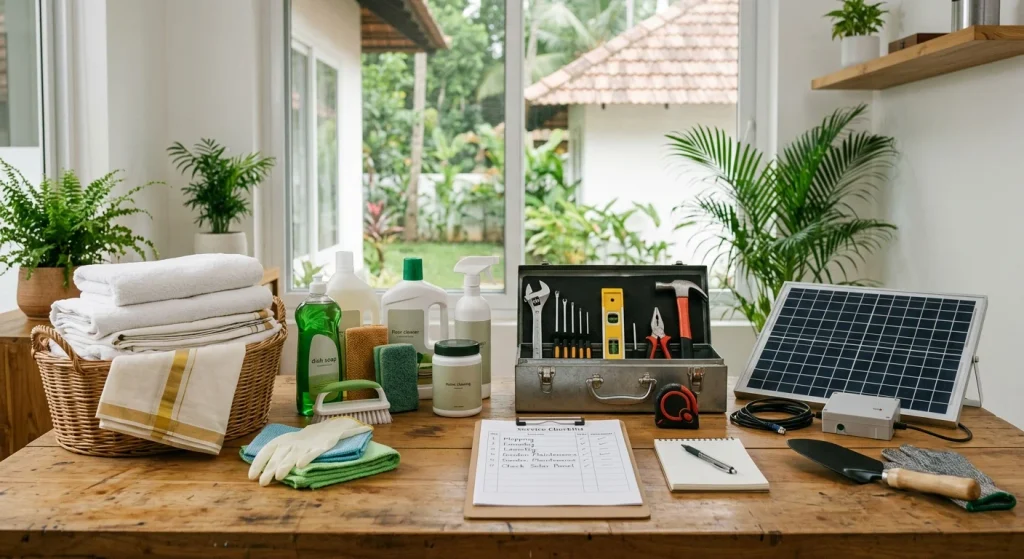
16. Travel Planning and Local Experience Business
- Estimated Investment: ₹50,000–₹2 lakh
- Potential Monthly Profit: ₹40,000–₹2 lakh
- Why It Works in Kerala: Tourism reached 2.58 crore visits in 2025
- Who Should Start This Business: Travel planners, local guides, hospitality professionals, and entrepreneurs with strong local networks
Instead of operating only as a conventional travel agency, build a business around curated Kerala experiences. Packages can focus on food walks, village experiences, plantation visits, responsible tourism, cultural activities, photography trips, or family-friendly itineraries. The scale of Kerala’s tourism market makes this category attractive, but competition is also strong. A specialised experience can therefore be more useful than selling generic sightseeing packages.
Kerala recorded more than 25 million domestic tourist visits in 2025, while foreign tourist visits also grew by 11.3% over 2024.
Skills Required
- Travel planning
- Local networking
- Customer service
- Digital marketing
How to Start
- Choose a specific tourist segment.
- Develop two or three experiences.
- Partner with local guides and operators.
- Create professional photographs and videos.
- Sell packages through online channels.
Tips to Make It Profitable
- Focus on experiences instead of price-based packages.
- Create private and group options.
- Build partnerships with hotels and homestays.
- Offer airport pickup as an add-on.
- Collect reviews from every customer.
17. Home Cleaning and Property Maintenance Service
- Estimated Investment: ₹75,000–₹2.5 lakh
- Potential Monthly Profit: ₹40,000–₹1.5 lakh
- Why It Works in Kerala: Homes, rental properties, offices, and hospitality businesses require recurring maintenance
- Who Should Start This Business: Organised entrepreneurs who can manage field staff
A professional cleaning and maintenance company can serve residential customers, offices, rental properties, homestays, and small hotels. The recurring nature of cleaning makes subscription packages possible. Services can include deep cleaning, move-in cleaning, kitchen and bathroom cleaning, property turnover services, and basic maintenance coordination. A reliable team and transparent pricing are more important than having an expensive office in the early stage.
Skills Required
- Team management
- Customer service
- Scheduling
- Basic operations management
How to Start
- Select a limited service area.
- Train a small team.
- Purchase essential equipment.
- Establish standard cleaning procedures.
- Introduce monthly maintenance packages.
Tips to Make It Profitable
- Sell recurring subscriptions.
- Group nearby appointments to reduce travel costs.
- Charge separately for specialised cleaning.
- Train staff thoroughly.
- Build trust through punctuality and service guarantees.
18. Elderly Assistance and Non-Medical Home Support
- Estimated Investment: ₹1 lakh–₹3 lakh
- Potential Monthly Profit: ₹40,000–₹1.5 lakh
- Why It Works in Kerala: Families may need dependable non-medical support for elderly relatives
- Who Should Start This Business: Entrepreneurs with strong service-management skills and reliable staff networks
This business should focus on non-medical support rather than presenting itself as a healthcare provider unless the required professional qualifications and approvals are available. Services can include companionship, assistance with errands, appointment coordination, household support, and regular check-ins. Trust is the core product. Families need transparent pricing, trained personnel, background checks, clear service agreements, and dependable communication.
Skills Required
- People management
- Customer communication
- Scheduling
- Service quality control
How to Start
- Clearly define non-medical services.
- Recruit and train reliable staff.
- Create background-verification procedures.
- Establish emergency escalation protocols.
- Offer monthly service packages.
Tips to Make It Profitable
- Build recurring monthly plans.
- Maintain detailed service records.
- Offer family updates with customer consent.
- Keep staff replacement arrangements ready.
- Develop strong referral relationships.
19. Laundry and Pickup-Drop Service
- Estimated Investment: ₹1.5 lakh–₹6 lakh
- Potential Monthly Profit: ₹40,000–₹1.5 lakh
- Why It Works in Kerala: Households, working professionals, students, hotels, and rental properties need convenient laundry services
- Who Should Start This Business: Entrepreneurs interested in operations and local delivery services
A laundry business does not necessarily require a large facility on day one. You can start with collection and delivery while partnering with an established laundry or operate a small processing unit once order volumes become predictable. The business can target households, hostels, hotels, salons, and Airbnb or homestay operators. Pickup and delivery can become the differentiating factor in a crowded market.
Skills Required
- Operations management
- Customer service
- Delivery coordination
- Quality control
How to Start
- Select a small service radius.
- Decide whether to process laundry yourself or outsource initially.
- Create clear pricing by product type.
- Build a pickup and delivery schedule.
- Test monthly subscriptions.
Tips to Make It Profitable
- Target recurring customers.
- Offer monthly packages.
- Create separate pricing for hotels and bulk customers.
- Reduce empty delivery trips.
- Use order tracking to prevent lost garments.
20. Solar and Energy-Saving Consultancy
- Estimated Investment: ₹1 lakh–₹5 lakh
- Potential Monthly Profit: ₹50,000–₹2 lakh+
- Why It Works in Kerala: Businesses and households are increasingly interested in reducing energy costs
- Who Should Start This Business: Electrical professionals, renewable-energy specialists, and entrepreneurs who can build technical partnerships
A solar consultancy does not necessarily need to manufacture or install solar equipment itself. A smaller business can work as a project advisor, lead generator, installation coordinator, or maintenance provider by partnering with qualified installers. Services can include energy-use assessments, solar feasibility checks, vendor coordination, maintenance, and energy-saving recommendations. The business should be transparent about technical qualifications and avoid making savings claims that cannot be supported.
Skills Required
- Basic renewable-energy knowledge
- Customer consultation
- Project coordination
- Vendor management
How to Start
- Learn the technical and regulatory requirements.
- Partner with qualified installers.
- Identify residential and commercial customer segments.
- Offer site assessment services.
- Build a network of equipment and installation partners.
Tips to Make It Profitable
- Earn through project coordination and maintenance.
- Target businesses with high electricity consumption.
- Offer annual maintenance packages.
- Build partnerships instead of maintaining heavy inventory.
- Use actual customer savings data in marketing.
E. Reselling & Retail Business Ideas
21. Kerala Spices and Specialty Products Store
- Estimated Investment: ₹1.5 lakh–₹5 lakh
- Potential Monthly Profit: ₹35,000–₹1.5 lakh
- Why It Works in Kerala: Strong agricultural identity and tourist demand for regional products
- Who Should Start This Business: Retailers, product curators, and entrepreneurs with supplier connections
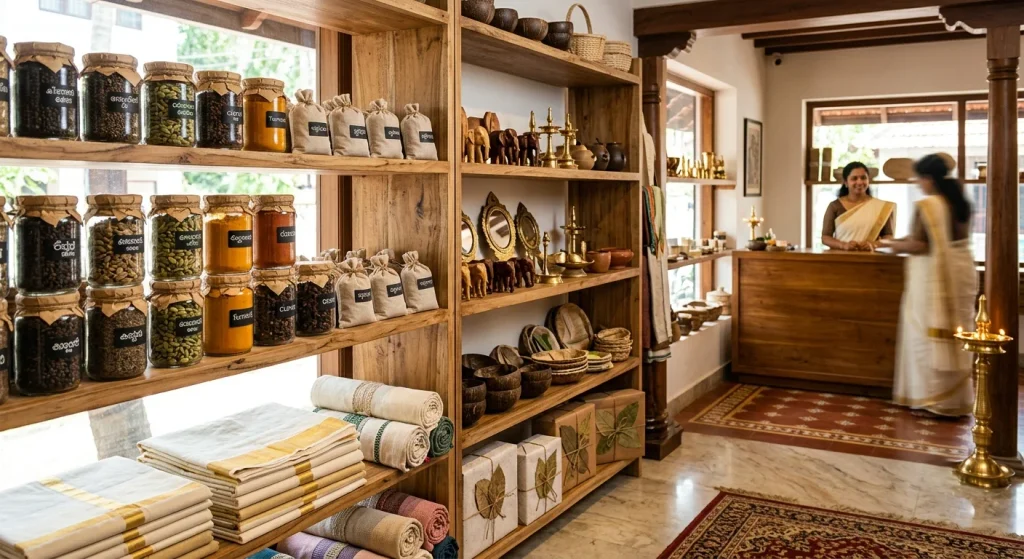
A specialty store can sell pepper, cardamom, turmeric, spice blends, coconut-based products, tea, coffee, and curated Kerala food products. The opportunity becomes stronger when the store provides quality information and attractive packaging rather than simply competing on price. Tourists can purchase small gift packs while online customers can order larger collections. Entrepreneurs can also create their own branded spice mixes after establishing a reliable sourcing and quality-control process.
Skills Required
- Product sourcing
- Retail management
- Packaging
- Inventory control
How to Start
- Select a focused range of products.
- Identify reliable suppliers.
- Develop quality and packaging standards.
- Start with a small physical or online store.
- Add branded products after testing demand.
Tips to Make It Profitable
- Create tourist-friendly gift packs.
- Sell premium and standard variants.
- Build private-label products.
- Target customers outside Kerala.
- Avoid holding excessive inventory of slow-moving products.
22. Thrift and Pre-Owned Fashion Store
- Estimated Investment: ₹75,000–₹3 lakh
- Potential Monthly Profit: ₹30,000–₹1.2 lakh
- Why It Works in Kerala: Online selling reduces the need for a large physical retail space
- Who Should Start This Business: Fashion enthusiasts and entrepreneurs skilled at sourcing and presentation
A curated thrift store can operate primarily through Instagram, a website, or marketplaces. The key difference between a professional thrift business and casual reselling is curation. Products should be selected for condition, style, brand, or uniqueness and presented with accurate photographs and measurements. The business can also specialise in vintage clothing, occasion wear, branded pre-owned products, or affordable fashion.
Skills Required
- Fashion knowledge
- Product photography
- Sourcing
- Online selling
How to Start
- Select a niche.
- Source small batches.
- Photograph and measure every item.
- Establish transparent condition grades.
- Build an online audience.
Tips to Make It Profitable
- Buy in small batches initially.
- Create themed collections.
- Offer bundle discounts.
- Maintain accurate product descriptions.
- Use limited drops to create urgency.
23. Beauty and Personal Care Retail Store
- Estimated Investment: ₹2 lakh–₹7 lakh
- Potential Monthly Profit: ₹40,000–₹1.5 lakh
- Why It Works in Kerala: Personal-care products have repeat-purchase potential
- Who Should Start This Business: Retailers, beauty professionals, and entrepreneurs with strong product knowledge
A specialised beauty store can focus on skincare, haircare, cosmetics, personal-care products, or professional salon supplies. Rather than trying to stock every brand, a smaller store can build a reputation around a particular customer need. For example, it could focus on professional hair products, natural personal care, or curated skincare. Product education can also help differentiate the business from large online marketplaces.
Skills Required
- Product knowledge
- Retail sales
- Inventory management
- Customer service
How to Start
- Choose a product category.
- Identify authorised suppliers.
- Start with fast-moving products.
- Create an online product catalogue.
- Track repeat purchases.
Tips to Make It Profitable
- Prioritise repeat-purchase products.
- Create product bundles.
- Maintain proper stock rotation.
- Avoid unverified or counterfeit products.
- Build loyalty through personalised recommendations.
24. Mobile Accessories and Repair Store
- Estimated Investment: ₹1.5 lakh–₹5 lakh
- Potential Monthly Profit: ₹40,000–₹1.5 lakh
- Why It Works in Kerala: Smartphones create recurring demand for accessories and repairs
- Who Should Start This Business: Technicians, electronics retailers, and entrepreneurs with a reliable repair partner
A mobile store does not have to compete with online marketplaces by stocking hundreds of low-margin products. A local business can combine accessories with repair services, screen protection, data-transfer assistance, device cleaning, and other convenience services. Repairs and services can create higher-margin revenue while accessories generate regular walk-in sales. Location remains important, so the entrepreneur should study local competition and customer footfall before renting a shop.
Skills Required
- Basic electronics knowledge
- Repair skills or technical hiring
- Retail management
- Customer service
How to Start
- Choose a location with relevant footfall.
- Start with fast-moving accessories.
- Partner with a trained technician if needed.
- Create transparent repair pricing.
- Offer basic warranty terms on repairs where appropriate.
Tips to Make It Profitable
- Focus on service revenue, not only accessories.
- Stock products based on local demand.
- Avoid excessive slow-moving inventory.
- Offer screen-protection services.
- Build trust through transparent repair estimates.
25. Eco-Friendly Home Products Store
- Estimated Investment: ₹1 lakh–₹4 lakh
- Potential Monthly Profit: ₹30,000–₹1.2 lakh
- Why It Works in Kerala: The business can combine local retail with online sales and sustainability-focused products
- Who Should Start This Business: Environment-conscious retailers, product curators, and e-commerce entrepreneurs
An eco-friendly store can sell reusable household products, natural cleaning products, sustainable kitchen items, cloth bags, bamboo products, refill products, and locally made alternatives to disposable goods. The business should avoid vague environmental claims and instead explain what makes each product different. A refill or subscription model can also create repeat sales. Online sales can expand the business beyond the immediate neighbourhood.
Skills Required
- Product sourcing
- Retail management
- E-commerce
- Customer education
How to Start
- Choose a narrow product category.
- Source from verified manufacturers or artisans.
- Start with products that have repeat demand.
- Build educational product content.
- Test online sales alongside local retail.
Tips to Make It Profitable
- Focus on useful everyday products.
- Create household starter kits.
- Introduce refill subscriptions.
- Build corporate gifting packages.
- Explain product benefits clearly instead of relying only on “eco-friendly” claims.
Government Support for Starting a Business in Kerala
Kerala has several government programmes that can reduce the financial pressure of starting or expanding a business. However, eligibility varies according to factors such as business activity, investment, location, entrepreneur category, and whether the enterprise is new or existing. Entrepreneurs should therefore verify the current scheme guidelines before making financial decisions.
The Entrepreneur Support Scheme (ESS) provides capital investment assistance for eligible manufacturing MSMEs. The Directorate of Industries and Commerce states that general-category applicants can receive assistance of 15% of eligible capital investment up to ₹30 lakh, while eligible young, women, SC/ST and NRK entrepreneurs can receive 25% up to ₹40 lakh, subject to scheme conditions. Additional assistance can apply to certain priority sectors, districts, and technology-related investments, making it a useful resource for entrepreneurs exploring low-investment business ideas in Kerala.
The One Family One Enterprise (OFOE) scheme is particularly relevant for smaller businesses. It provides interest subvention for eligible new MSMEs in manufacturing, services, and trading on loans up to ₹10 lakh. The scheme can provide support for up to five years, subject to its conditions and applicable interest-subvention limits.
Technology-focused founders can also explore Kerala Startup Mission (KSUM). Its ecosystem includes incubators, innovation centres, technology startups, funding programmes, and sector-specific support. KSUM reports more than 8,000 technology startups and a network of 63 incubators and 550 IEDCs on its ecosystem platform.
How to Choose the Right Business Idea in Kerala?
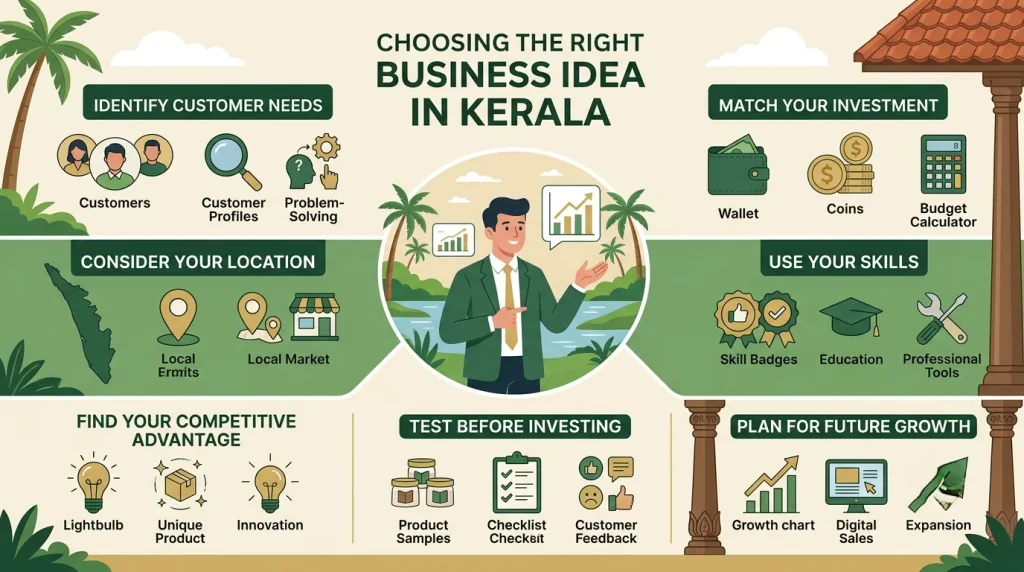
- Identify a Real Customer Need:Start by identifying a problem that people in your target area regularly face and are willing to pay to solve. Look at existing businesses and find gaps in pricing, quality, convenience, availability, or customer service. Avoid choosing an idea only because it appears profitable for someone else, as their location, customer base, experience, and resources may be different from yours.
- Match the Business With Your Investment:Consider how much money you can comfortably invest without creating unnecessary financial pressure. Digital marketing solution, online tutoring, freelance services, and home-based food businesses can usually be tested on a smaller budget. Restaurants, manufacturing units, retail stores, and food-processing businesses generally require more capital for equipment, rent, inventory, staff, and working capital.
- Consider Your Location:Your location can have a major impact on business demand. A business that performs well in Kochi may not have the same potential in a smaller town. Tourism-related businesses can benefit from areas with strong tourist activity, while services such as laundry, home cleaning, catering, and tutoring depend more on nearby households and businesses. Check local competition, customer demand, rent, accessibility, and supplier availability before making a decision.
- Use Your Existing Skills and Experience:Choose a business that matches your existing knowledge whenever possible. Your professional experience can reduce the learning curve and help you provide better service from the beginning. For example, someone with digital marketing experience can start an online marketing service, while an experienced cook may find a catering or packaged-food business easier to manage.
- Find Your Competitive Advantage:Think about what you can offer that existing businesses may not provide. This could be a family recipe, specialised professional skill, strong supplier network, existing customer relationships, access to local resources, or knowledge of a particular customer group. A clear competitive advantage can help you attract customers without competing only on lower prices.
- Test the Business Before Making a Large Investment:Do not invest your entire budget before confirming that customers actually want your product or service. Start with a small test through pre-orders, pilot services, limited product batches, online sales, or a small service area. Pay attention to actual sales, repeat customers, feedback, and profit margins before deciding whether to expand.
- Think About Future Growth:Choose an idea that has potential to grow beyond its initial market. Consider whether you can later add products, serve nearby cities, sell online, introduce subscriptions, or target customers outside Kerala. For example, a local food business could eventually sell packaged products online, while a local creative service could work with clients across India.
- Check Government Support and Business Requirements:Before finalising your idea, check whether you qualify for relevant MSME loans, subsidies, interest support, or startup programmes available in Kerala. You should also identify the licences, registrations, approvals, and industry-specific requirements applicable to the business. Government support can reduce the financial burden, but it should be an additional benefit rather than the main reason for selecting a business idea.
Tips for Making a Business Successful in Kerala
- Start with a specific customer:Avoid trying to sell to everyone. A home catering service could focus on office workers, while a travel business could specialise in foreign tourists or family vacations. A narrower audience makes your pricing, marketing, product development, and customer service much easier to manage.
- Use Kerala’s local identity strategically:Products linked to Kerala’s food, culture, crafts, spices, clothing, and tourism can have a strong point of difference. But simply adding the word “Kerala” to a product does not make it unique. The product should offer genuine regional value through ingredients, craftsmanship, storytelling, experience, or sourcing.
- Build an online sales channel:Even businesses that operate offline should maintain a digital presence. Google Business Profile, Instagram, WhatsApp, a website, online reviews, and digital payments can help customers discover and interact with the business. For tourism, food, retail, and creative businesses, good photographs and customer reviews can have a direct impact on purchase decisions.
- Plan for seasonality:Tourism, festivals, weddings, agricultural products, and certain food categories can experience seasonal changes. Do not calculate profitability using only your best month. Build a cash reserve and identify products or services that can generate revenue during slower periods.
- Control costs before chasing growth:Revenue growth does not automatically mean higher profits. Track food wastage, inventory, delivery costs, advertising expenditure, rent, staff costs, payment fees, and returns. A small business with controlled costs can be healthier than a larger business that generates high sales but has poor margins.
- Build repeat customers:Repeat customers are especially valuable for food, retail, personal care, laundry, digital services, and subscription businesses. Instead of spending the entire marketing budget on acquiring new customers, create reasons for existing customers to return through subscriptions, loyalty programmes, useful communication, personalised offers, and consistent service.
- Use government support carefully:Government subsidies and loans can reduce the cost of starting a business, but they should not be the only reason for selecting an idea. First establish that customers want the product or service. Then check whether you qualify for relevant government support and whether the scheme’s current conditions fit your business model.
Future of Business Opportunities in Kerala
The future of business ideas in Kerala is likely to be shaped by the combination of traditional strengths and newer technology-led opportunities. Tourism is one clear example. Kerala’s 2025 tourist visits reached 2.58 crore, with domestic visits growing substantially compared with both 2024 and the pre-pandemic period. This creates opportunities around accommodation, local experiences, food, transportation, wellness, souvenirs, photography, and tourism technology.
Technology is another major growth area. Kerala Startup Mission’s current ecosystem spans IT and SaaS, food and agritech, healthtech, consumer products, education, mobility, climate and energy, and fintech. This means future entrepreneurs do not necessarily have to choose between a “traditional Kerala business” and a technology business. They can combine the two.
For example, a traditional food producer can build an e-commerce enterprise, a homestay can sell curated local experiences, a craft business can reach international buyers online, and a small retailer can use digital inventory and customer-management systems. This combination of local expertise and digital distribution can create more scalable business models.
Conclusion
The best Business Ideas in Kerala are not limited to tourism, agriculture, or traditional manufacturing. The state offers opportunities across food, digital services, creative work, local services, retail, tourism, and technology. Entrepreneurs can choose a model based on their available investment, skills, location, and long-term goals.
The state’s entrepreneurial activity also shows that there is strong momentum for new businesses. Kerala’s Year of Enterprises programme had recorded more than 3.49 lakh enterprises and over 7.42 lakh employment opportunities by March 2025. At the same time, tourism reached a record 2.58 crore visits in 2025, while the technology startup ecosystem continues to expand.
For a first-time entrepreneur, the safest approach is to start with a clearly defined customer problem, test the idea at a manageable scale, track the numbers, and expand only after finding consistent demand. Whether you choose a home-based food business, digital agency, tourism service, creative venture, or specialised retail store, Kerala provides a strong base for businesses that combine local understanding with modern ways of reaching customers.
FAQs
1. Which Business Is Most Profitable In Kerala?
There is no single business that is guaranteed to be the most profitable. Digital services, tourism experiences, specialised food businesses, software services, and premium retail can offer attractive margins, but profitability depends on pricing, operating costs, location, competition, and customer demand. A business that matches your skills and has repeat customers can be more profitable than a supposedly high-margin business that you do not understand well.
2. What Are The Best Low-Investment Business Ideas In Kerala?
Digital marketing, online tutoring, freelance creative services, home-based catering, packaged snacks, travel planning, and specialised online retail can be started with comparatively low investment. The exact amount depends on whether you already have equipment, workspace, skills, and supplier relationships.
3. Is Kerala A Good Place To Start A Small Business?
Yes. Kerala has a large consumer market, strong tourism activity, a developed service sector, and government programmes supporting MSMEs and entrepreneurs. The state also recorded more than 3.49 lakh enterprises under its Year of Enterprises initiative by March 2025.
4. What Government Support Is Available For New Businesses In Kerala?
Depending on the business and eligibility, entrepreneurs can explore the Entrepreneur Support Scheme, One Family One Enterprise, Kerala Entrepreneurs Loan Scheme, Margin Money Grant to Nano Units, startup support through Kerala Startup Mission, and other programmes. K-SWIFT can also help entrepreneurs identify applicable approvals and clearances.
5. Do I Need A Large Investment To Start A Business In Kerala?
No. Some service and home-based businesses can be tested with a relatively small budget, while manufacturing, restaurants, retail stores, and processing units usually need more capital. The better approach is to calculate the initial setup cost, monthly operating expenses, working capital requirement, and expected break-even period before investing.