

Starting a business from home can be a practical way for housewives to earn an income while continuing to manage their household responsibilities. A low investment business does not always require a shop, a large team, or a high starting budget. In many cases, you can begin with a skill you already have and serve a small group of customers before expanding.
Digital access has also made it easier to reach customers beyond your neighbourhood. India had nearly 290–300 million online shoppers in 2025, and around 65% of new shoppers came from Tier-2 and smaller cities. This creates opportunities for housewives who want to sell clothing, handmade products, food items, beauty products, or services online instead of depending only on local customers.
However, the right business is not simply the one that promises the highest income. It should fit your skills, available time, investment capacity, and access to customers. The following business ideas for housewives cover food, digital work, creative skills, services, and retail so that you can compare different options before making a decision.
Tips For Housewives Starting Their First Business
Starting your first business can be exciting, but it can also feel confusing when you have to manage everything yourself. You may have to think about customers, pricing, suppliers, marketing, payments, and daily operations at the same time. The easiest way to avoid feeling overwhelmed is to start small and solve one problem at a time.
Start With a Skill You Already Have
Your existing skills can reduce both your learning time and starting cost. If you are already good at cooking, baking, stitching, teaching, designing, writing, or making handmade products, consider turning that skill into a paid service or product.
This does not mean you should never learn something new. It simply means that your first business can be easier to manage if you begin with something familiar. Once you understand customers and basic business operations, you can add new products or services.
Do Not Invest Your Entire Budget at Once
One common mistake is buying too much stock or equipment before checking whether people actually want the product. Instead, create a small test version of the business.
For example, someone starting a home bakery does not need to offer 20 types of cakes from day one. Five or six products can be enough to understand which items customers actually order. The same approach works for clothing, handmade products, beauty services, and food businesses.
Find Your First Customers Before Scaling
Your first customers do not always have to come from Instagram or paid advertising. Friends, neighbours, relatives, local WhatsApp groups, parent communities, and nearby businesses can help you get your first few orders.
These early customers are important because they can give you useful feedback. They can tell you whether your pricing feels reasonable, whether your packaging works, and what they would like you to offer next.
Keep a Record of Every Expense
A business can have good sales and still make very little profit. This happens when the owner forgets to include packaging, delivery, electricity, raw materials, platform charges, or other small expenses.
Maintain a simple record of sales and expenses from the beginning. Even a spreadsheet or notebook can help you understand how much you are actually earning.
Build Around Your Available Time
A business should fit your routine instead of making your routine impossible to manage. If you only have two or three hours available each day, an online service, tutoring, reselling, or customised product business may be easier than a business that requires all-day operations.
Also consider your busiest days. A tiffin service, for example, requires regular preparation and delivery, while a handmade gift business may allow you to work more flexibly around orders.
Use Digital Payments and Simple Online Tools
You do not need expensive software when you are starting. A smartphone, WhatsApp Business, Google Sheets, Canva, UPI payments, and social media can handle many basic business activities.
Digital payments are especially useful because customers can pay quickly without requiring cash. India’s digital payment ecosystem has grown substantially, with UPI accounting for 81% of retail payment transaction volume in FY2024-25, according to IBEF’s compilation of industry and government data.
Check Business-Specific Requirements
Some home businesses have additional legal or safety requirements. Food businesses, for example, may need applicable FSSAI registration or licensing. FSSAI’s licensing framework specifically includes home-based food businesses among the categories covered by food registration requirements. Always check the latest rules that apply to your activity before accepting commercial orders.
List Of 20 Best Business Ideas For Housewives
There is no single business that works for every housewife. Some people may prefer selling products, while others may want to earn through their skills. To make the options easier to compare, the following business ideas for housewives are divided into five categories.
A. Food & Catering Business Ideas for Housewives
1. Home Tiffin Service
Investment Required: ₹10,000–₹30,000
Monthly Earning: ₹20,000–₹60,000+
Time Required: 4–7 hours per day
Best For: Housewives who enjoy cooking and can maintain a regular schedule
Difficulty: Medium
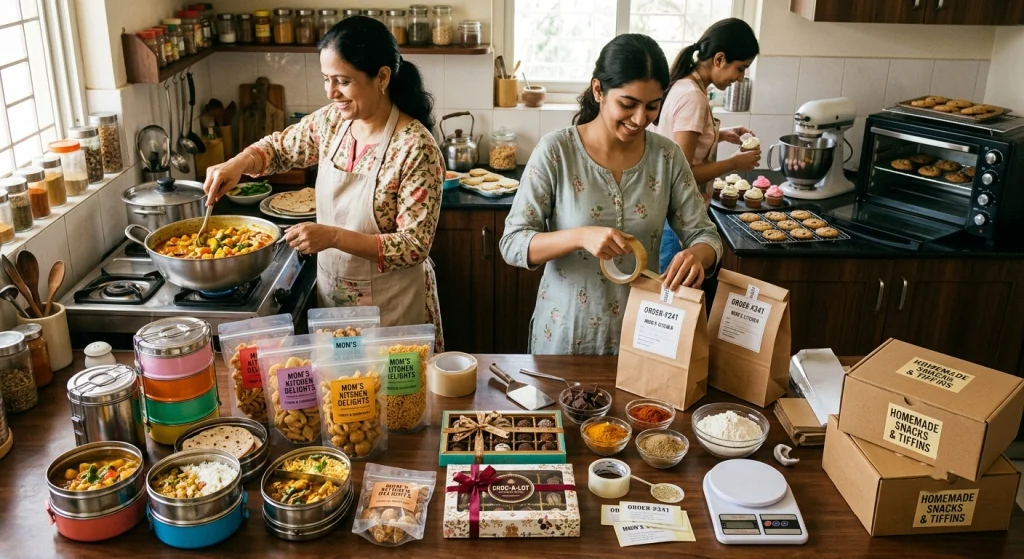
A home tiffin service involves preparing and delivering home-cooked meals to students, office employees, bachelors, elderly customers, or families. The main advantage of this business is the possibility of repeat orders. Instead of finding a new customer every day, you can create weekly or monthly meal plans for regular customers.
You can begin with a small menu rather than trying to prepare every type of Indian food. For example, you could offer a simple lunch combination with dal, vegetables, roti, rice, and salad. Once you understand what your customers prefer, you can add regional meals, breakfast options, healthy meals, or special weekend menus.
Tools Needed:
- Cooking utensils and kitchen equipment
- Food-grade containers
- Packaging materials
- Digital weighing scale
- WhatsApp Business
- UPI payment facility
- Basic order-tracking sheet
How to Start:
- Identify customers within a manageable delivery area.
- Create a simple weekly menu.
- Calculate the complete cost of each meal.
- Start with around 5–10 customers.
- Offer weekly or monthly meal plans.
- Ask customers for feedback on taste, quantity, and packaging.
- Check the applicable FSSAI requirements before starting commercial food sales.
2. Home Bakery
Investment Required: ₹15,000–₹50,000
Monthly Earning: ₹20,000–₹80,000+
Time Required: 3–6 hours per day
Best For: Housewives who enjoy baking and decorating
Difficulty: Medium
A home bakery allows you to sell cakes, brownies, cookies, cupcakes, dessert boxes, and customised baked products without renting a commercial bakery. You can focus on occasions such as birthdays, anniversaries, baby showers, festivals, and small celebrations.
Customisation can help a home bakery stand out. Instead of competing only on price, you can offer personalised cakes, themed cupcakes, photo cakes, dessert hampers, or smaller celebration boxes. This also gives you opportunities to charge more for custom designs and urgent orders.
Tools Needed:
- Oven
- Mixer
- Baking moulds and trays
- Measuring equipment
- Cake decorating tools
- Ingredients
- Packaging boxes
- Product photography setup
How to Start:
- Select five to six products for your initial menu.
- Practise and standardise each recipe.
- Calculate ingredient, packaging, electricity, and delivery costs.
- Create sample products for your portfolio.
- Photograph your products in natural light.
- Create an Instagram and WhatsApp Business catalogue.
- Start with local customers before expanding your delivery area.
3. Homemade Pickles, Masalas and Snacks
Investment Required: ₹10,000–₹30,000
Monthly Earning: ₹15,000–₹50,000+
Time Required: 2–5 hours per day
Best For: Housewives with traditional recipes or food-making skills
Difficulty: Easy to Medium
Homemade pickles, masalas, chutneys, papad, namkeen, sweets, and other traditional food products can be turned into a small home-based brand. This model can work particularly well if you have a recipe that customers already appreciate among friends and family.
The important part is consistency. Customers who buy a homemade food product expect the taste, quantity, and quality to remain similar every time. Standardise your recipe and packaging before increasing your order volume. If you are selling food commercially, also check the food-safety requirements that apply to your product and scale of operations.
Tools Needed:
- Kitchen equipment
- Storage containers
- Digital weighing scale
- Food-grade jars or packets
- Labels
- Packaging materials
- WhatsApp Business
How to Start:
- Choose two or three products.
- Standardise the recipes.
- Calculate the cost per jar or packet.
- Create simple but clean packaging.
- Give samples to a small group of potential customers.
- Collect feedback about taste and pricing.
- Build repeat sales before adding more products.
4. Homemade Chocolate and Dessert Business
Investment Required: ₹10,000–₹30,000
Monthly Earning: ₹15,000–₹50,000+
Time Required: 2–5 hours per day
Best For: Housewives interested in food, gifting, and creative packaging
Difficulty: Medium
A homemade chocolate business can focus on gift boxes, customised chocolates, dessert jars, chocolate bouquets, festive hampers, and small celebration packs. Unlike a traditional sweet shop, a home-based business can compete through customisation and personal service.
Seasonality can also create opportunities. Demand can increase around festivals, Valentine’s Day, Raksha Bandhan, birthdays, weddings, and corporate gifting periods. You can prepare sample boxes before these occasions and promote them through WhatsApp and Instagram.
Tools Needed:
- Chocolate moulds
- Chocolate and fillings
- Melting equipment
- Refrigerator
- Packaging boxes
- Ribbons and labels
- Smartphone for product photography
How to Start:
- Learn basic chocolate-making techniques.
- Create four or five sample products.
- Develop simple price-based gift boxes.
- Calculate product and packaging costs.
- Photograph each product clearly.
- Promote seasonal hampers in advance.
- Collect customer photographs and reviews for future marketing.
B. Online & Digital Business Ideas for Housewives

5. Online Tutoring
Investment Required: ₹2,000–₹10,000
Monthly Earning: ₹20,000–₹60,000+
Time Required: 2–5 hours per day
Best For: Housewives with teaching experience or strong subject knowledge
Difficulty: Easy to Medium
Online tutoring is one of the more flexible business options because you can decide your subjects, class timings, batch sizes, and fees. You can teach school subjects, spoken English, regional languages, mathematics, music, computer skills, or other subjects you understand well.
You can begin with individual classes and later move to small groups. Group classes can improve your earning potential because you teach several students during the same time slot. However, keeping the batch size manageable is important so that students still receive enough attention.
Tools Needed:
- Laptop or smartphone
- Stable internet
- Headphones
- Google Meet or Zoom
- Digital teaching materials
- Whiteboard or writing tablet
How to Start:
- Choose the subject and student age group.
- Decide whether you want individual or group classes.
- Prepare sample lessons.
- Set monthly or per-class fees.
- Start with students from your personal network.
- Ask parents and students for referrals.
- Build separate batches as demand grows.
6. Content Writing
Investment Required: ₹2,000–₹10,000
Monthly Earning: ₹20,000–₹80,000+
Time Required: 3–6 hours per day
Best For: Housewives who enjoy writing and research
Difficulty: Medium
Content writing can include blog articles, website pages, product descriptions, social media content, newsletters, and marketing material. It can be especially useful for someone who wants to work with businesses without having to maintain physical inventory.
A specialised writing niche can make it easier to find clients. For example, instead of presenting yourself simply as a content writer, you could focus on areas such as education, fashion, food, technology, healthcare, finance, or small-business content.
Tools Needed:
- Laptop
- Internet connection
- Google Docs
- Grammar and editing tools
- Portfolio
- Basic keyword research tools if offering SEO writing
How to Start:
- Select one or two areas you understand.
- Create three to five writing samples.
- Build a simple online portfolio.
- Approach small businesses and agencies.
- Create a clear pricing structure.
- Start with manageable projects.
- Increase your rates after building experience and testimonials.
7. Social Media Management
Investment Required: ₹3,000–₹15,000
Monthly Earning: ₹20,000–₹80,000+
Time Required: 2–5 hours per day
Best For: Housewives interested in Instagram, content, and marketing
Difficulty: Medium
Small businesses often need help managing their social media accounts but may not have enough work to hire a full-time employee. This creates an opportunity for freelance social media managers.
Your work can include creating content calendars, writing captions, designing basic posts, scheduling content, replying to comments, and preparing simple performance reports. You can specialise in one type of business, such as salons, restaurants, boutiques, coaches, clinics, or local retailers.
Tools Needed:
- Smartphone or laptop
- Canva
- Meta Business Suite
- Google Sheets
- Content calendar
- Social media platforms
How to Start:
- Learn the basics of Instagram and Facebook marketing.
- Select a business category.
- Create five to ten sample posts.
- Prepare one simple monthly service package.
- Approach local businesses.
- Offer a small trial package if appropriate.
- Build case studies from your first clients.
8. Virtual Assistant Services
Investment Required: ₹2,000–₹10,000
Monthly Earning: ₹20,000–₹70,000+
Time Required: 2–6 hours per day
Best For: Housewives who are organised and comfortable using digital tools
Difficulty: Medium
A virtual assistant provides administrative support remotely. Tasks can include managing emails, maintaining spreadsheets, scheduling appointments, doing online research, updating documents, handling basic customer communication, or organising files.
This can be a good option for someone who wants flexible work but does not necessarily want to become a content creator or sell physical products. You can also specialise in a particular service instead of offering everything.
Tools Needed:
- Laptop
- Internet connection
- Google Workspace
- Zoom or Google Meet
- Trello or Notion
- Spreadsheet software
- Communication tools
How to Start:
- List the administrative tasks you can handle.
- Choose two or three core services.
- Create a simple service profile.
- Prepare sample work where possible.
- Approach entrepreneurs and small businesses.
- Start with one or two clients.
- Create fixed packages once you understand the workload.
C. Creative & Skill-Based Business Ideas for Housewives
9. Tailoring and Alteration Services
Investment Required: ₹15,000–₹50,000
Monthly Earning: ₹20,000–₹60,000+
Time Required: 3–6 hours per day
Best For: Housewives with stitching and tailoring skills
Difficulty: Medium
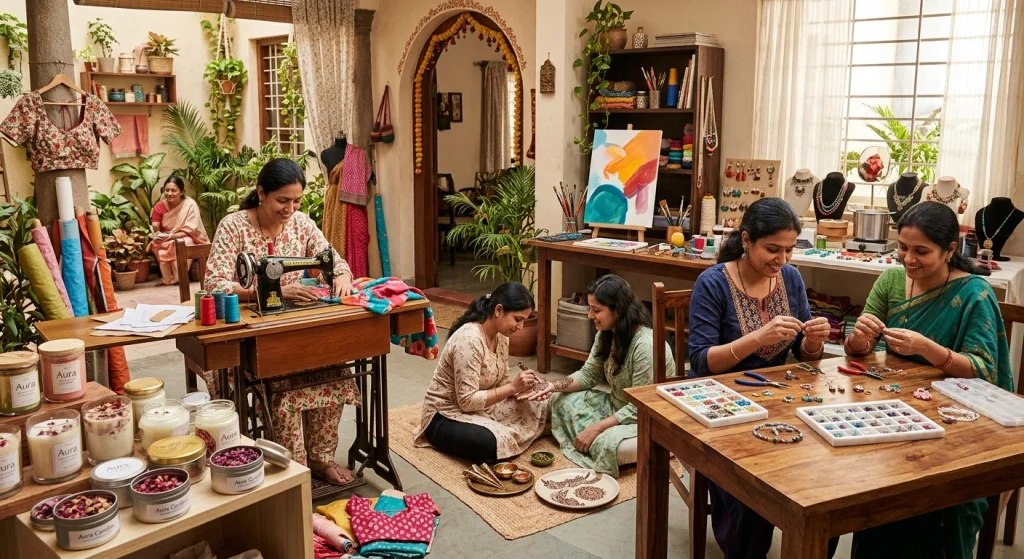
Tailoring can include alterations, blouse stitching, suit stitching, children’s clothing, custom outfits, and minor repairs. You do not need to start by making complete outfits. Alteration work can be an easier entry point because customers in your local area may regularly need fitting adjustments.
As your customer base grows, you can introduce customised designs and higher-value stitching services. You can also create a niche around a particular product, such as blouse stitching, children’s ethnic wear, or customised women’s clothing.
Tools Needed:
- Sewing machine
- Measuring tape
- Scissors
- Threads
- Needles
- Iron
- Basic tailoring equipment
How to Start:
- Start with alterations you can complete confidently.
- Tell neighbours and local contacts about your service.
- Create a small portfolio.
- Offer customised stitching after gaining regular customers.
- Maintain customer measurements carefully.
- Introduce pickup and delivery if demand justifies it.
10. Handmade Candle Business
Investment Required: ₹10,000–₹40,000
Monthly Earning: ₹15,000–₹60,000+
Time Required: 2–5 hours per day
Best For: Housewives interested in handmade products and home décor
Difficulty: Medium
Handmade candles can be sold as home décor, gifts, wedding favours, festive products, or customised hampers. The product itself is relatively simple, but presentation can strongly influence customer perception.
Instead of creating a very large product range, begin with a few formats and experiment with fragrances, packaging, and gifting combinations. You can also work with other small businesses to create combined gift boxes.
Tools Needed:
- Wax
- Candle moulds
- Wicks
- Fragrance oils
- Melting equipment
- Containers
- Labels and packaging
How to Start:
- Learn the basic candle-making process.
- Test different waxes and fragrances.
- Create four or five initial designs.
- Calculate the cost of every candle.
- Test packaging before selling.
- Photograph the finished products.
- Promote gift sets around festivals and special occasions.
11. Mehendi Services
Investment Required: ₹2,000–₹10,000
Monthly Earning: ₹15,000–₹70,000+
Time Required: Flexible
Best For: Housewives who are skilled at mehendi
Difficulty: Easy to Medium
A mehendi service requires relatively little equipment and can be operated from home or at the customer’s location. You can take bookings for festivals, parties, weddings, family functions, and other occasions.
Bridal mehendi can become a higher-value service once you have developed strong skills and a portfolio. However, it usually requires more time per customer, so pricing should reflect the complexity and duration of the work.
Tools Needed:
- Mehendi cones
- Design references
- Practice sheets
- Sanitisation supplies
- Photography setup
- Instagram or WhatsApp portfolio
How to Start:
- Practise different styles regularly.
- Create a portfolio of your best work.
- Start with friends and family.
- Offer festive booking packages.
- Ask customers to share photographs and reviews.
- Connect with local salons, photographers, and wedding vendors.
12. Handmade Jewellery Business
Investment Required: ₹10,000–₹40,000
Monthly Earning: ₹15,000–₹60,000+
Time Required: 2–5 hours per day
Best For: Housewives interested in fashion and crafting
Difficulty: Medium
A handicraft business can include earrings, bracelets, necklaces, beaded accessories, customised pieces, and fashion jewellery. You can sell through social media, WhatsApp, exhibitions, or online marketplaces.
The key is to develop a clear style instead of making completely unrelated products. For example, you could focus on minimal jewellery, festive jewellery, beaded accessories, or affordable gifting pieces.
Tools Needed:
- Beads and jewellery components
- Pliers
- Jewellery wire
- Clasps and hooks
- Packaging
- Product photography setup
- WhatsApp Business and Instagram
How to Start:
- Choose one jewellery style.
- Create a small collection.
- Calculate material and packaging costs.
- Take clear photographs.
- Create a digital catalogue.
- Start selling through your network.
- Add customised options after understanding customer preferences.
D. Service-Based Business Ideas for Housewives
13. Home Salon and Beauty Services
Investment Required: ₹30,000–₹1,00,000
Monthly Earning: ₹25,000–₹1,00,000+
Time Required: 3–7 hours per day
Best For: Housewives trained in beauty and personal-care services
Difficulty: Medium to High
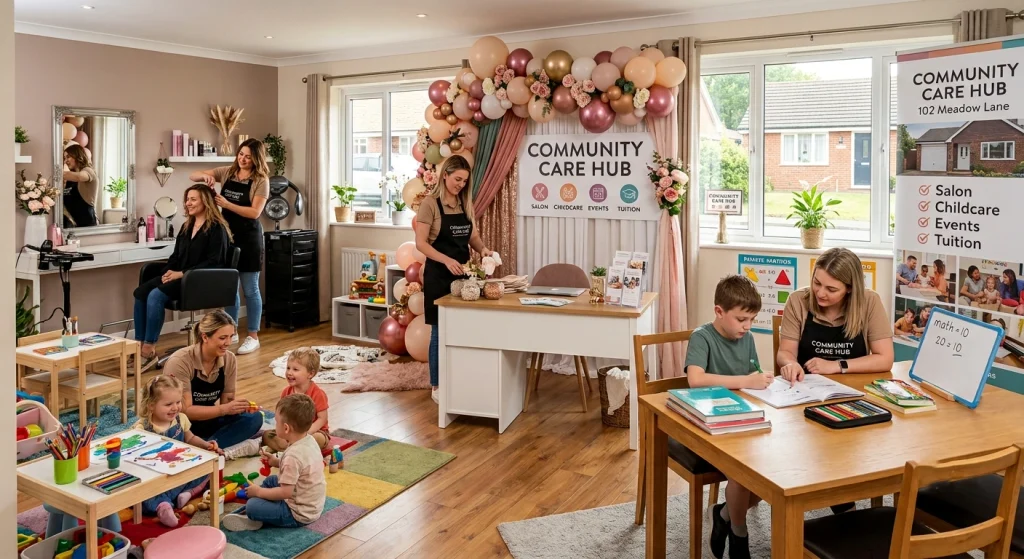
A home salon can offer services such as threading, waxing, facials, manicures, pedicures, hair styling, and basic makeup. Starting from home can reduce the cost of commercial rent, allowing you to invest more in equipment, hygiene, and customer experience.
India’s beauty and personal-care market is also expanding. IBEF reports that the Indian beauty and personal-care market is expected to reach around ₹2.6 lakh crore by 2027 and is growing at around 10% annually. This does not guarantee earnings for an individual home salon, but it indicates a growing consumer market around beauty and personal care.
Tools Needed:
- Salon chair
- Beauty equipment
- Facial products
- Waxing equipment
- Towels
- Hygiene and sanitisation supplies
- Storage units
How to Start:
- Decide which services you are qualified to provide.
- Set up a clean and private work area.
- Create a clear service menu.
- Research local pricing.
- Start with friends and nearby customers.
- Offer packages for repeat customers.
- Maintain strong hygiene standards.
14. Home Daycare
Investment Required: ₹30,000–₹1,00,000+
Monthly Earning: ₹25,000–₹80,000+
Time Required: 6–9 hours per day
Best For: Housewives experienced with children
Difficulty: High
A home daycare can serve working parents who need childcare during working hours. It can be suitable for someone who enjoys working with children and has enough space to create a safe and organised environment.
This business requires more responsibility than many other home-based options. Safety, hygiene, emergency planning, supervision, food arrangements, and local requirements should all be considered before accepting children. You should also check applicable local regulations and insurance or licensing requirements where relevant.
Tools Needed:
- Child-safe furniture
- Toys and learning materials
- First-aid supplies
- Safety equipment
- Clean play area
- Sleeping arrangements where required
- Parent communication system
How to Start:
- Research the applicable local requirements.
- Prepare a safe and child-friendly area.
- Decide the age group you will accept.
- Set working hours and fees.
- Create clear parent policies.
- Start with a small number of children.
- Maintain regular communication with parents.
15. Event Decoration Services
Investment Required: ₹20,000–₹80,000
Monthly Earning: ₹25,000–₹1,00,000+
Time Required: Flexible, with longer hours during events
Best For: Housewives with creative and organisational skills
Difficulty: Medium to High
Event decoration can cover birthdays, anniversaries, baby showers, engagement functions, small weddings, festivals, and family celebrations. You do not have to purchase every decoration item at the beginning. Some larger items can be rented when a customer places an order.
A strong portfolio is more important than having a huge inventory. Customers want to see what the final setup looks like before booking you, so photograph each completed event and gradually build a catalogue of packages.
Tools Needed:
- Balloons
- Backdrops
- Decorative props
- Artificial flowers
- Lights
- Ribbons and stands
- Transport arrangement
How to Start:
- Choose the types of events you want to handle.
- Create three or four packages.
- Build sample setups.
- Photograph each setup professionally.
- Promote your work locally.
- Partner with photographers and event planners.
- Rent expensive equipment until demand becomes consistent.
16. Home Tuition Centre
Investment Required: ₹5,000–₹20,000
Monthly Earning: ₹20,000–₹70,000+
Time Required: 2–5 hours per day
Best For: Housewives with teaching experience
Difficulty: Easy to Medium
A home tuition centre is different from online tutoring because students attend classes at your home. This can be useful in neighbourhoods where parents prefer face-to-face classes for younger children.
Instead of teaching one student at a time, you can create small batches based on class level or subject. This allows you to teach several students during the same period while keeping the group small enough for individual attention.
Tools Needed:
- Whiteboard
- Chairs and desks
- Textbooks
- Worksheets
- Stationery
- Printer
- Study materials
How to Start:
- Select the classes and subjects you will teach.
- Decide the maximum batch size.
- Set monthly fees.
- Create a simple timetable.
- Inform parents in your locality.
- Start with one or two batches.
- Use parent referrals to increase enrolment.
E. Reselling & Retail Business Ideas for Housewives

17. Clothing Reselling
Investment Required: ₹5,000–₹30,000
Monthly Earning: ₹15,000–₹70,000+
Time Required: 2–5 hours per day
Best For: Housewives interested in fashion and sales
Difficulty: Easy to Medium
Clothing is one of the more flexible reselling categories because you can specialise in products that match the preferences of your target customers. You could focus on sarees, kurtis, ethnic wear, children’s clothes, nightwear, or affordable fashion.
You do not necessarily need a large physical inventory. You can test products through catalogues, samples, pre-orders, or small quantities before investing heavily. The important part is working with reliable suppliers and being transparent about sizes, material, delivery time, and return conditions.
Tools Needed:
- Smartphone
- WhatsApp Business
- Product catalogue
- Packaging materials
- Supplier contacts
- Order-tracking sheet
How to Start:
- Select one clothing category.
- Find reliable suppliers.
- Compare product quality and pricing.
- Start with limited inventory.
- Photograph or catalogue products clearly.
- Promote products through WhatsApp and Instagram.
- Track which designs receive the most enquiries and orders.
18. Beauty Product Reselling
Investment Required: ₹5,000–₹30,000
Monthly Earning: ₹15,000–₹60,000+
Time Required: 2–4 hours per day
Best For: Housewives interested in beauty and personal care
Difficulty: Easy to Medium
Beauty-product reselling can include skincare, hair-care products, cosmetics, and personal-care items. The market is becoming increasingly attractive as consumers discover and purchase beauty products online, but trust is especially important in this category.
Avoid sourcing products from unknown suppliers simply because they offer very low prices. Customers expect genuine products, clear expiry information, and proper packaging. Working with authorised or reliable suppliers can help protect your reputation.
Tools Needed:
- Smartphone
- Product catalogue
- WhatsApp Business
- Order-tracking sheet
- Packaging supplies
How to Start:
- Select a specific beauty category.
- Identify legitimate suppliers.
- Research the products you plan to sell.
- Create a simple product catalogue.
- Share useful product information with customers.
- Maintain records of orders and customer preferences.
- Focus on repeat customers rather than only one-time sales.
19. Home Décor Reselling
Investment Required: ₹10,000–₹40,000
Monthly Earning: ₹15,000–₹60,000+
Time Required: 2–5 hours per day
Best For: Housewives interested in interiors and home products
Difficulty: Medium
Home décor reselling can include wall décor, lamps, cushions, organisers, artificial plants, decorative pieces, mirrors, and other household products. The category works well for visual marketing because customers often discover décor products through photographs and short videos.
You can reduce inventory risk by starting with a small catalogue and ordering larger quantities only for products that sell consistently. Another approach is to use supplier-based fulfilment where possible, but you should understand the supplier’s delivery and return policies before making such promises to customers.
Tools Needed:
- Smartphone
- Product catalogue
- WhatsApp Business
- Packaging supplies
- Supplier network
How to Start:
- Choose a specific décor niche.
- Find two or three reliable suppliers.
- Start with a limited product range.
- Create attractive product photographs.
- Promote products through social media.
- Track enquiries, sales, and returns.
- Expand the range based on actual customer demand.
20. Customised Gift Hamper Business
Investment Required: ₹10,000–₹40,000
Monthly Earning: ₹20,000–₹70,000+
Time Required: 2–6 hours per day
Best For: Housewives who enjoy packaging, gifting, and creative work
Difficulty: Medium
A customised gift hamper business can combine products from different categories into one personalised package. You can create hampers for birthdays, weddings, anniversaries, baby showers, festivals, employee gifts, and corporate occasions.
The advantage of this model is that you do not need to manufacture every product yourself. You can source chocolates, candles, stationery, beauty products, dry fruits, mugs, accessories, or other products and focus on selection, personalisation, packaging, and presentation.
Tools Needed:
- Gift boxes and baskets
- Ribbons
- Wrapping paper
- Decorative materials
- Labels and tags
- Printing supplies
- Smartphone for photography
How to Start:
- Select three to five hamper themes.
- Find suppliers for the products inside each hamper.
- Create sample hampers.
- Calculate product, packaging, labour, and delivery costs.
- Photograph each hamper.
- Promote seasonal hampers before major occasions.
- Offer personalised notes and packaging as an additional service.
How To Choose The Right Business Idea For You
Choosing from so many business ideas for housewives can be difficult. Instead of selecting an idea simply because someone else is earning from it, compare it with your own situation.
Consider Your Existing Skills
Start by listing the things you can already do well. If you enjoy teaching, tutoring may be easier than learning a completely new skill. If you are good at cooking, a food business may be a natural starting point. If you enjoy social media, digital services may suit you better.
Your existing skill does not have to be professional. Even a hobby can become a business if there is a customer willing to pay for it.
Consider Your Available Investment
Your budget should influence the type of franchise business you choose. Service businesses generally require less inventory, while product businesses may need money for materials, packaging, storage, and delivery.
Do not borrow a large amount simply because a business looks profitable online. First test whether you can generate sales with a smaller investment.
Consider How Much Time You Have
Think about your actual availability rather than your ideal availability. If household responsibilities mean that your schedule changes frequently, a flexible business such as content writing, reselling, handmade products, or virtual assistance may be easier.
If you have a fixed block of time every day, tutoring or a tiffin service can also work well because you can build a predictable routine.
Consider Whether You Want Local or Online Customers
A wholesale business can be easier to start because customers are physically close. Tiffin services, tailoring, beauty services, tuition, and event decoration can benefit from local demand.
Online businesses give you access to a much larger market but also create more competition. You may need stronger product presentation, customer service, packaging, and digital marketing.
Consider Repeat Purchase Potential
Some businesses naturally encourage repeat purchases. Tiffin services, beauty services, tutoring, food products, and certain retail products can bring customers back regularly.
Other businesses may depend more on occasional purchases. Gift hampers and event decoration are examples. They can still be profitable, but you may need a stronger marketing strategy to maintain a steady flow of orders.
Use This Simple Comparison
| Business Type | Typical Starting Investment | Flexibility | Repeat Customer Potential |
| Online tutoring | ₹2,000–₹10,000 | High | High |
| Content writing | ₹2,000–₹10,000 | High | High |
| Tiffin service | ₹10,000–₹30,000 | Medium | Very High |
| Tailoring | ₹15,000–₹50,000 | Medium | High |
| Home bakery | ₹15,000–₹50,000 | Medium | Medium to High |
| Reselling | ₹5,000–₹30,000 | High | Medium to High |
| Home salon | ₹30,000–₹1,00,000 | Medium | Very High |
| Event decoration | ₹20,000–₹80,000 | Medium | Medium |
These figures are indicative rather than guaranteed. Actual costs and earnings will depend on your city, customer base, pricing, skill level, operating costs, and number of orders.
How To Start Your Home-Based Business — Step-By-Step Guide
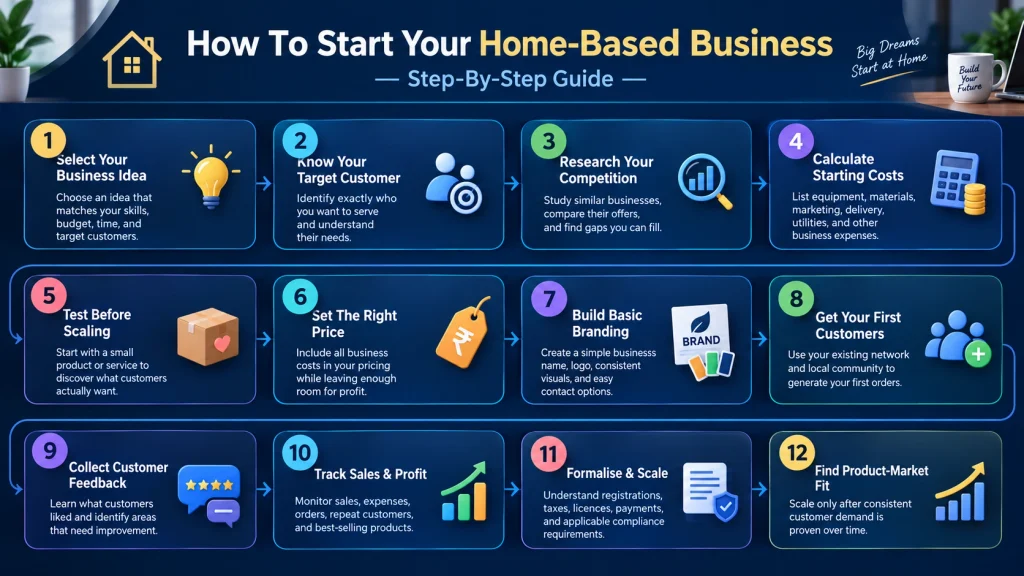
Starting a business becomes easier when you break it into smaller tasks. You do not need to build a perfect brand before your first sale. Your first goal should be to prove that customers are willing to pay for what you offer.
Step 1: Select One Business Idea
Choose one business based on your skills, budget, time, and target customers. Avoid starting several unrelated businesses together because this can make it difficult to understand what is actually working.
Write down why you think customers will buy from you. This simple exercise can help you identify whether you have a clear business idea or only an interesting hobby.
Step 2: Identify Your Target Customer
Do not try to sell to everyone. Define the type of customer you want to serve.
For example, a tiffin service could target office employees living near your home. A tailoring business could focus on women looking for blouse alterations. An online tutor could specialise in students from a particular class level.
The more clearly you understand your customer, the easier it becomes to decide what to sell and how much to charge.
Step 3: Research Your Competition
Look at other businesses offering similar products or services in your area. Compare their pricing, packaging, product range, reviews, delivery options, and social media presence.
Do not copy them. Instead, identify a gap. Maybe customers want faster delivery, better customisation, smaller quantities, clearer pricing, or more personalised service.
Step 4: Calculate Your Starting Cost
Create a list of everything you need before taking your first order. Include equipment, raw materials, packaging, transportation, marketing, internet, electricity, and any applicable registration or compliance costs.
Then decide how much of your personal savings you are comfortable investing. Keep some money aside instead of spending your entire budget on the business.
Step 5: Create a Small Test Product or Service
This is one of the most important steps for first-time entrepreneurs. Test your idea before scaling.
If you want to sell handmade candles, make a small collection. If you want to start tutoring, begin with a small batch. If you want to sell clothing, test a limited catalogue.
The purpose of this stage is not maximum profit. It is to learn what customers actually want.
Step 6: Decide Your Pricing
Your price should cover your actual costs and leave enough room for profit. Do not calculate only the cost of raw materials.
For a product, consider materials, packaging, labour, electricity, delivery, platform fees, damaged items, and other operating expenses. For a service, consider the time you spend preparing and delivering the service.
Step 7: Create Basic Branding
You do not need an expensive logo or professional website on day one. A clear business name, simple logo, consistent photographs, and an easy way to contact you are enough to begin.
For many small businesses, WhatsApp Business and Instagram can work as the first digital storefront.
Step 8: Get Your First Customers
Start with your existing network and local community. Tell people exactly what you offer, how much it costs, and how they can place an order.
Avoid sending generic promotional messages repeatedly. Instead, show the actual product, explain its benefit, share customer feedback, or introduce a limited offer.
Step 9: Collect Feedback
Ask your first customers what they liked and what could be improved. Feedback about taste, packaging, delivery, quality, pricing, or communication can help you make better decisions.
Do not take every suggestion as an instruction. Look for patterns across several customers before changing your business.
Step 10: Track Sales and Profit
Maintain a simple monthly record of:
- Total sales
- Total expenses
- Number of orders
- Average order value
- Repeat customers
- Best-selling products
- Customer acquisition sources
These numbers will show whether the business is growing or simply becoming busier.
Step 11: Formalise and Scale When Necessary
As your business grows, look into the registrations, tax requirements, licences, payment systems, and other compliance requirements applicable to your business.
For eligible enterprises, Udyam Registration can also become useful when accessing government schemes and formal business opportunities. The government has stated that Udyam registration is online and paperless, and women entrepreneurs have also received specific support through several MSME programmes.
The government has also reported that women-owned MSMEs receive additional support under credit guarantee programmes. For example, the Credit Guarantee Scheme provides enhanced coverage for women entrepreneurs, while PMEGP provides higher margin-money subsidy rates for women under its special category.
Step 12: Scale Only After Finding Product-Market Fit
Once you have consistent customers, you can consider adding products, increasing prices, hiring help, expanding delivery, or selling online.
Do not scale simply because one month was successful. Look for consistent demand over several months before making large investments.
Why Home-Based Businesses Have More Opportunities Today
The biggest change for new entrepreneurs is that a home-based business no longer has to remain limited to the neighbourhood. A small seller can use WhatsApp, Instagram, online marketplaces, digital payments, and delivery services to build an ecommerce business and reach customers in different locations.
India’s online shopper base reached around 290–300 million in 2025, while Tier-2 and smaller cities contributed around 65% of new shoppers. This is particularly relevant for housewives because many home-based businesses can begin locally and later expand online.
The broader e-commerce market is also expected to continue expanding. IBEF reports that India’s e-commerce industry could reach around US$345 billion by 2030, up from around US$125 billion in 2024. The same ecosystem is seeing growing demand from smaller cities and increasing use of digital payments.
Another important opportunity is digital procurement. In FY2025-26, more than 11 lakh registered micro and small enterprises on the Government e-Marketplace secured over 51 lakh orders, while women-led MSEs secured procurement orders worth more than ₹28,000 crore. This does not mean every new home business should immediately target government procurement, but it shows how small enterprises can eventually move beyond direct-to-consumer sales as they become more formalised.
The future therefore is not simply about starting a business from home. It is about using home-based operations as a low-cost starting point and gradually building a wider customer base.
Conclusion
The best business ideas for housewives are not necessarily the businesses that require the most money or promise the highest income. A better choice is one that matches your skills, available time, investment capacity, and the needs of customers around you.
Food businesses, online services, creative work, local services, and reselling all offer different advantages. Some can be started with a few thousand rupees, while others require more equipment or training. Your first goal should be to test the idea with a small number of customers rather than trying to build a large business immediately.
Start with one product or service, understand your customers, keep track of your money, and improve based on real feedback. Once you have consistent demand, you can gradually increase your prices, expand your product range, hire help, or move into online markets.
For many housewives, the biggest advantage of a home-based business is not only the potential to earn money. It is the ability to build something of their own while having greater control over their time and the pace at which they grow.
FAQs
What are the best business ideas for housewives with low investment?
Some low-investment options include online tutoring, content writing, virtual assistance, mehendi services, small-scale reselling, and handmade products. These businesses can often be started using skills and equipment you already have.
However, low investment does not mean zero investment. You may still need to spend money on internet access, marketing, materials, software, transportation, or basic equipment.
Which business is best for a housewife from home?
There is no single best business for every housewife. Someone who enjoys cooking may find a tiffin service or home bakery suitable, while someone with teaching experience may prefer tutoring. A person who enjoys fashion could explore clothing reselling, while someone comfortable with computers could offer digital services.
The right choice depends on your skills, budget, time, and access to customers.
Can I start a business with ₹10,000?
Yes. Several business ideas for housewives can be tested with a budget of around ₹10,000. Online tutoring, content writing, mehendi services, small-scale reselling, virtual assistance, and some handmade products can be possible starting points.
The important thing is not to spend the entire amount immediately. Keep part of your budget available for operating expenses and unexpected costs.
How can a housewife get customers for a new business?
Start with people who already know you. Friends, neighbours, relatives, local WhatsApp groups, parent communities, and existing social contacts can help you find your first customers.
Once you have a few satisfied customers, ask for genuine reviews and referrals. For product-based businesses, Instagram can also help you build a visual portfolio and reach customers beyond your immediate network.
Can I run a business without leaving my home?
Yes. Several businesses can be operated almost entirely from home, including online tutoring, content writing, virtual assistance, home baking, tiffin services, handmade products, reselling, and some types of tailoring or beauty services.
However, businesses such as event decoration, mehendi, or certain beauty services may require occasional travel to customers or event locations.