

The dream of starting a business in India usually runs into two major roadblocks: the massive risk of starting from scratch, and the sheer guesswork of finding product-market fit. This is exactly why franchising has shifted from a corporate alternative to the preferred choice for modern Indian entrepreneurs. Instead of burning capital to test an unproven concept, you invest in a business model that has already figured out its supply chain, target audience, and operational playbooks. It bridges the gap between wanting to own a business and actually knowing how to run one successfully.
The numbers backing this shift are staggering. The Indian franchise industry has grown into a powerhouse ecosystem valued at over ₹800 billion (~$100 billion USD), expanding at a rapid pace of 30% to 35% annually. Today, India stands proudly as the world’s second-largest franchise hub, powered by over 4,600 active franchisors managing nearly 2 lakh outlets across the country. What makes this landscape incredibly unique is its penetration; brand expansion is no longer restricted to Tier-1 metros. High disposable incomes and a craving for branded experiences are driving massive consumer demand straight into Tier-2 and Tier-3 cities.
The beauty of the current Indian market is that you do not need a massive corporate fortune to jump in, making franchising one of the best low-investment business ideas for aspiring entrepreneurs. Whether you are looking for a low-investment kiosk model with a footprint in cloud kitchens or preschools, or you are ready to scale up to a high-return premium retail or automobile service outlet, there is a bracket for every budget. In this guide, we break down the 15 most profitable Franchise Business Ideas in India, analyzing real investment numbers, expected return timelines, and the exact sectors currently experiencing the highest consumer demand.
What Is A Franchise Business? (And Why It Works in 2026)
At its core, a franchise is a legal and operational partnership where an established company (the franchisor) grants an independent entrepreneur (the franchisee) the right to run a business using its brand name, proven operating systems, and supply chain. Instead of spending years building brand recognition and figuring out operational bottlenecks, you are essentially buying a copy of a successful business blueprint. In exchange, you pay an initial franchise fee and ongoing royalties, gaining immediate access to a built-in customer base, marketing support, and tested vendor networks from day one.
In 2026, this model has become more potent than ever due to a massive shift in consumer behavior and retail economics across India. Navigating high real estate costs, volatile digital ad spends, and hyper-fragmented supply chains makes launching an independent brand incredibly risky today. Franchising solves this by providing collective bargaining power and a centralized digital infrastructure. Modern franchisors now equip their partners with integrated tech stacks ranging from AI-driven inventory management to automated local hyper-local delivery integrations allowing local owners to compete seamlessly with global e-commerce giants while capturing the trust of a brand-conscious Indian consumer.
List Of 15 Best Franchise Business Ideas By Category
A. Food and Restaurant Franchise Ideas in India
1. Quick Service Restaurant (QSR) & Fast Food Outlets
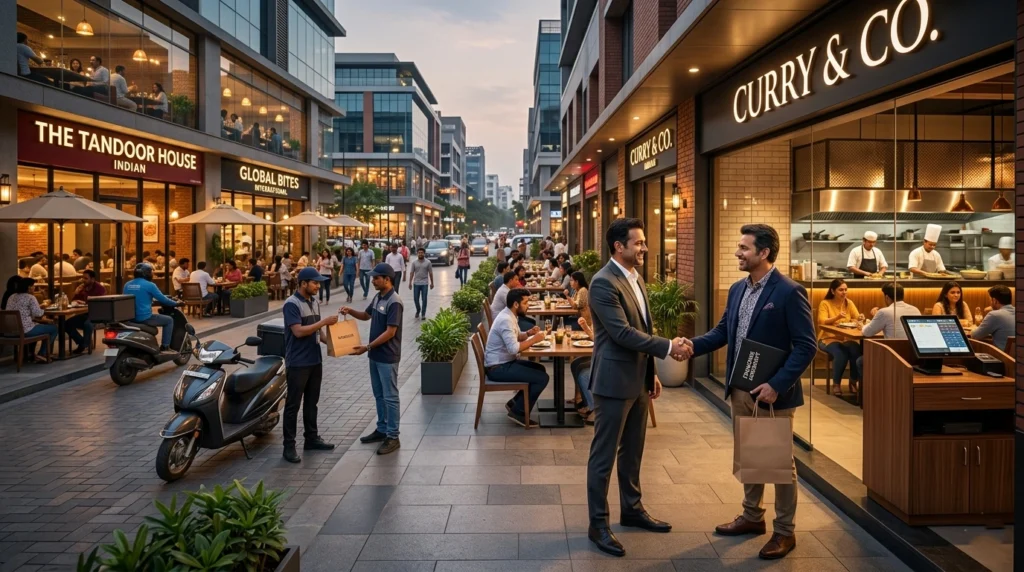
The fast food industry in India is growing rapidly, driven by busy urban lifestyles and an expanding young population. Modern QSR franchises balance speed with consistent quality, using pre-vetted raw materials and automated kitchen setups to keep wait times minimal.
This sector spans a massive variety of popular formats, including burger joints, pizza kitchens, and localized roll or momo brands. Because these businesses rely heavily on rapid order processing and standardized menus, they can achieve highly predictable daily revenues when positioned correctly in areas with high pedestrian visibility.
Investment Required: ₹15 Lakhs to ₹35 Lakhs (depending on brand reputation, kitchen machinery, and store formatting).
Tips to Start:
- Focus on commercial high streets or primary food courts in major shopping malls to ensure a steady baseline of customer footfall.
- Heavily prioritize integration with major hyper-local food delivery networks like Swiggy and Zomato right from the launch phase to optimize your off-premise sales.
- Rigorously monitor and control ingredient portion sizes and daily kitchen wastage to protect your operating margins from food inflation.
Best for: Investors looking for a high-volume, tech-enabled business model with instant, pre-established brand recall.
2. Café and Beverage Kiosks (Chai & Coffee)
India is fundamentally a beverage-loving nation, and specialized tea and coffee outlets have evolved from street corners into highly sophisticated, hygienic organized retail spaces. Low-investment beverage kiosks require minimal floor space and run on very high gross profit margins, making them exceptionally resilient business assets.
By offering consumers predictable, pocket-friendly daily luxuries like specialized kulhad chai, premium filter coffees, and simple accompaniments, these outlets cultivate immense customer loyalty. Their compact physical blueprint makes them incredibly flexible to set up in areas where traditional retail space is restricted.
Investment Required: ₹5 Lakhs to ₹15 Lakhs (covering compact brewing hardware, display cases, and initial franchise onboarding).
Tips to Start:
- Secure locations near major IT tech parks, large corporate office hubs, or prominent university campuses where daily beverage consumption is a routine.
- Ensure your staff maintains absolute consistency in the beverage brewing process by utilizing pre-packaged spice blends and specific milk formulations provided by the franchisor.
- Introduce high-margin quick snacks like cookies, samosas, or sandwiches to elevate the average transaction ticket size per customer visit.
Best for: First-time entrepreneurs looking for an entry-level, low-overhead business format that is simple to manage operationally.
3. Heritage Sweet and Snack Shops
Traditional sweets and regional Indian snacks represent a multi-billion-rupee market that enjoys permanent, culturally driven consumer demand that is completely insulated from passing food trends. From celebratory family occasions and major national festivals to routine corporate gifting, the requirement for premium, high-quality traditional items remains constant throughout the calendar year.
Franchising with established, trusted heritage sweet brands allows you to instantly command the local market without dealing with the complex, labor-intensive cooking techniques traditionally required behind the scenes. The central franchisor handles the heavy manufacturing and distribution, delivering uniform, shelf-stable inventory directly to your storefront.
Investment Required: ₹30 Lakhs to ₹70 Lakhs (inclusive of specialized cold-display counters, heavy inventory storage, and prime retail positioning).
Tips to Start:
- Choose spacious retail spots situated within dense residential neighborhoods where families habitually shop for household groceries and weekend treats.
- Plan your working capital and inventory storage pipelines meticulously in advance of major festival surges like Diwali, Rakhi, and Durga Puja, when sales volumes routinely triple.
- Implement strict inventory rotation practices using the First-In, First-Out (FIFO) methodology to maximize the freshness of milk-based and delicate food items.
Best for: Experienced business owners seeking a highly prestigious retail asset with high average bill values and structural longevity.
B. Retail Franchise Business Ideas

4. Pharmacy and Wellness Retail
Pharmacy franchising is a structurally defensive, high-volume retail sector that remains entirely unaffected by economic recessions or shifting market trends. Modern retail pharmacies in India have successfully expanded past standard prescription medications to become comprehensive wellness destinations stocking medical equipment, personal care products, baby care items, and nutritional supplements.
While individual product transaction margins can be strictly regulated, the sheer frequency of recurring monthly customer visits and long-term prescription renewals generates a highly stable, predictable cash flow. Partnering with a recognized corporate pharmacy network also streamlines the tedious process of inventory sourcing and regulatory drug compliance.
Investment Required: ₹15 Lakhs to ₹30 Lakhs (covering climate-controlled storage setups, specialized billing software, and initial corporate pharmaceutical stock).
Tips to Start:
- Position the storefront directly adjacent to prominent multi-specialty hospitals, dense residential colonies, or bustling local diagnostic centers.
- Recruit fully qualified, pleasant, and licensed pharmacists who can build genuine trust and long-term rapport with elderly, recurring neighborhood patients.
- Offer reliable, structured home delivery options for the local community to counter the rising competition from digital-only pharmacy applications.
Best for: Long-term investors looking for a secure, recession-proof business with a highly predictable, recurring consumer base.
5. Grocery and Supermarket Minimarks
The rapid transformation of Indian consumer behavior has driven a massive structural shift away from traditional unorganized mom-and-pop stores toward clean, structured, and modern neighborhood supermarkets. Consumers now heavily prefer air-conditioned, well-lit spaces where they can easily browse through a vast selection of household staples, gourmet snacks, organic produce, and daily utilities under a single roof. This also creates opportunities for entrepreneurs interested in wholesale business ideas with consistent inventory turnover.
A franchised minimark leverages a highly robust, centralized supply chain that guarantees optimal product availability and highly competitive consumer pricing. This structural alignment allows a local owner to compete effectively against large e-commerce applications by capitalizing on immediate, tactile point-of-sale customer satisfaction.
Investment Required: ₹25 Lakhs to ₹50 Lakhs (covering extensive modular display racking, modern POS billing terminals, and deep initial multi-category inventory).
Tips to Start:
- Ensure the physical store layout features a wide, easily accessible storefront with dedicated, hassle-free parking spaces for two-wheelers and cars.
- Run strategic, localized promotional campaigns centered tightly around routine monthly grocery purchases during the first week of every calendar month.
- Utilize the real-time automated data from your franchisor’s inventory management system to immediately reorder fast-moving consumption goods before stockouts occur.
Best for: Entrepreneurs with access to spacious commercial real estate who want a high-turnover retail business with clear utility value.
6. Apparel and Fashion Brand Outlets
India’s rapidly expanding middle class, paired with rising disposable incomes, has turned the branded fashion and apparel industry into a highly lucrative retail opportunity. Consumers in both metro areas and developing Tier-2 or Tier-3 cities are actively trading up to formal clothing, trendy athleisure, and premium ethnic wear lines.
Franchising with an established apparel brand eliminates the immense creative and financial risks involved in forecasting seasonal style shifts and managing multi-layered garment manufacturing. The franchisor takes full charge of continuous style innovation, seasonal lookbook updates, and nationwide marketing campaigns, allowing the store operator to focus completely on visual merchandising and customer service.
Investment Required: ₹20 Lakhs to ₹45 Lakhs (inclusive of high-end interior aesthetics, premium trial rooms, lighting setups, and seasonal clothing lines).
Tips to Start:
- Target premium shopping avenues, prominent corner spaces on fashion high streets, or anchor zones inside established regional retail malls.
- Train your floor staff extensively in active consultative styling and personalized customer service to naturally elevate conversion rates and average basket sizes.
- Maintain absolute visual compliance with the brand’s official window display and internal merchandising guidelines to pull in passing foot traffic.
Best for: Trend-conscious business owners with a keen eye for retail aesthetics and an interest in premium lifestyle customer experiences.
C. Service-Based Franchise Business Ideas

7. Professional Laundry and Fabric Care
The professional laundry and dry-cleaning sector has transitioned from a highly fragmented, unorganized task into a rapidly expanding, tech-driven utility service across urban India. Premium working professionals, dual-income households, and student populations willingly outsource their fabric care to avoid the time drain of doing it at home.
Modern laundry franchises utilize commercial-grade, eco-friendly machinery to deliver specialized services like intensive dry cleaning, premium shoe restoration, and heavy upholstery care. Because this model does not suffer from inventory spoilage, unsold stock, or complex supply chain bottlenecks, it yields incredibly high and resilient net profit margins.
Investment Required: ₹10 Lakhs to ₹16 Lakhs (covering industrial washers, specialized hydro-extractors, steam ironing tables, and digital booking software).
Tips to Start:
- Select an accessible storefront location with a consistent, heavy supply of clean running water and a reliable three-phase commercial electricity connection.
- Introduce convenient, app-based scheduled pickup and drop-off services for surrounding residential complexes to dramatically scale up monthly volume.
- Focus heavily on cross-selling high-margin specialty services like premium leather jacket restoration or wedding attire dry cleaning during the off-season.
Best for: Investors looking for a low-overhead operational model that offers clean, predictable cash flows and zero inventory risks.
8. Courier, Logistics, and Express Delivery
The massive, continuous explosion of global e-commerce and corporate digitization has made express logistics and courier networks absolutely vital to the Indian economy. A logistics franchise branch serves as a critical local hub handling hyper-local document dispatches, e-commerce cash-on-delivery packages, and heavy domestic or international freight booking.
Because you operate under the vast infrastructure of a national logistics giant, your storefront benefits instantly from a highly trusted global network, optimized route management systems, and transparent tracking software. The revenue model is incredibly reliable, scaling up directly alongside the volume of local business shipments and personal packages processed daily.
Investment Required: ₹5 Lakhs to ₹12 Lakhs (covering office setups, secure digital scaling systems, barcode scanners, and initial brand security deposits).
Tips to Start:
- Setup shop in highly commercial business districts, wholesale trading markets, or dense industrial zones where local enterprises ship packages daily.
- Actively approach local small-to-medium businesses, e-commerce sellers, and corporate offices to secure long-term, high-volume shipping contracts.
- Ensure your counter staff is thoroughly trained in accurately weighing packages and entering destination pin codes to entirely avoid processing errors.
Best for: Operationally minded individuals who want an asset-light, execution-focused business backed by the continuous growth of digital commerce.
9. Automobile Servicing and Detailing Hubs
With millions of new passenger cars and two-wheelers hitting Indian roads every year, the consumer demand for reliable, transparent, and multi-brand vehicular maintenance is at an all-time high. Authorized dealership workshops are frequently perceived as excessively expensive, while local independent mechanics often lack the sophisticated diagnostic tools and clean hospitality standards required by modern vehicle owners.
A franchised automobile servicing and detailing hub bridges this market gap perfectly by delivering highly standardized vehicle care, computerized engine diagnostics, and premium aesthetic detailing treatments within a modern, comforting customer lounge environment.
Investment Required: ₹20 Lakhs to ₹40 Lakhs (covering computerized diagnostic kits, hydraulic vehicle lifts, high-pressure washing arrays, and detailing tools).
Tips to Start:
- Secure an expansive commercial plot located along a major arterial road or highway junction that offers high vehicle visibility and easy drive-in access.
- Roll out structured annual vehicle maintenance packages and routine wash packages to lock in long-term customer retention and steady seasonal revenue.
- Create a comfortable, air-conditioned waiting lounge equipped with clean transparent glass viewing windows so vehicle owners can easily watch their cars being serviced.
Best for: Auto enthusiasts and technically inclined business owners who want to capitalize on India’s booming personal vehicle ownership.
D. Health and Fitness Franchise Business Ideas

10. Compact Gyms and Fitness Centers
Health awareness across India has undergone a massive structural shift, moving fitness from an elite luxury to an absolute daily health priority for the urban middle class. Compact, high-tech neighborhood gym franchises capitalize efficiently on this shift by offering premium, imported cardiovascular equipment, free weights, and certified personal coaching close to residential clusters.
By prioritizing clean hygiene standards, vibrant community environments, and transparent digital membership pricing, these gyms easily outcompete old-school local fitness halls. The financial model relies heavily on upfront annual or quarterly membership subscriptions, providing the owner with highly predictable capital inflows to smoothly run operations.
Investment Required: ₹35 Lakhs to ₹75 Lakhs (largely determined by imported commercial fitness machinery floor layout, biometric access systems, and interior HVAC setups).
Tips to Start:
- Choose a wide, pillar-less commercial floor plate with high structural weight tolerance and sufficient ceiling height to ensure an airy, uncrowded workout environment.
- Offer highly attractive, discounted pre-launch membership rates during the construction phase to secure immediate revenue before the doors open.
- Focus on recruiting high-energy, internationally certified personal trainers, as their client engagement directly drives gym membership renewals.
Best for: Investors looking to build a high-profile, recurring revenue business centered around community wellness and modern lifestyle trends.
11. Organic Health Food and Nutrition Supplements
As lifestyle diseases rise and consumers become deeply conscious of what they consume, the market for specialized health food, organic staples, and authentic nutritional supplements is booming. This retail franchise segment avoids the intense competition of traditional groceries by focusing strictly on authentic whey proteins, vitamins, gluten-free items, organic cold-pressed oils, and diabetic-friendly snacks.
A franchised nutrition store commands immense consumer trust because the central brand carefully verifies the laboratory purity and supply origins of all listed items. This verification protects health-conscious consumers from the rampant counterfeit products often found in unorganized channels.
Investment Required: ₹12 Lakhs to ₹25 Lakhs (inclusive of air-conditioned product display cabinets, initial supplement inventory, and wellness testing kiosk setups).
Tips to Start:
- Position your retail outlet in close physical proximity to major upscale premium gyms, sports complexes, or high-income residential areas.
- Conduct regular, free in-store health checkups, such as BMI and body fat analysis days, to organically draw target health enthusiasts inside your store.
- Train your store staff to provide accurate, non-prescriptive, knowledge-driven guidance regarding different supplement types and healthy ingredient alternatives.
Best for: Health-conscious individuals and wellness advocates who want an easily scalable, clean retail format with solid profit margins.
12. Dental and Diagnostic Clinics
The corporate consolidation of healthcare services in India has created an excellent opportunity for highly trusted, branded neighborhood clinics and diagnostic collection centers. Patients are increasingly moving away from crowded, unorganized medical labs in favor of hygienic, corporate-backed diagnostic environments that offer highly accurate digital reporting and transparent pricing structures.
A franchised dental clinic or pathology collection hub operates with an exceptionally professional reputation, utilizing standardized medical protocols and centralized laboratory processing systems provided by the primary healthcare brand. This structure lowers local operating risks while ensuring premium clinical care.
Investment Required: ₹20 Lakhs to ₹45 Lakhs (covering specialized medical chairs, automated sample refrigeration units, sterile clinical interiors, and franchise licensing).
Tips to Start:
- Secure a fully accessible ground-floor commercial space that offers a comfortable, spacious seating area for elderly patients or individuals with limited mobility.
- Build deep, professional relationships with local family physicians, residential welfare associations, and nearby corporate offices to generate steady clinical referrals.
- Maintain flawless, uncompromising bio-medical waste management and daily clinical sanitization protocols to preserve absolute medical trust.
Best for: Medical professionals or serious business investors seeking a noble, highly respected enterprise with long-term community value.
E. Technology and Business Services Franchise Ideas

13. IT Training and Professional Skill Development Institutes
With India’s young corporate workforce navigating rapid technological shifts, the consumer demand for job-oriented, specialized skill development remains incredibly intense. Independent colleges often struggle to update their curriculums quickly enough, leaving a massive training gap that professional IT institutes fill perfectly.
A training franchise delivers structured, industry-vetted courses spanning high-demand fields like Full-Stack Development, Data Science, AI Applications, and Digital Marketing. The parent brand provides a fully ready digital learning management system, continuously updated course modules, and direct national placement support networks, allowing the local branch to focus entirely on teaching and student enrollment.
Investment Required: ₹10 Lakhs to ₹22 Lakhs (covering high-speed computer lab hardware, interactive digital screens, licensing, and student counseling desks).
Tips to Start:
- Position the institute near major educational hubs, undergraduate colleges, or transit locations that are highly convenient for commuting students.
- Hire deeply knowledgeable, industry-experienced technical instructors whose teaching quality can be clearly felt during free trial demo classes.
- Organize regular local campus placement drives, resume workshops, and mock interview sessions to actively maximize your student employment success rates.
Best for: Educators, retired professionals, and IT entrepreneurs who want to build a highly rewarding business focused on career empowerment.
14. Managed Co-Working and Shared Office Spaces
The modern corporate shift toward hybrid working arrangements, alongside an explosion of independent freelance professionals and early-stage startups, has turned co-working spaces into high-yield real estate investments. Instead of navigating the immense capital drains of independent commercial leasing, businesses actively prefer plug-and-play shared offices that offer high-speed internet, conference facilities, and automated printing utilities.
A managed co-working franchise provides a sophisticated corporate design blueprint, automated desk-booking applications, and global corporate enterprise client connections. This model effortlessly transforms standard commercial real estate into a high-yielding, premium shared ecosystem.
Investment Required: ₹40 Lakhs to ₹90 Lakhs (highly dependent on the scale of real estate, interior design layouts, acoustic partitions, and automated office utilities).
Tips to Start:
- Utilize commercial real estate holdings that feature wide floor plans, abundant natural lighting, and extensive corporate parking provisions.
- Design a highly dynamic mix of private hot-desks, closed team cabins, and flexible open spaces to easily cater to diverse corporate budget requirements.
- Host regular in-house community networking mixers, legal compliance workshops, and founder meetups to transform your space into a bustling entrepreneurial hub.
Best for: Property owners and institutional investors looking to maximize the rental yields of commercial real estate assets through a tech-enabled corporate service model.
15. Digital Marketing and Business Consultation Hubs
Small and medium-sized enterprises (SMEs) across India are rushing to transition their traditional operations online, yet they frequently lack the specialized in-house expertise required to execute successful digital strategies. A franchised business consultation hub acts as a trusted local agency partner, offering localized business owners direct access to premium corporate branding, SEO execution, e-commerce storefront creation, and automated billing software.
The local franchisee functions essentially as the relationship manager and strategic consultant on the ground, while the complex technical execution and digital delivery are handled seamlessly by the franchisor’s centralized corporate back-office team.
Investment Required: ₹6 Lakhs to ₹14 Lakhs (covering a professional corporate meeting office setup, presentation hardware, and specialized CRM software access).
Tips to Start:
- Setup your consultation office inside a modern commercial business tower that houses a high density of small-to-medium enterprise corporate headquarters.
- Conduct free, highly insightful digital audit workshops for traditional local business owners to clearly show them their current online operational gaps.
- Maintain high client retention rates by delivering highly transparent, data-backed monthly performance reports that explicitly prove clear business growth.
Best for: Natural networkers, sales professionals, and corporate consultants looking for an asset-light, highly intellectually engaging business services model.
Franchise Business Ideas With Low Investment Under Rs. 10 Lakh
1. Localized Food Kiosks and Quick-Snack Counters
Food kiosks focusing on single-category items like momos, kathi rolls, or french fries offer an incredibly accessible entry point into the food service industry without the crippling overheads of full-scale restaurants. These models require minimal square footage typically operating out of a tiny 100 to 150 square foot space which allows you to secure spots in high-traffic market lanes or near corporate exits where real estate prices are otherwise prohibitive.
Because the central brand supplies pre-portioned, frozen, or semi-cooked raw materials, you can run the entire operation with just one or two kitchen workers, keeping your operational expenses remarkably low. The setup is highly efficient, allowing for immediate turnaround times that appeal directly to impulsive, on-the-go snackers looking for a quick bite.
2. Low-Inventory Ice Cream and Frozen Dessert Parlours
Partnering with established dairy cooperatives or national ice cream brands allows you to step into a business model that boasts permanent, year-round consumer demand across all age groups in India. A low-investment ice cream parlor typically functions as a compact scooping station where the core product lines arrive fully prepared, eliminating any complex manufacturing steps or local ingredient sourcing issues.
The primary franchisor installs or heavily subsidizes the required deep-freezing hardware and supplies branded point-of-sale marketing materials, which drastically lowers your initial launch capital. Because ice cream is a non-perishable item when stored properly under correct refrigeration, this business experiences virtually zero food wastage or daily stock spoilage, ensuring healthy and predictable operational margins.
3. Pre-School and Early Childhood Activity Centres
Early childhood education and structured daycare spaces have become an essential requirement for urban, dual-income households looking to give their kids a competitive start. Franchising with an established pre-school or kids’ activity network completely bypasses the massive hurdle of designing a custom curriculum, applying for educational affiliations, and creating child-safe learning materials from scratch.
The parent brand provides a completely structured educational framework, trains your teaching staff, and shares layout blueprints to transform residential or commercial spaces into safe, inviting classrooms. This model operates on an upfront, seasonal fee collection structure, which provides excellent cash flow visibility right at the beginning of the academic terms while building strong, long-term goodwill within the local neighborhood.
4. Courier and Hyperlocal Delivery Booking Points
The massive explosion of e-commerce, small online D2C brands, and corporate digital paperwork has made neighborhood logistics counters an incredibly stable and low-overhead business venture. Acting as a franchised booking point for a national courier giant means your primary role is to accept, weigh, and log packages from walk-in customers and local small businesses.
The parent logistics company handles the complex fleet management, interstate transportation, and final-mile deliveries, meaning you don’t have to worry about maintaining vehicles or hiring riders. Because the model requires little more than a tiny commercial storefront, a digital weighing scale, a barcode scanner, and a computer, it is one of the most cost-effective ways to generate consistent monthly commission income.
5. Automated Water Purification and Dispensing Kiosks
With safe drinking water being an absolute everyday necessity, setting up a franchised water ATM or automated purification kiosk provides a highly resilient, community-focused business model. These automated setups are placed in dense residential clusters, transit points, or semi-urban markets, allowing customers to fill their own containers with purified water at incredibly low prices.
The franchisor provides the complete, state-of-the-art reverse osmosis (RO) and UV filtration machinery alongside IoT-enabled smart vending systems that accept UPI and coin payments automatically. Because the business runs entirely on autopilot without requiring a dedicated counter salesman, your ongoing operational costs are restricted purely to basic water extraction, electricity, and periodic filter replacements, making it a highly profitable passive income source.
How To Choose The Right Franchise Business For You
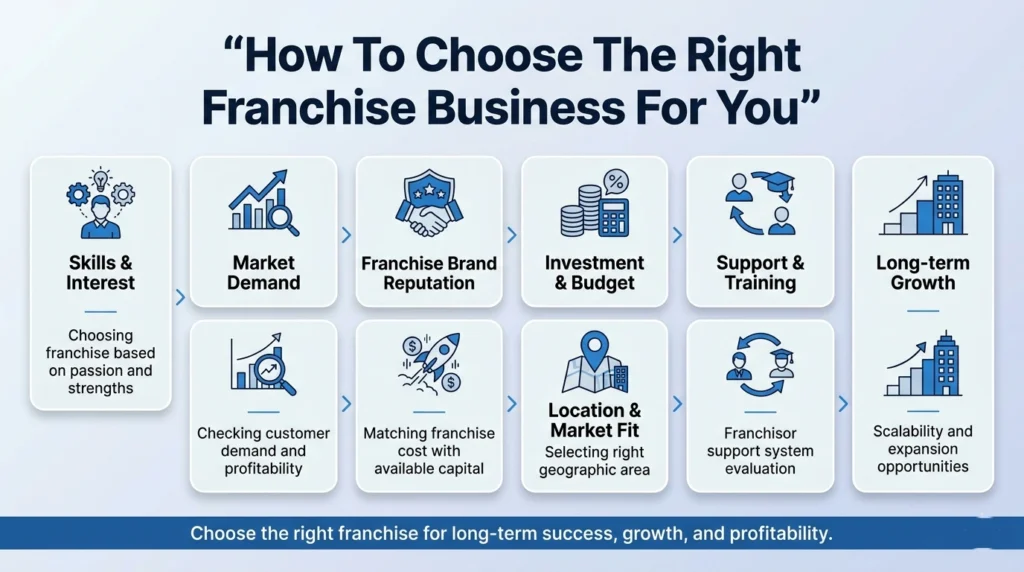
Selecting the perfect franchise is not just about picking the brand with the highest popularity; it is about finding a model that aligns with your personal budget, local market demand, and daily management style. Investing in a business you genuinely understand ensures you can navigate operational challenges smoothly and stay motivated for long-term growth.
- Assess Your Real Financial Runway: Look beyond the initial franchise fee and calculate the total setup cost, including advanced real estate deposits, interior fit-outs, and at least six months of working capital to sustain the business until it breaks even.
- Evaluate Your Personal Time Commitment: Decide whether you want to be an hands-on owner-operator managing daily inventory and staff, or a passive investor hiring an experienced center manager to run a hands-off, manager-driven model.
- Analyze Localized Market Demand: Ensure the specific neighborhood or territory you are targeting has a genuine, unfulfilled gap for the brand, rather than stepping into a hyper-saturated local market already crowded with direct competitors.
- Scrutinize the Franchisor’s Support Track Record: Speak directly with existing, active franchisees within the network to verify if the parent corporate brand actually delivers on its promises of continuous marketing support, staff training, and smooth supply chain logistics.
- Understand the Exit and Renewal Clauses: Carefully review the franchise agreement’s legal terms regarding ongoing royalty fee structures, territory exclusivity rights, contract renewal costs, and the exact process required if you choose to sell the outlet later.
How To Finance Your Franchise In India
Securing the right funding is the engine that transforms your franchise choice into an operational reality. The modern Indian banking and financial ecosystem offers specialized pathways tailored for franchise businesses, making capital highly accessible if you approach it with a structured plan.
- Leverage Collateral-Free Government Loan Schemes: Tap into robust government-backed initiatives like the Pradhan Mantri MUDRA Yojana (PMMY), which offers tailored loan brackets up to ₹20 Lakhs, or the CGTMSE scheme for larger, collateral-free credit limits up to ₹5 Crore for MSME-registered setups.
www.motilaloswal.com - Apply for Specialized Bank Franchise Loans: Approach prominent public and private sector banks that maintain direct, pre-approved financing tie-ups with established national franchisors to secure faster credit evaluation and preferential interest rates.
- Utilize Non-Banking Financial Companies (NBFCs) for Speed: Partner with reputable NBFCs or emerging fintech lenders if you need rapid asset financing, commercial equipment funding, or flexible working capital without the extensive paperwork required by traditional banks.
- Explore Franchisor In-House Financing Models: Check if your target franchisor offers custom internal financing assistance, localized deferred payment plans for initial equipment, or extended credit windows on your startup raw material inventory.
- Pitch to Venture Debt or Angel Networks for Scale: If you are targeting a multi-unit franchise territory or a capital-intensive premium experiential hub, look into structured angel investor circles or private equity routes specializing in retail and consumer brands.
Steps To Start A Franchise Business In India
Launching a franchise in the current Indian market involves moving beyond just signing a contract; it requires a systematic approach to due diligence, digital compliance, and operational setup. Following this structured path ensures you transition from a prospective investor to an active business owner while minimizing legal and financial risks in a competitive ecosystem.
Conduct Deep-Dive Due Diligence:
Before signing any paperwork, verify the brand’s “Entity Score” by researching their existing franchise outlets on Google Maps and social media to see real customer sentiment. Speak directly to 3–5 current franchisees to understand the reality of their support systems, royalty collections, and actual daily profitability versus the pitch.
Master the Legal Trinity:
Ensure the brand has a registered trademark under the Trade Marks Act, 1999, and is prepared to structure your franchise agreement strictly under the Indian Contract Act, 1872. Always have a lawyer review the territorial exclusivity clauses and the “Step-in Rights” to ensure you are legally protected if the business underperforms.
Secure Your Licenses and GST Compliance:
Navigate the specific regulatory requirements for your sector such as FSSAI for food businesses or specialized trade licenses for retail and ensure your GST registration is finalized. By 2026, most franchisors require franchisees to be fully GST-compliant from Day 1 to handle the Reverse Charge Mechanism and TDS (Section 194J) on franchise fees and royalties effectively.
Finalize the Operational Setup:
Work with the franchisor to secure your site according to their approved “Store Format” blueprints, which should prioritize high-footfall zones and efficient layout design. Once the space is ready, integrate the franchisor’s provided digital SOPs and Learning Management Systems (LMS) to train your staff, ensuring your store’s service standard matches the national brand identity.
Execute the Launch and Monitor Unit Economics:
Focus your initial launch phase on “Local Store Marketing” (LSM) to drive immediate neighborhood awareness. Track your unit economics daily using the franchisor’s provided POS and inventory management tools, focusing on hitting your break-even milestone within the first 18–24 months as per current Indian industry benchmarks.
Common Mistakes To Avoid In Franchise Businesses
Even with a proven brand blueprint in hand, a franchise can easily underperform if you fall into predictable operational or financial traps. Avoiding these common industry missteps protects your capital runway and ensures your outlet builds a sustainable, long-term path to profitability.
- Confusing Brand Visibility with Unit Profitability: Do not assume a brand’s massive social media presence or aggressive national advertising automatically translates to profitable individual outlets; always verify the actual net margins after local rent, staff salaries, and royalties are deducted.
- Underestimating the Core Working Capital Runway: Avoid investing all your available cash into the initial setup and franchise fees without keeping a secure, 6-to-9-month cash reserve to cover operational expenses while your local customer base slowly builds.
- Choosing a Location Based Solely on Cheap Rent: Selecting an inexpensive or easily available commercial space without analyzing pedestrian footfall, parking accessibility, and neighborhood demographics can permanently cripple your sales volume from day one.
- Unilaterally Deviating from the Brand’s Standard Operating Procedures: Trying to cut local corners by modifying the franchisor’s established ingredient portions, vendor networks, or service protocols breaks brand consistency and destroys consumer trust.
- Relying entirely on Passive Brand Awareness: Do not sit back and assume the brand name alone will pull in customers; failing to execute consistent local store marketing, neighborhood outreach, and hyper-local promotions leaves your outlet completely isolated.
Conclusion
Choosing the right Franchise Business Ideas is about more than investing in a well-known brand—it’s about finding a business that aligns with your budget, experience, and long-term goals. Whether you’re exploring low-investment opportunities or planning to launch a large-scale franchise, careful research and proper financial planning can significantly improve your chances of success. By selecting the right franchise, understanding the market, and following the franchisor’s proven business model, you can build a profitable and sustainable business in India. Take your time, compare your options, and invest in a franchise that offers strong growth potential for the future.