
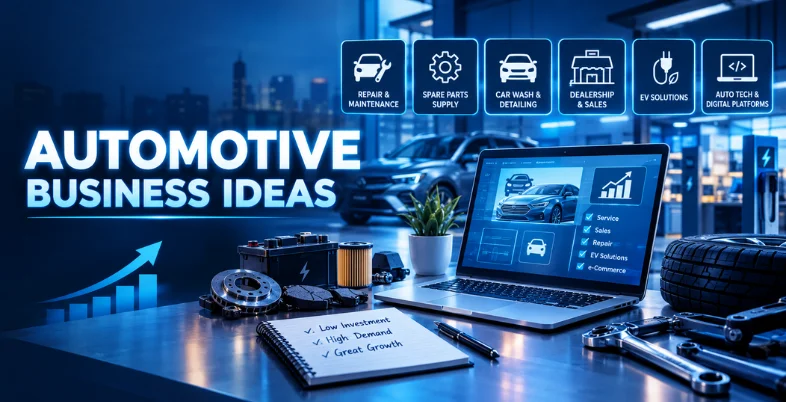
The automotive industry is entering 2026 with strong demand among passenger vehicles, two-wheelers, commercial vehicles, and three-wheelers. The Society of Indian Automobile Manufacturers (SIAM) reported the highest-ever domestic mobility demand in FY 2025 to 26 among Indian automakers.
Sales of passenger vehicles stood at 46.43 lakh units, two-wheelers at 2.17 crore, commercial vehicles at 10.80 lakh, and three-wheelers at 8.36 lakh. This momentum continued into FY 2026-27, as passenger vehicle sales expanded 25.9% year-on-year in Q1, while two-wheeler sales grew 20.3%, creating further opportunities for automotive business ideas.
This growing vehicle base is creating opportunities beyond manufacturing, including servicing, detailing, accessories, EV support, rentals, repairs, and technology-led automotive services.
What Is an Automotive Business?
An automotive business is one where people carry out activities related to cars, such as the business of selling, repairing, servicing, and detailing parts and accessories; renting vehicles; and technology. It can serve passenger cars, two-wheelers, commercial vehicles, or electric vehicles. Entrepreneurs can pick a physical workshop, retail outlet, dealership, mobile service, online service, or specialized automotive service center based on the model they choose.
Types of Automotive Businesses in India
India’s motor industry includes automobile manufacturing, maintenance, after-sales services, transportation, and new-age electric vehicles. Depending on investment, expertise, and target market, entrepreneurs can choose from various automotive business ideas that suit their goals.
- Automotive Dealerships: Car dealerships deal in new cars, two-wheelers, commercial vehicles, and electric vehicles. They can also earn income from financing, insurance, etc., and accessories.
- Auto Repair and Service Centers: Multi-brand or specialized workshops offer routine diagnostics, repair, mechanical services, brake servicing, etc. These companies take advantage of regular customer needs.
- Car Detailing and Washing: Car wash and detailing companies are geared around auto appearance and maintenance. Work can encompass ceramic coating and deep cleaning services, paint protection, and interior services.
- Automotive Spare Parts: Spare parts companies provide spare parts to vehicle owners, mechanics, and workshops. They can be done physically in shops, via whitelists, or online.
- Tire and Battery Services: Tyre shops and battery centres provide replacements for different vehicle categories and offer tyre replacement, puncture repair, and wheel balancing and alignment.
Is the Automotive Business Worth It In India 2026?
The rise of vehicles, mobility needs, and the EV ecosystem in India is generating opportunities in a number of automotive service segments.
- Strong Vehicle Demand: Domestic sales across major vehicle categories reached a record level in FY 2025–26. Passenger vehicles sold 46.43 lakh units, while the sales of 2-wheelers crossed 2.17 crore units.
- Growing Aftermarket Needs: A need for service, repairs, tires, batteries, cleaning, and replacement parts for every vehicle arises periodically. This gives rise to demand for automotive businesses after the initial purchase.
- Rising EV Adoption: New requirements for charging capacity, diagnostics, specialized service, and parts support for EVs. In FY 2025–26, the number of electric passenger vehicles registered grew by over 80%, according to SIAM.
- Opportunities Beyond Metro Cities: Automotive businesses are not limited to Delhi, Mumbai, Bengaluru, or other major cities. Tier 2 and Tier 3 cities also offer opportunities in vehicle servicing, accessories, detailing, rentals, and spare parts. Entrepreneurs can also consider business ideas in Delhi when evaluating different market opportunities.
- Commercial Vehicle Demand: Commercial vehicles sold about 10.80 lakh units in FY 25-26, up 12.6% from the previous year. This supports opportunities around fleet maintenance, tire services, repairs, and commercial vehicle support.
- Multiple Business Models: Automotive businesses range from low-investment business mobile services to workshops, dealerships, and technology platforms, allowing entrepreneurs to choose automotive business ideas based on their funding, skills, and local market needs.
List Of 12 Automotive Business Ideas In India
1. Multi-Brand Car Service Center
A multi-brand car service center is one that can offer you services and make repairs on multiple car brands in one place. Common services performed are regular service, oil changes, brakes, batteries, A/C, wheel alignment, and computer diagnostics.
Customers like to go to a workshop that is able to service other vehicles and provide reliable service. Begin with basic equipment and later add specialized services. Attracting customers with experienced mechanics and clear pricing can help foster trust and continue the flow of business.
- Investment: ₹8 lakh – ₹25 lakh
- Monthly Profit: ₹80,000 – ₹3 lakh
- Best For: Experienced mechanics, automotive professionals and entrepreneurs interested in workshop management.
Why It Works
- Regular demand for vehicle servicing and repairs.
- Can serve multiple car brands.
- Opportunities for repeat customers.
- Additional revenue from parts and specialised services.
Key Requirements
- Suitable workshop space.
- Skilled mechanics and service staff.
- Vehicle diagnostic equipment.
- Hydraulic lift, tools and service equipment.
- Spare parts and lubricant suppliers.
- Business registration and applicable local permissions.
2. Car Detailing and Ceramic Coating
Car detailing is an emerging vehicle detailing service that is committed to car cleaning, protection, and maintenance. You can provide services like deep interior cleaning, exterior washing, polishing, paint correction, ceramic coating, and paint protection.
Detailing is a more focused treatment than normal cleaning and can help boost service charges. Careful planning, good materials, and trained personnel are essential in working well. It can provide various service packages for the car according to the condition and requirements of the customers.
- Investment: ₹5 lakh – ₹15 lakh
- Monthly Profit: ₹60,000 – ₹2.5 lakh
- Best For: Entrepreneurs interested in premium car care, beauty services and customer-focused businesses.
Why It Works
- Growing interest in vehicle appearance and protection.
- Premium detailing services can support higher billing.
- Repeat cleaning and maintenance requirements.
- Can offer different packages for different budgets.
Key Requirements
- Covered detailing studio.
- Pressure washer and vacuum cleaner.
- Polishing and paint correction equipment.
- Ceramic coating and cleaning products.
- Trained detailing professionals.
- Strong local marketing and customer reviews.
3. Two-Wheeler Repair and Service Center
A two-wheeler repair & service center can provide support to motorcycle and scooter owners who require regular maintenance and repair for their bikes. Services could range from engine servicing, oil changes, brake repair, tire replacement, battery tests, electrical problems, and general inspection.
Indian cities and towns have a huge market of millions of two-wheeled vehicles sold annually. A local workshop that has technicians and offers an affordable rate and service can bring in regular clients and encourage repeat business.
- Investment: ₹3 lakh – ₹10 lakh
- Monthly Profit: ₹40,000 – ₹1.5 lakh
- Best For: Motorcycle enthusiasts, mechanics and entrepreneurs targeting local bike and scooter owners.
Why It Works
- Large two-wheeler customer base in India.
- Regular servicing and repair requirements.
- Lower setup cost than a full car workshop.
- Opportunities for tyre, battery and spare-parts sales.
Key Requirements
- Accessible workshop location.
- Experienced two-wheeler mechanics.
- Repair tools and diagnostic equipment.
- Oil, filters and spare parts.
- Basic customer service and billing system.
- Applicable business registrations and permissions.
4. Automotive Spare Parts Business
An automobile spare parts business focuses on supplying components required for vehicle maintenance and repairs. Products can include filters, brake parts, belts, bulbs, batteries, engine components, and electrical parts. Vehicle owners, mechanics, workshops, and dealerships can all be potential customers, making it a practical automotive business idea.
You may run through a brick-and-mortar store, wholesale pushers, or online. It is essential to develop trust-based relationships with dependable suppliers in order to ensure product availability. Offering genuine products, proper product information, and competitive pricing can help develop long-term customers.
- Investment: ₹5 lakh – ₹20 lakh
- Monthly Profit: ₹40,000 – ₹2 lakh
- Best For: Entrepreneurs with supplier connections, automotive knowledge and retail or wholesale experience.
Why It Works
- Vehicle owners and workshops need replacement parts.
- Can serve both retail and wholesale customers.
- Online selling can expand market reach.
- Opportunities to specialise in selected vehicle brands.
Key Requirements
- Retail shop or warehouse.
- Reliable spare-parts suppliers.
- Inventory management system.
- Knowledge of vehicle compatibility.
- Working capital for stock.
- GST and other applicable registrations.
5. Car Accessories Store
A car accessories store can sell items that will enhance the comfort, look, convenience, and function of an automobile. Popular products range from seat covers, floor mats, dash cameras, and reverse cameras to infotainment systems, LED lights, phone holders, and car organizers. Extra income can be made by offering installation in addition to product sales.
Physical retail stores can work seamlessly with online sales via a website or via a marketplace. Being familiar with common vehicles and having products on hand that workflow software with them can lessen stock issues and improve customer satisfaction.
- Investment: ₹3 lakh – ₹12 lakh
- Monthly Profit: ₹40,000 – ₹1.5 lakh
- Best For: Entrepreneurs interested in automotive retail, vehicle styling and product installation.
Why It Works
- Customers purchase accessories for comfort and convenience.
- Installation services create additional revenue.
- Can sell through a physical store and online channels.
- Products can be offered across different price ranges.
Key Requirements
- Store or showroom.
- Accessories inventory.
- Reliable distributors.
- Installation tools and technicians.
- Knowledge of vehicle models and compatibility.
- Billing and inventory management system.
6. Tire and Wheel Care Centre
A tire and wheel care outlet can offer crucial maintenance solutions for vehicles, bikes, and various other services. Support can cover tire sales, puncture repairs, wheel alignment, wheel balancing, tire rotation, and battery replacement. These services are routinely needed since tires wear out with time and wheels have to be checked every now and then.
As location is very important, a busier road or an area surrounded by high amounts of vehicles can help in drawing in customers. Reporting reliably and accounting for the price correctly can lead to repeat orders.
- Investment: ₹5 lakh – ₹15 lakh
- Monthly Profit: ₹50,000 – ₹2 lakh
- Best For: Automotive professionals and entrepreneurs interested in tyre sales and vehicle maintenance.
Why It Works
- Tyres require replacement and maintenance.
- Wheel alignment and balancing create service revenue.
- Can serve cars, motorcycles and commercial vehicles.
- Opportunities for battery and related product sales.
Key Requirements
- Workshop with vehicle access.
- Tyre changer and wheel balancer.
- Wheel alignment machine.
- Air compressor and puncture repair tools.
- Tyre and battery suppliers.
- Skilled technicians and safety equipment.
7. EV Charging Station
An EV charging station provides charging facilities for electric cars, two-wheelers, and other electric vehicles. Common routes for entrepreneurs are highways, shopping areas, offices, residential communities, parking lots, and commercial properties.
It is necessary to understand all the factors associated with EV adoption and distribution on local electric networks, such as electricity needs, space availability, and charging demand, to design an investment that makes sense.
You may combine the business with a café, a convenience store, a parking service, or other facilities as well. Good chargers, accessible payment options, and availability can enhance the user experience.
- Investment: ₹5 lakh – ₹30 lakh+
- Monthly Profit: ₹20,000 – ₹2 lakh
- Best For: Property owners, infrastructure entrepreneurs and investors with suitable parking or commercial locations.
Why It Works
- Growing electric vehicle adoption.
- Charging demand can increase in suitable locations.
- Can combine charging with parking or other businesses.
- Multiple charging formats offer different business models.
Key Requirements
- Suitable commercial or private location.
- Appropriate charging equipment.
- Electricity connection and electrical infrastructure.
- Installation and safety arrangements.
- Payment and charging management system.
- Applicable local permissions and electricity compliance.
8. EV Repair and Battery Service
The growing adoption of EVs presents new potential revenue streams for specialized repair and maintenance services. An EV service center may specialize in diagnostics, electrical systems, batteries, charging components, electric motors, and other EV-specific systems.
This business calls for trained technicians because electric vehicles employ technology that is different from conventional vehicles. Also, please be sure to have safety protocols and diagnostic devices in place. With selected EV services, entrepreneurs start small and gradually build their abilities according to customer requirements and expertise.
- Investment: ₹5 lakh – ₹20 lakh
- Monthly Profit: ₹50,000 – ₹2 lakh
- Best For: EV technicians, electrical professionals and entrepreneurs interested in specialised vehicle technology.
Why It Works
- Electric vehicles require specialised maintenance.
- EV diagnostics and electrical services can create niche opportunities.
- Can serve electric cars, scooters and other EVs.
- Additional revenue from parts and maintenance packages.
Key Requirements
- EV service workshop.
- Trained EV technicians.
- Diagnostic tools and electrical equipment.
- Battery safety equipment.
- Reliable component suppliers.
- Appropriate safety procedures and insurance.
9. Mobile Car Wash and Detailing
Mobile car wash and detailing is a vehicle cleaning business that provides services at the customer’s location. Services include exterior cleaning, upholstery cleaning, basic detailing, interior vacuuming, and dashboard cleaning. This is one of the practical automotive business ideas, as it does not always require a large commercial workshop.
Serving homes, offices, residential societies, parking areas, etc., is unavoidable. Establishing a customer base and repeat bookings can be achieved with good marketing and hiring skilled employees, as well as having a reliable vehicle and cleaning supplies.
- Investment: ₹1.5 lakh – ₹6 lakh
- Monthly Profit: ₹30,000 – ₹1.2 lakh
- Best For: First-time entrepreneurs, small business owners and people interested in doorstep services.
Why It Works
- Lower premises costs than a full workshop.
- Convenient service for residential and office customers.
- Can operate through bookings.
- Opportunities for monthly cleaning packages.
Key Requirements
- Vehicle or mobile service setup.
- Pressure washer and vacuum cleaner.
- Water supply or suitable waterless cleaning system.
- Cleaning products and equipment.
- Trained cleaning staff.
- Local marketing and booking system.
10. Used-Car Dealership
A used car dealership is a place where people buy, sell, inspect, and restock used cars as necessary. Entrepreneurs can narrow down their focus to individual brands, specific vehicle classes, and/or price points. Vehicle roadworthiness, ownership records, service records, insurance papers, and registration records are important.
This can be done by selling physically, through the Internet, or a combination of both. Some trust needs to be earned in this business. However, good customer service with transparent terms and conditions, helpful documentation, fair prices, and after-sales care will enhance the vehicle buying process.
- Investment: ₹10 lakh – ₹50 lakh+
- Monthly Profit: ₹75,000 – ₹4 lakh
- Best For: Entrepreneurs with automotive knowledge, sales experience and sufficient working capital.
Why It Works
- Pre-owned vehicles offer an alternative to new-car purchases.
- Can specialise in selected brands or price ranges.
- Revenue comes from vehicle margins and related services.
- Online listings can help reach more buyers.
Key Requirements
- Showroom or vehicle display space.
- Working capital for vehicle purchases.
- Vehicle inspection and valuation process.
- Reliable documentation and ownership checks.
- Refurbishment and service partners.
- Insurance, registration and applicable business compliance.
11. Fleet Management Services
Fleet management services assist businesses in managing vehicles involved in transportation, delivery, employee commuting, or commercial use. Services may feature vehicle tracking, maintenance planning, driver control, fuel tracking, documentation, and operational reporting. Users can be logistics firms, delivery companies, schools, corporations, and other businesses with multiple vehicles.
Digital tracking and system tools can enhance these services by improving efficiency. business intelligence tools can also help monitor performance, analyze data, and support better decision-making. First, serve small fleets, and then progressively build up as they gain experience, technology, and business contacts.
- Investment: ₹3 lakh – ₹15 lakh
- Monthly Profit: ₹50,000 – ₹2.5 lakh
- Best For: Logistics professionals, technology entrepreneurs and businesses with transport management experience.
Why It Works
- Companies need support managing multiple vehicles.
- Recurring contracts can support predictable revenue.
- Technology can improve tracking and maintenance management.
- Can serve delivery, logistics and corporate fleets.
Key Requirements
- Fleet management software.
- GPS tracking and reporting tools.
- Trained operations staff.
- Vehicle maintenance partnerships.
- Customer support system.
12. Automotive Technology Solutions
Automotive technology is creating opportunities for companies to integrate vehicles, software, and digital applications. Entrepreneurs can develop solutions for vehicle diagnostics, fleet management, connected vehicle services, tracking, and automotive data, making these areas promising automotive business ideas.
Car companies, automobile workshops, and businesses can supply software to the car owner. A technology-focused solution might involve funding for software operations, technology skills, and cybersecurity. Identifying a specific industry problem and creating a simple, reliable solution can help build a focused automotive technology business.
- Investment: ₹5 lakh – ₹30 lakh+
- Monthly Profit: ₹50,000 – ₹5 lakh+
- Best For: Software developers, automotive technology professionals and entrepreneurs with B2B business experience.
Why It Works
- Workshops and fleet operators need digital marketing tools.
- Software can be sold through subscriptions or service contracts.
- Opportunities in diagnostics, tracking and service management.
- Technology businesses can expand beyond one local market.
Key Requirements
- Skilled software development team.
- Automotive industry knowledge.
- Product development and testing.
- Cloud infrastructure and cybersecurity.
- Sales and customer support.
- Business registration and applicable data compliance.
Things To Consider Before Starting An Automotive Business
Launching an auto business is not just as simple as selecting a beneficial business idea. Sustainability can be affected significantly by factors such as capital, location, technical expertise, customer demand, and operating costs. Using crm software can also help businesses manage customer relationships, follow-ups, and service records efficiently.
- Market Demand: Research the vehicles commonly used in your target area, existing competitors, customer spending patterns, and service gaps. Choose a segment where there is sufficient and recurring demand.
- Investment: Estimate costs for buildings, hardware, tools, stock, workers, licenses, insurance, computer technology, marketing, and working capital. Keep a reserve for unexpected operating costs.
- Location: The place should also allow for vehicle movement & visibility to be made available by means of a workshop or a retail outlet. When looking into the property—think parking, traffic, and residential & commercial uses.
- Skilled Workforce: Technical ability and service to be expected are essential to automotive companies. Employ knowledgeable mechanics, technicians, and support personnel, and train staff regularly when new technology is developed.
- Equipment and Technology: Diagnostic equipment and specialized tools are needed for modern vehicles. Safety gear and technical expertise for EV businesses might be required. Invest in the type of services you’ll be providing.
- Customer Trust: Clear pricing and estimates, service records, warranties (as applicable), and service history of genuine parts can help build customer confidence. Reviews and referrals can also be powerful avenues for repeat business.
How To Start An Automotive Business In India?
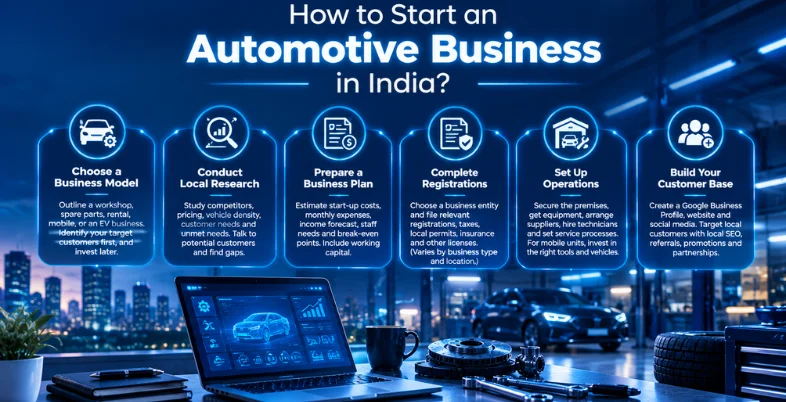
A structured approach can help entrepreneurs control initial costs, understand demand, and build an automotive business around a clearly defined customer segment.
- Choose a Business Model: Outline a workshop, spare parts, rental, mobile, or an EV business, or yet another automotive business. Identify and understand who you’re targeting first, and invest later.
- Conduct Local Research: Examine rivals, rates of pricing, density of vehicles, customer needs, and unmet needs. Speak with potential customers and identify services they find difficult to access or compare.
- Prepare a Business Plan: Make estimates of start-up costs, monthly expenses, forecasts of income, personnel needs, and break-even points. Include working capital because customer acquisition and operational expenses may take time to stabilize.
- Complete Registrations: Select a suitable business entity and file relevant registrations, taxes, local permits, insurance, and other licenses. Requirements will depend on the type of business and location.
- Set Up Operations: Secure the premises, purchase equipment, arrange suppliers, hire technicians, and establish service processes. If it is a mobile unit, invest in the right tools and vehicles, rather than a large workshop.
- Build Your Customer Base: Develop a Google Business Profile, website, and social media account as appropriate. Target local customers through local SEO, referral incentives, promotions, and business collaborations.
Conclusion
The auto industry is entering 2026-27 with a solid sales outlook and growth opportunity across traditional and emerging segments. Domestic sales of passenger vehicles, two-wheelers, commercial vehicles, and three-wheelers reached record levels in FY 2025-26, while Q1 FY 2026-27 also recorded strong year-on-year growth. These trends create opportunities for automotive business ideas across different segments.
This presents avenues for entrepreneurs in fields such as vehicle servicing, vehicle detailing, accessories and parts, tyres, spares, rentals, or managing fleets and EV services. But the key is in choosing the right market and managing costs, service levels, and local customer needs.
Skilled manpower, efficient suppliers, and customer experience are the foundation for establishing a successful and sustainable business in India’s growing automotive industry.
FAQs
1. Is An Automotive Business Profitable In India?
Depending on demand levels and costs of doing business, an automotive business can draw revenue from vehicle sales, regular servicing, vehicle repairs, accessories, detailing services, vehicle rentals, spare parts, and specialized EV services.
2. Which Automotive Business Requires Less Investment?
Mobile car cleaning, simple detailing, and car accessories, along with select doorstep washing, may demand less upfront investment versus dealerships or workshops.
3. Is An EV Business A Good Opportunity In 2026?
EV Opportunity categories cover charging services, diagnostics, battery services, and maintenance & accessories. Demand is driven by local EV adoption, infrastructure, and availability of suitable technical expertise.
4. What Is The Initial Capital Required For An Automotive Business?
There are wide differences in investment among business models. A mobile service does not demand much capital investment; a workshop, dealership, rental fleet, and charging station require a very significant amount of money.
5. What Are Some Factors To Think About When Starting A Car Business?
Take into account location, customer base, equipment, experienced personnel, resources, registrations, insurance, funds, competitor pricing, and the services you intend to offer.