Starting a small business in India is becoming more accessible, but choosing the right business idea can still be challenging. The MSME sector is already a major part of the Indian economy, contributing around 30% of GDP and nearly 45% of the country’s exports. With such a large role in employment, manufacturing, and exports, the sector offers opportunities across many industries.
From food processing and manufacturing to digital services, retail, home-based businesses, and local services, there are plenty of MSME business ideas in India for different budgets and skill sets. But a good business idea is not just about low investment—it should also have steady demand, manageable operating costs, and room to grow.
In this guide, we’ll explore profitable MSME business ideas in India, including low-investment options, manufacturing ideas, service-based businesses, and opportunities for first-time entrepreneurs. You’ll also learn what to consider before choosing an idea so you can start with a clearer plan and realistic expectations.
What Qualifies as an MSME in India?
Under the revised classification effective from April 1, 2025, a business qualifies as an MSME based on two things together – how much it invests in plant, machinery, or equipment, and its annual turnover:
| Category | Investment Limit | Turnover Limit |
| Micro | Up to ₹2.5 crore | Up to ₹10 crore |
| Small | Up to ₹25 crore | Up to ₹100 crore |
| Medium | Up to ₹125 crore | Up to ₹500 crore |
Both conditions apply together – a business must stay within both the investment and turnover limit for its category. Registration happens for free on the Udyam Registration Portal using Aadhaar and PAN details, and it’s what unlocks government schemes, priority sector lending, and eligibility for tenders reserved specifically for MSMEs. Note that pure trading businesses (wholesale, retail, e-commerce resale) currently can’t register under Udyam unless they’re also engaged in manufacturing or services.
Why Start an MSME Business in India Right Now?
- Government-backed funding is easier to access: Schemes like CGTMSE offer collateral-free credit guarantees on loans up to ₹2 crore for eligible micro and small enterprises, removing one of the biggest barriers to starting out.
- Reserved market categories: Several product categories – including certain mechanical goods – are reserved specifically for the MSME sector, giving smaller manufacturers a degree of protection from larger competitors.
- Growing digital infrastructure: With over 90% digital payment adoption and improving infrastructure in Tier-2 and Tier-3 cities, reaching customers outside metro areas is far easier than it was even five years ago.
- Union Budget support: Recent budgets have allocated significant funding – including ₹40,000 crore earmarked for key MSME sectors – toward easier compliance, better cash flow, and expanded credit access.
- Lower entry barriers than before: The 2025 revision to MSME classification raised both investment and turnover thresholds substantially, letting more home-run and early-stage businesses formally register and access benefits sooner.
List of 15 Best MSME Business Ideas in India

1. Tailoring and Garment Designing
Custom clothing remains a dependable business in India, where tailored and ethnic wear is consistently in demand for festivals, weddings, and everyday wear alike. Demand never really goes away, since every wedding season, festival, and school reopening brings a fresh wave of orders. Customers also keep coming back once they trust a tailor’s fit and finishing.
It’s one of the few MSME ideas where you can start with almost no marketing spend. Word-of-mouth in a neighborhood tends to fill a tailor’s order book on its own. Skill and consistency matter far more here than any upfront capital.
- What you need: A sewing machine, quality fabric sourcing, and basic design tools.
- Who buys: Individuals wanting tailored outfits, boutiques, and small retail stores.
- Earning potential: ₹15,000 to ₹1,00,000 per month, depending on order volume and design complexity.
- Growth path: Launch a branded clothing line, sell online through Instagram or marketplaces, or open a boutique storefront.
2. Handmade Soaps and Candles
Natural, eco-friendly personal care and home décor products have a steadily growing urban customer base, especially online. Among popular MSME business ideas, this option offers a low starting cost combined with strong margins, since raw materials like oils, wax, and fragrance are inexpensive relative to what a well-packaged, branded product can command. This makes it an appealing entry point for first-time entrepreneurs.
It also suits solo or home-based entrepreneurs particularly well. Production can scale gradually from a kitchen-table operation to a small dedicated workspace as orders grow. Packaging and branding often matter as much as the product itself.
- What you need: Raw materials (oils, wax, fragrance), basic equipment, and simple packaging.
- Who buys: Health-conscious consumers, gifting customers, and D2C shoppers on Instagram and Etsy-style platforms.
- Earning potential: ₹10,000 to ₹60,000 per month for a home-based operation, scaling significantly with wholesale orders.
- Growth path: Build a D2C brand, get listed on Amazon/Flipkart, or supply hotels and spas in bulk.
3. Cloud Kitchen
A cloud kitchen business skips the cost of a dine-in restaurant entirely, operating purely through food delivery apps like Swiggy and Zomato. Without needing a dine-in space, seating, or front-of-house staff, the same kitchen can serve a far larger delivery radius. This comes at a fraction of a traditional restaurant’s rent and overhead.
Success usually comes down to picking a focused, deliverable-friendly menu. Getting the unit economics right on packaging and delivery platform commissions matters more than ambience. Location and menu discipline typically decide whether a cloud kitchen turns profitable.
- What you need: A commercial kitchen space, FSSAI license, and listings on delivery platforms.
- Who buys: Urban customers ordering food through delivery apps.
- Earning potential: Highly variable – ₹30,000 to several lakh per month depending on location, menu, and order volume.
- Growth path: Add cloud kitchen brands under one roof, expand delivery radius, or franchise the concept.
4. Organic Farming and Organic Food Products
Rising health consciousness has pushed demand for chemical-free vegetables, fruits, spices, and organic fertilizers well beyond niche status. Among promising MSME business ideas, organic farming and farming businesses benefit from urban consumers increasingly willing to pay a premium for certified organic produce. That price gap over conventional farming makes the extra effort of certification and chemical-free processes financially worthwhile.
The business also benefits from strong policy support. The government actively promotes organic farming through subsidies and dedicated certification programs. These programs are aimed specifically at smaller producers.
- What you need: Farmland or a small growing operation, organic certification, and direct-to-consumer or B2B distribution channels.
- Who buys: Health-focused consumers, organic retail stores, and export buyers.
- Earning potential: Varies significantly by scale, but organic produce commands a meaningful price premium over conventional produce.
- Growth path: Move into organic fertilizer/pesticide manufacturing, or build a subscription-based delivery model for urban customers.
5. Agarbatti (Incense Stick) Manufacturing
India’s deep-rooted religious and spiritual use of incense means demand stays steady year-round, with strong export potential on top of the domestic market. Unlike many trend-driven business ideas, agarbatti manufacturing benefits from demand that’s essentially recession-proof. Religious and household use doesn’t fluctuate much with the broader economy.
The manufacturing process itself is also relatively simple to learn and semi-automate. This is why it remains a popular first-time manufacturing choice for entrepreneurs. Limited technical background is rarely a real barrier here.
- What you need: Raw materials (bamboo sticks, fragrance compounds), basic manufacturing equipment, and packaging.
- Who buys: Households, temples, retailers, and export markets.
- Earning potential: Stable, recurring demand with reasonable margins, particularly on catering-scale bulk orders
- Growth path: Scale into export markets or build a recognizable retail brand.
6. Steel Furniture and Almirah Manufacturing
Durable steel almirahs and furniture see consistent demand from both households and institutions like schools, offices, and hostels. Among practical MSME business ideas, this category can benefit directly from government policies supporting small manufacturers, which can help reduce competition from very large-scale players.
Steel furniture has a long replacement cycle for individual households but a shorter, recurring one for institutions. This makes B2B contracts with schools, hostels, and offices a particularly stable revenue base. Once established, these contracts tend to renew steadily.
- What you need: Sheet metal, welding and fabrication equipment, and a small workshop space.
- Who buys: Households, offices, schools, and institutional buyers.
- Earning potential: Solid margins on institutional bulk orders, with the government reserving several mechanical product categories specifically for MSMEs.
- Growth path: Move into modular furniture design or expand into B2B supply contracts.
7. Stainless Steel and Aluminium Utensils
Rust-resistant cookware and everyday kitchenware have consistent household and catering-industry demand across every price segment. Because utensils are a genuine daily-use necessity rather than a discretionary purchase, this business tends to be far less sensitive to economic downturns. That stability is rare among consumer product categories.
The catering and hospitality segment offers a real growth lever here. Hotels and event caterers typically place large, repeat bulk orders. These are far more predictable than one-off retail sales.
- What you need: Sheet metal, stamping/molding equipment, and a small manufacturing unit.
- Who buys: Households, hotels, restaurants, and catering businesses.
- Earning potential: Stable, recurring demand with reasonable margins, particularly on catering-scale bulk orders.
- Growth path: Supply hotel chains and caterers directly, or build a retail utensil brand.
Also Read :
8. Wooden Furniture and Décor
Rising demand for sustainable, aesthetically pleasing wood products spans furniture, décor, toys, and gifting items. Among versatile MSME business ideas, woodworking stands out because the same skillset can serve very different customer segments. Bulk institutional furniture orders sit at one end, and high-margin, design-led decorative pieces at the other.
Export demand for Indian handcrafted wood products has also been growing steadily. This gives smaller manufacturers a realistic path beyond just the domestic market. Design sensibility often matters as much as woodworking skill.
- What you need: A woodworking workshop, tools, and reliable timber sourcing.
- Who buys: Households, interior designers, and export buyers for décor and gift items.
- Earning potential: Mass-production furniture orders offer volume-based margins; decorative pieces command higher per-unit pricing.
- Growth path: Add green/sustainable packaging manufacturing, or expand into export-focused décor lines.
9. Pickles, Jams, and Packaged Snacks
Regional and traditional food products have strong demand both locally and increasingly through online grocery and D2C channels. Traditional, home-style recipes travel unusually well online, since customers actively search for regional and “authentic” packaged food. This niche appeal often lets small producers charge a premium over mass-market packaged food brands.
Building a loyal repeat-customer base tends to happen faster here than in most product categories. Taste and quality consistency drive genuine brand loyalty. That loyalty, once earned, is hard for larger competitors to dislodge.
- What you need: FSSAI food license, basic processing equipment, and packaging.
- Who buys: Local retailers, online grocery platforms, and D2C customers seeking regional/artisanal food products.
- Earning potential: Low starting investment with healthy margins once a repeat customer base builds.
- Growth path: Get listed on Amazon/BigBasket, expand product lines, or supply retail chains in bulk.
10. Digital Marketing Agency
Every small business now needs a digital presence, and most don’t have the in-house skills to manage it, creating consistent demand for agency services. Among service-based MSME business ideas, this option can start generating revenue faster than many others. It requires virtually no physical inventory or manufacturing setup, just skills, a laptop, and a strong portfolio of results.
The real growth challenge tends to be client retention rather than client acquisition. Agencies that focus on measurable results for a specific niche, like local restaurants or D2C brands, typically outgrow generalist agencies over time. Specialization tends to compound faster than broad service offerings.
- What you need: Skills in SEO, social media management, and paid ads; minimal equipment beyond a laptop.
- Who buys: Local businesses, D2C brands, and other MSMEs needing an online presence.
- Earning potential: ₹20,000 to several lakh per month depending on client roster and service scope.
- Growth path: Specialize in a niche (e.g., restaurant marketing, D2C growth), or scale into a full-service agency with a team.
11. Online Tutoring and Digital Coaching
Demand for exam preparation, skill-building, and academic tutoring has moved decisively online, and this needs minimal physical infrastructure to start. A laptop, subject expertise, and a stable internet connection are often enough to begin. That low barrier makes it accessible to a wide range of educators.
Income here grows with student volume rather than being capped by physical classroom space. A single tutor can realistically teach students across multiple cities at once. Reputation and results tend to drive most new enrolments over time.
- What you need: Subject expertise, a laptop, and a platform (own website, YouTube, or third-party tutoring marketplaces).
- Who buys: Students, working professionals upskilling, and parents seeking supplemental education for their children.
- Earning potential: Highly scalable – income grows with student volume rather than being capped by physical classroom space.
- Growth path: Build a course platform, hire additional tutors, or expand into cohort-based coaching programs.
12. Handcrafted Jewelry Brand
Custom and handcrafted jewelry has a strong customer base on Instagram and marketplaces like Etsy, particularly for fusion and contemporary designs. Among creative MSME business ideas, design originality tends to matter more than production scale. A distinctive visual identity on social media can often do more for sales than paid advertising.
Margins can be strong on handcrafted, design-led pieces compared to mass-manufactured jewelry. Buyers are often willing to pay a premium for a recognizable personal style. That premium is what separates a hobbyist seller from a genuine small brand.
- What you need: Basic jewelry-making tools/materials, and a strong visual presence on social media or marketplaces.
- Who buys: Fashion-conscious buyers on Instagram, Etsy, and gifting customers.
- Earning potential: Margins can be strong on handcrafted, design-led pieces compared to mass-manufactured jewelry.
- Growth path: Build a recognizable D2C brand, expand into export markets, or wholesale to boutiques.
13. Niche E-Commerce Store
Instead of competing with the market, a store can position itself as a niche supplier of non-considered goods. Specific goods may attract a particular audience looking for unique items. Niche marketing usually has lower prices because there are fewer similar stores. In addition, customers searching for specific goods are often dissatisfied with the existing options.
The current suppliers’ perception of the value of their products and a company’s marketing strategy are more important than the variety of goods. It is vital to create a catalog that will provide the most accurate conversion rather than goods variety. Regular customers play a more significant role than one-time buyers.
- What you need: An online store (Shopify or similar), sourcing/supplier relationships, and a digital marketing plan.
- Who buys: Customers searching specifically for that niche category, often underserved by large marketplaces.
- Earning potential: Depends heavily on niche and margin structure, but focused niches typically see less price competition than generalist stores.
- Growth path: Expand product range within the niche, or build a subscription/repeat-purchase model.
14. Pet Care Services
Rising pet ownership in urban India has created steady demand for grooming, walking, boarding, and pet product retail. Among growing MSME business ideas, pet care offers recurring revenue since grooming and walking services are typically repeat or subscription-style purchases. Trust with individual pet owners, once built, tends to hold for years.
Local reputation drives most client acquisition, far more than broad marketing. A handful of reliable, well-reviewed providers can dominate a neighborhood. Consistency and care matter more than scale in the early stages.
- What you need: Basic grooming/handling skills or equipment, and local marketing to pet owners.
- Who buys: Urban pet owners, particularly in metro and Tier-2 cities.
- Earning potential: Recurring revenue model, since grooming and walking services are typically repeat/subscription-style purchases.
- Growth path: Add pet product retail, boarding facilities, or a mobile grooming service.
15. Elderly Home-Care Services
India’s aging population, together with its increasingly nuclear family structure, has led to a rising demand for professional home-care services. Trust is the primary commodity in this industry, as families place their vulnerable elders in the hands of a stranger. Once earned, trust is likely to lead to long-term, contract-like relationships.
Caregivers have a high retention rate of clients once they have gained their trust. Word of mouth within the family serves to get new clients. Reliable and trained staff is the most important factor for families considering home care agencies.
- What you need: Trained caregiving staff, basic operational/scheduling systems, and appropriate certifications.
- Who buys: Families needing care support for elderly relatives, particularly where children live elsewhere.
- Earning potential: Recurring, contract-based revenue with strong retention once trust is established with a family.
- Growth path: Expand into medical-adjacent services (physiotherapy, nursing tie-ups), or scale across multiple cities.
Government Schemes That Support MSME Businesses
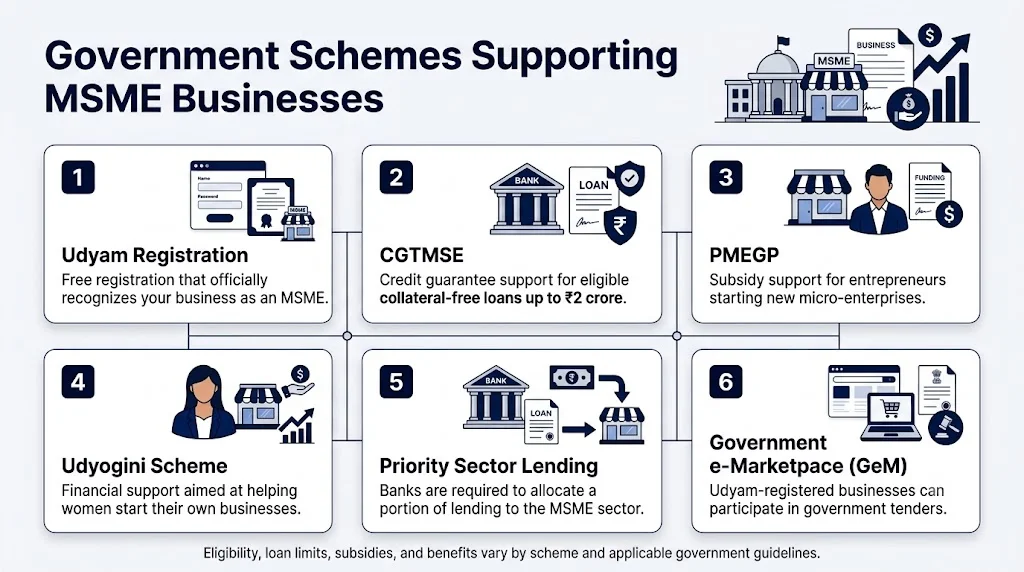
- Udyam Registration: Free-of-cost registration on the Udyam portal officially registers your enterprise as an MSME, and allows you to access every scheme mentioned below.
- CGTMSE (Credit Guarantee Fund Trust for Micro and Small Enterprises): This scheme offers a credit guarantee of collateral-free loans up to Rs 2 crore for eligible micro and small enterprises.
- PMEGP (Prime Minister’s Employment Generation Programme): This scheme offers a subsidy component that supports new entrepreneurs in setting up a micro-enterprise.
- Udyogini Scheme: This particular scheme was started to provide fund support to women entrepreneurs who would like to start on their own.
- Priority Sector Lending: All commercial banks are required by the RBI to provide a certain percentage of loans to the MSME sector.
- Government e-Marketplace (GeM): Participate and bid for government tenders as a Udyam-registered entity.
How to Choose the Right MSME Business Idea for You
- Start with what you can actually fund: Manufacturing ideas (furniture, utensils, agarbatti) need workshop space and equipment upfront; service and digital ideas (tutoring, digital marketing) need far less starting capital.
- Check the local demand, not just the trend: A business idea that’s booming nationally might already be saturated in your specific city or town.
- Match the idea to your skills: A business built on a skill you already have (tailoring, teaching, design) gets to profitability faster than one requiring you to learn everything from scratch.
- Understand the registration path early: Confirm whether your business type is manufacturing, services, or trading, since trading businesses currently can’t register on Udyam unless also engaged in manufacturing or services.
- Plan for cash flow, not just the big idea: A large share of MSME failures come down to weak cash flow management and under-planning working capital, not the underlying business idea itself.
Conclusion
The MSME sector in India in 2026 has a truly broad selection of options to choose from, ranging between industrial enterprises manufacturing steel utensils and agarbattis, and internet-based businesses providing tutoring services or running online boutiques.
However, unless one has a realistic assessment of one’s own financial and professional capabilities, the selection process can be overwhelming. It is crucial to realistically evaluate one’s own needs and the unique demands of the chosen business idea and then use the Udyam Registration and government opportunities to offset some of the risks and costs.
FAQs
1. What Is The Easiest MSME Business To Start With Low Investment?
Digital services like online tutoring, digital marketing, and content-based businesses typically need the lowest starting investment, since they don’t require manufacturing equipment or workshop space.
2. How Do I Register My Business As An MSME?
Registration is free and done online through the Udyam Registration Portal, using your Aadhaar number, PAN, and basic business details.
3. Can Women Entrepreneurs Get Special Support For MSME Businesses?
Yes. Schemes like the Udyogini Scheme provide funding support specifically for women starting new ventures, alongside general MSME schemes available to all eligible entrepreneurs.
4. What Is The Biggest Reason MSME Businesses Fail?
Common reasons include poor planning, weak cash flow management, inadequate marketing, and not registering formally – which cuts a business off from government schemes and structured credit access.
5. Can I Start An MSME Business From Home?
Yes. Several ideas on this list – including tailoring, handmade soaps and candles, digital marketing, online tutoring, and jewelry making – can realistically start as home-based operations with minimal upfront investment.
6. Do Trading Businesses Qualify As MSMEs?
No, not currently. Pure trading businesses (wholesale, retail, e-commerce resale) cannot register on the Udyam portal unless they are also engaged in manufacturing or service activities.