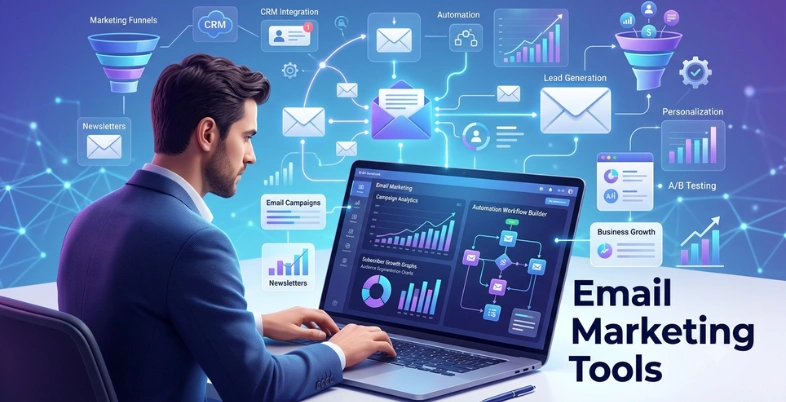
Email marketing remains one of the most effective digital marketing strategies for businesses looking to engage customers, generate leads, and increase conversions. With the right **Email Marketing Tools**, businesses can create personalized campaigns, automate customer journeys, segment audiences, and track performance with ease.
As marketing technology continues to evolve, modern email marketing platforms now offer advanced features such as AI-powered automation, CRM integration, A/B testing, analytics, and multi-channel communication. Whether you’re a small business, content creator, e-commerce brand, or enterprise, choosing the right tool can significantly improve your marketing results.
In this guide, we review the15 best Email Marketing Tools in 2026, comparing their features, pricing, pros, cons, and ideal use cases to help you find the perfect solution for your business.
What Are Email Marketing Tools and Why Do They Matter In 2026?
Email marketing tools are software that help businesses create, send, automate, and monitor email campaigns. These tools enable marketers to manage subscriber lists, design professional emails, segment audiences, schedule campaigns, and analyse performance through metrics such as open rates, click-through rates, and conversions. Modern email marketing platforms also include advanced capabilities like AI-powered content generation, customer journey automation, personalisation, CRM integration, and behavioral targeting.
By streamlining communication and improving audience engagement, email marketing tools help businesses build stronger customer relationships, generate leads, increase sales, and maintain consistent brand communication across multiple customer touchpoints.
Why Do They Matter In 2026?
- AI-powered automation enables businesses to deliver highly personalised customer experiences at scale.
- First-party data strategies make email marketing increasingly valuable as privacy regulations continue to evolve.
- Advanced audience segmentation improves engagement, conversion rates, and customer retention.
- Automated customer journeys reduce manual marketing effort and increase operational efficiency.
- Detailed analytics help businesses measure campaign performance and optimize marketing strategies. Many businesses also use competitor analysis tools to identify market opportunities and improve campaign effectiveness.
- Integration with CRM, e-commerce, and sales platforms creates a unified customer experience.
Email remains one of the highest-ROI digital marketing channels for businesses of all sizes. Growing competition in digital marketing makes direct customer communication more important than ever.
How We Evaluated These Tools (Our Testing Criteria)
Choosing the best email marketing tools requires more than simply comparing features or pricing. To identify the most effective platforms, we evaluated each tool based on factors that directly impact campaign performance, ease of use, scalability, and overall value.
Our assessment focused on how well each platform supports businesses of different sizes, from startups and small businesses to large enterprises.
- Ease of Use: We assessed how simple it is to create, manage, and launch email campaigns without technical expertise.
- Email Automation: We evaluated workflow builders, automated sequences, trigger-based emails, and customer journey capabilities.
- Audience Segmentation: We examined how effectively users can segment contacts and personalise campaigns.
- Template and Design Options: We reviewed drag-and-drop editors, template quality, and customisation flexibility.
- Analytics and Reporting: We compared reporting dashboards, conversion tracking, and campaign performance insights.
- Integrations: We assessed compatibility with CRM systems, e-commerce platforms, social media monitoring tools, and third-party applications.
- Deliverability Rates: We considered each platform’s ability to consistently place emails in inboxes rather than spam folders.
- Pricing and Value: We analysed feature availability across pricing tiers and overall return on investment.
- Scalability: We evaluated how well each tool supports growing subscriber lists and increasing marketing demands.
- Customer Support: We reviewed support channels, knowledge bases, onboarding resources, and response quality.
Using these criteria helped ensure that every tool included in our list offers strong functionality, reliability, and value for modern email marketing needs.
Quick Comparison Table: Best Email Marketing Tools at a Glance
| Tools | Best For | Automation | Pricing |
| Mailchimp | Small businesses | Advanced | Free / Paid plans |
| ActiveCampaign | Marketing Automation | Excellent | From $15/month |
| Brevo | Email & SMS marketing | Advanced | Free / Paid plans |
| Constant Contact | Beginners & SMBs | Good | From $12/month |
| GetResponse | Webinars & automation | Excellent | From $19/month |
| MailerLite | Budget-conscious users | Good | Free / Paid plans |
| AWeber | Small businesses | Good | Free / Paid plans |
| ConvertKit | Creators & bloggers | Advanced | From $15/month |
| Campaign Monitor | Professional campaigns | Good | From $12/month |
| HubSpot Marketing Hub | CRM integration | Excellent | Free / Paid plans |
| Moosend | Affordable automation | Advanced | From $9/month |
| Klaviyo | E-commerce stores | Excellent | Free / Paid plans |
| Omnisend | Shopify & e-commerce | Advanced | Free / Paid plans |
| Benchmark Email | Simple email campaigns | Good | Free / Paid plans |
| Drip | E-commerce automation | Excellent | From $39/month |
List Of Top Email Marketing Tools in 2026
1. Mailchimp

Website: https://mailchimp.com/
Mailchimp is one of the most popular email marketing platforms for small and medium-sized businesses. It offers an intuitive drag-and-drop editor, pre-designed email templates, audience segmentation, marketing automation, and detailed campaign analytics. Businesses can create newsletters, promotional emails, and customer journeys without technical expertise. The platform also integrates with e-commerce, CRM, and social media tools.
Its free plan makes it attractive for startups, while advanced plans provide enhanced automation and reporting capabilities. Mailchimp is particularly suitable for businesses seeking an easy-to-use all-in-one marketing solution.
Key Features:
- Drag-and-drop email builder
- Marketing automation workflows
- Audience segmentation tools
- Landing page creation
- Campaign analytics and reporting
- Social media integrations
- AI-powered content suggestions
Pros:
- Easy for beginners to use
- Generous free plan available
- Strong template library
- Reliable analytics and reporting
- Extensive third-party integrations
Cons:
- Pricing increases with contacts
- Advanced automation requires higher plans
- Limited support on free plan
Pricing:
- Free– 0
- Essentials– ₹385/mo
- Standard– ₹575/mo
- Premium– ₹11,500/mo
2. ActiveCampaign
Website: https://www.activecampaign.com/
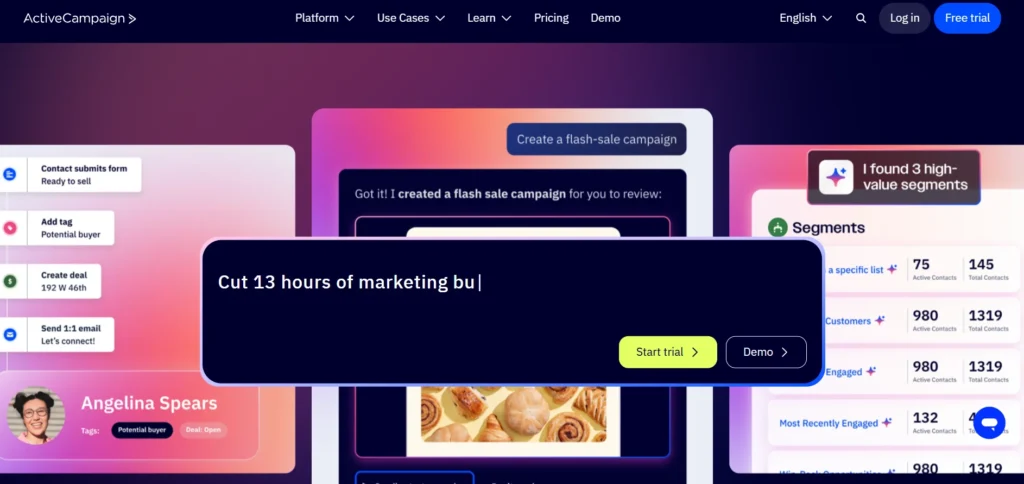
ActiveCampaign is a powerful email marketing and customer experience automation platform designed for businesses focused on personalisation and lead nurturing. It combines email marketing, CRM functionality, sales automation, and customer journey mapping within a single platform. Users can build advanced workflows based on customer behavior, website activity, and engagement data.
The platform provides strong segmentation capabilities and predictive analytics to improve campaign performance. ActiveCampaign is widely used by growing businesses and agencies that require sophisticated automation features and deeper customer relationship management capabilities.
Key Features:
- Advanced marketing automation
- Built-in CRM functionality
- Customer journey mapping
- Behavioral email triggers
- Lead scoring tools
- Dynamic content personalisation
- Detailed reporting dashboards
Pros:
- Industry-leading automation features
- Excellent CRM integration
- Powerful customer segmentation
- Highly customisable workflows
- Suitable for growing businesses
Cons:
- Learning curve for beginners
- No permanent free plan
- Higher pricing for advanced features
Pricing:
- Starter– $15/mo
- Plus– $49/mo
- Pro– $79/mo
- Enterprise– $145/mo
3. Brevo
Website: https://www.brevo.com/
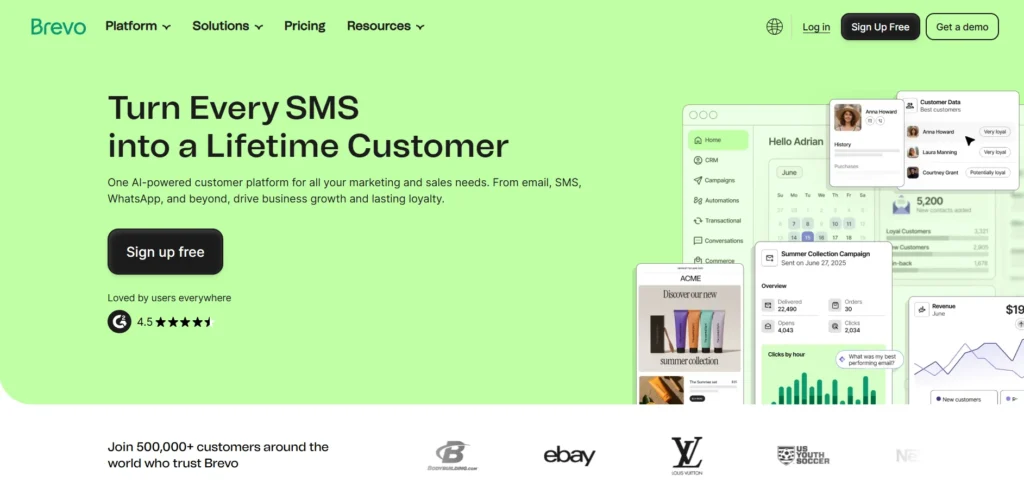
Brevo is a versatile marketing platform that combines email marketing, SMS campaigns, automation, CRM tools, and customer communication features. It is known for offering strong functionality at competitive pricing, making it attractive for startups and small businesses. Users can create automated workflows, transactional emails, personalised campaigns, and customer engagement sequences.
Brevo also supports WhatsApp marketing and live chat integrations. Its flexible pricing model based on email volume rather than contact count appeals to businesses with large subscriber lists seeking cost-effective marketing solutions.
Key Features:
- Email and SMS marketing
- Marketing automation workflows
- CRM capabilities
- Transactional email support
- WhatsApp marketing tool
- Landing page builder
- Real-time campaign analytics
Pros:
- Affordable pricing structure
- Free plan available
- Supports multiple channels
- Strong transactional email features
- Easy-to-use interface
Cons:
- Limited advanced reporting
- Fewer templates than competitors
- Automation options vary by plan
Pricing:
- Starter– ₹625/mo
- Standard– ₹1,345/mo
- Professional– ₹44,680/mo
- Enterprise– Custom Price
4. Constant Contact

Website: https://www.constantcontact.com/
Constant Contact is a beginner-friendly email marketing solution widely used by small businesses, nonprofits, and local organisations. The platform offers customisable templates, list management, event marketing tools, social media integrations, and performance tracking features. Its straightforward interface allows users to create professional campaigns quickly without advanced technical knowledge.
Constant Contact also provides marketing guidance, educational resources, and customer support to help businesses maximise results. It is particularly suitable for organisations that prioritise ease of use, reliability, and consistent email communication with their audiences.
Key Features:
- Email campaign builder
- Event marketing tools
- Contact management system
- Social media integrations
- Customisable templates
Pros:
- Very beginner-friendly platform
- Excellent customer support
- Easy campaign creation
- Strong event marketing tools
- Reliable deliverability rates
Cons:
- No free plan available
- Limited automation features
- Pricing higher than some competitors
Pricing:
- Lite– ₹990/mo
- Standard– ₹2,888/mo
- Premium– ₹6,600/mo
5. GetResponse

Website: https://www.getresponse.com/
GetResponse is an all-in-one marketing platform offering email marketing, automation, webinars, landing pages, sales funnels, and CRM capabilities. It helps businesses manage customer acquisition and engagement from a single dashboard. The platform provides advanced automation workflows, audience segmentation, and detailed analytics for optimising campaign performance.
One of its standout features is webinar hosting, making it popular among educators, consultants, and online businesses. GetResponse is suitable for companies seeking a comprehensive marketing solution that extends beyond traditional email marketing and supports full customer journey management.
Key Features:
- Email marketing automation
- Webinar hosting platform
- Landing page builder
- Sales funnel creation
- Contact segmentation
- Conversion tracking tools
- Marketing analytics dashboard
Pros:
- Comprehensive marketing suite
- Built-in webinar functionality
- Strong automation capabilities
- Good conversion tools
- Suitable for online businesses
Cons:
- Premium plans can be expensive
- Interface may feel complex initially
- Some features locked behind higher tiers
Pricing:
- Starter– ₹1801.87/mo
- Marketer– ₹5595.28/mo
- Creator– ₹6543.64/mo
- Enterprise– Custom Pricing
6. MailerLite

Website: https://www.mailerlite.com/
MailerLite is a user-friendly email marketing platform known for its simplicity, affordability, and modern interface. It offers drag-and-drop email design, automation workflows, landing pages, signup forms, and subscriber management tools. Businesses can create professional email campaigns without requiring technical expertise.
The platform also includes A/B testing, audience segmentation, and performance analytics to improve campaign effectiveness. MailerLite is particularly popular among startups, bloggers, freelancers, and small businesses looking for a budget-friendly solution that delivers essential email marketing and automation capabilities efficiently.
Key Features:
- Drag-and-drop editor
- Automation workflows
- Landing page builder
- •Signup forms and popups
- Email personalisation tools
- Subscriber segmentation
- Campaign performance tracking
Pros:
- Affordable pricing plans
- Generous free version
- Clean and modern interface
- Easy setup process
- Good automation for small businesses
Cons:
- Limited advanced features
- Fewer integrations than larger competitors
- Some templates are basic
Pricing:
- Free– $0
- Growing Business– $9.00/mo
- Advanced– $18.00/mo
7. AWeber

Website: https://www.aweber.com/
AWeber is one of the longest-established email marketing platforms and remains a trusted choice for small businesses and entrepreneurs. It provides email automation, landing pages, newsletter templates, subscriber management, and reporting tools. The platform emphasises ease of use while offering advanced features such as behavioral automation and audience tagging.
Users can quickly create campaigns and monitor engagement through detailed analytics. AWeber also integrates with numerous third-party applications, making it suitable for businesses seeking reliable email marketing software with strong customer support and straightforward campaign management.
Key Features:
- Email automation tools
- Newsletter templates
- Landing page creation
- Audience tagging system
- Subscriber management
- Reporting and analytics
- E-commerce integrations
Pros:
- Long-standing industry reputation
- Easy campaign setup
- Good customer support
- Free plan available
- Reliable email delivery
Cons:
- Interface feels dated
- Automation less advanced than competitors
- Limited customisation options
Pricing:
- Lite– $15.00/month
- Plus– $30.00/month
- Done For You– $30.00/month
8. Kit
Website: https://kit.com/
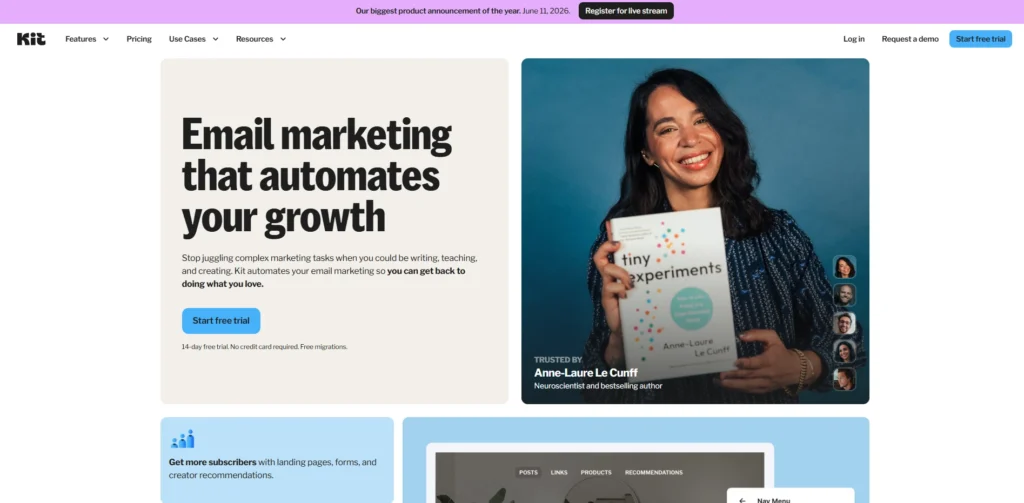
Kit is designed specifically for creators, bloggers, authors, podcasters, and online educators. It focuses on audience growth, subscriber engagement, and digital product sales through personalised email communication. The platform offers visual automation builders, landing pages, signup forms, audience tagging, and monetisation tools.
Kit enables creators to segment subscribers based on interests and behaviors, helping improve engagement and conversions. Its creator-focused approach and easy-to-use interface make it particularly effective for individuals and businesses building communities, memberships, newsletters, and online content-driven brands.
Key Features:
- Creator-focused automation
- Audience tagging and segmentation
- Landing page builder
- Email sequence automation
- Digital product selling tools
- Newsletter management
- Subscriber growth features
Pros:
- Ideal for creators and bloggers
- Powerful audience management
- Simple automation builder
- Easy to learn and use
- Strong creator-focused tools
Cons:
- Expensive as audience grows
- Limited template selection
- Less suitable for large enterprises
Pricing:
- Newsletter- $0
- Creator– $33/mo
- Pro– $66/mo
9. Campaign Monitor
Website: https://www.campaignmonitor.com/
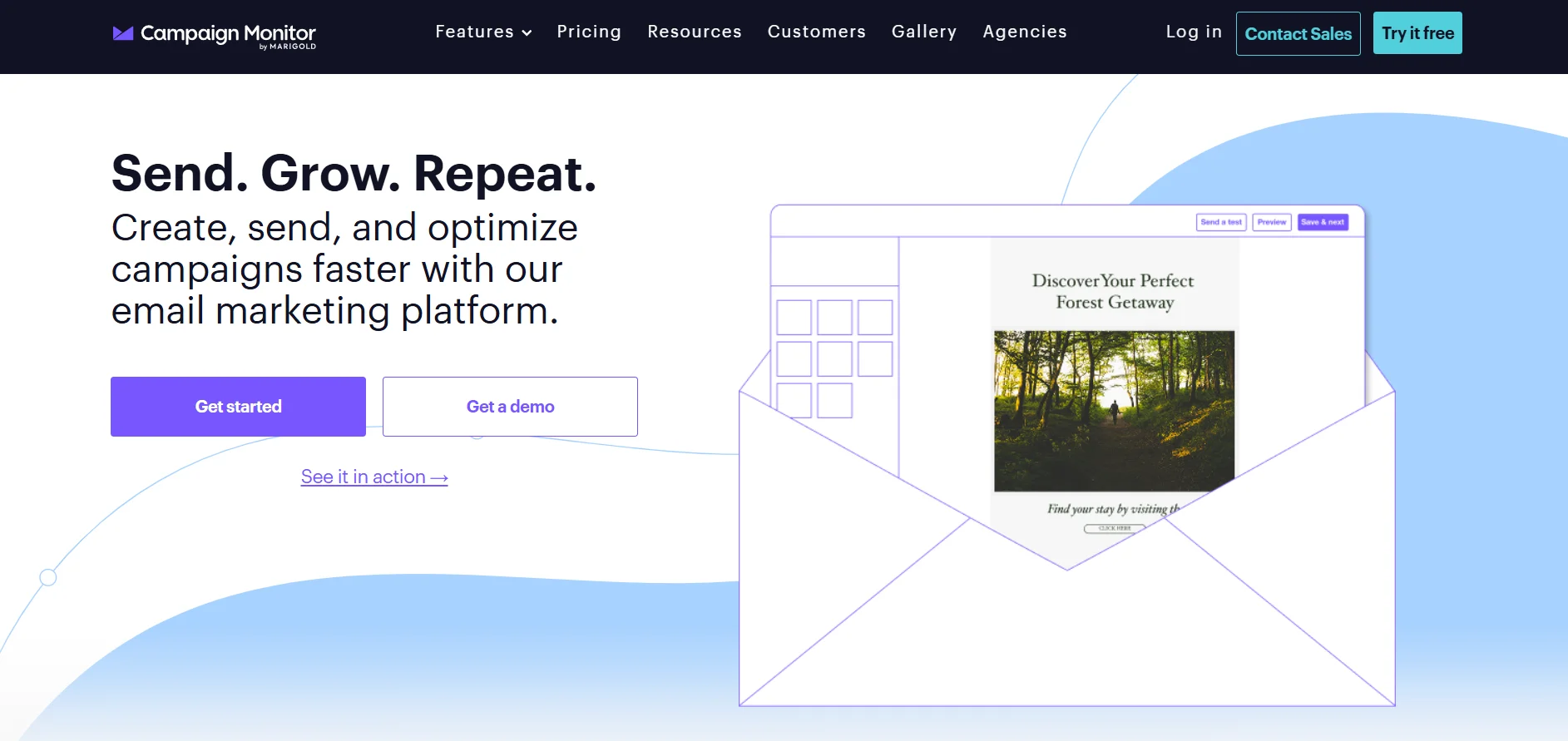
Campaign Monitor is a professional email marketing solution recognised for its visually appealing email design capabilities and advanced campaign management features. It offers customisable templates, drag-and-drop editing, audience segmentation, automation workflows, and performance tracking. Businesses can create highly branded email experiences while monitoring engagement metrics through detailed reports.
Campaign Monitor also integrates with CRM systems, e-commerce platforms, and business applications. The platform is particularly suitable for marketing teams, agencies, and businesses that prioritise professional design, brand consistency, and data-driven campaign optimization.
Key Features:
- Professional email designer
- Automation journeys
- Audience segmentation
- A/B testing tools
- Dynamic content options
- Campaign analytics
- CRM integrations
Pros:
- Beautiful email templates
- Strong branding capabilities
- Easy campaign management
- Detailed reporting features
- Suitable for agencies
Cons:
- No free plan available
- Limited advanced automation
- Pricing increases quickly
Pricing:
- Lite– $13/month
- Essentials– $31/month
- Premier– $171/month
- Enterprise– Contact Sales
10. HubSpot Marketing Hub

Website: https://www.hubspot.com/products/marketing
HubSpot Marketing Hub is a comprehensive marketing platform that combines email marketing, CRM integration, lead generation, automation, analytics, and customer relationship management. It enables businesses to create personalised marketing campaigns based on customer interactions and lifecycle stages.
The platform provides advanced workflow automation, lead scoring, landing pages, forms, and detailed reporting capabilities. Because it integrates seamlessly with HubSpot’s CRM ecosystem, businesses gain a unified view of customer activity across sales and marketing channels. HubSpot Marketing Hub is especially valuable for growing businesses and enterprises seeking an integrated marketing and CRM solution.
Key Features:
- Email marketing automation
- CRM integration
- Lead management tools
- Landing pages and forms
- Customer journey tracking
- Advanced analytics
- Marketing campaign management
Pros:
- Complete marketing ecosystem
- Excellent CRM connectivity
- Powerful automation tools
- Detailed reporting capabilities
- Highly scalable solution
Cons:
- Premium plans are expensive
- Complex for small businesses
- Advanced features require upgrades
Pricing:
- Free– ₹0
- Starter- ₹585/mo/seat
- Professional– ₹66,697/mo
- Enterprise– ₹300,000/mo
11. Moosend

Website: https://moosend.com/
Moosend is an affordable email marketing and automation solution designed for businesses seeking advanced functionality without enterprise-level pricing. The platform offers drag-and-drop email creation, automation workflows, landing pages, audience segmentation, and detailed analytics. Users can create personalised customer journeys based on subscriber behavior and engagement patterns.
Moosend also includes reporting tools that help marketers track campaign performance and optimise results. Its combination of affordability, ease of use, and automation capabilities makes it a strong option for startups, small businesses, and growing online brands.
Key Features:
- Marketing automation workflows
- Email campaign builder
- Landing pages
- Audience segmentation
- Reporting dashboards
- Personalization tools
- Subscription form creation
Pros:
- Affordable pricing model
- Strong automation capabilities
- User-friendly interface
- Good reporting tools
- Suitable for growing businesses
Cons:
- Smaller integration ecosystem
- Limited brand recognition
- Advanced features require paid plans
Pricing:
- Pro- $7 Per month
- Moosend+– Custom Plan
- Enterprise– Custom Plan
12. Klaviyo
Website: https://www.klaviyo.com/
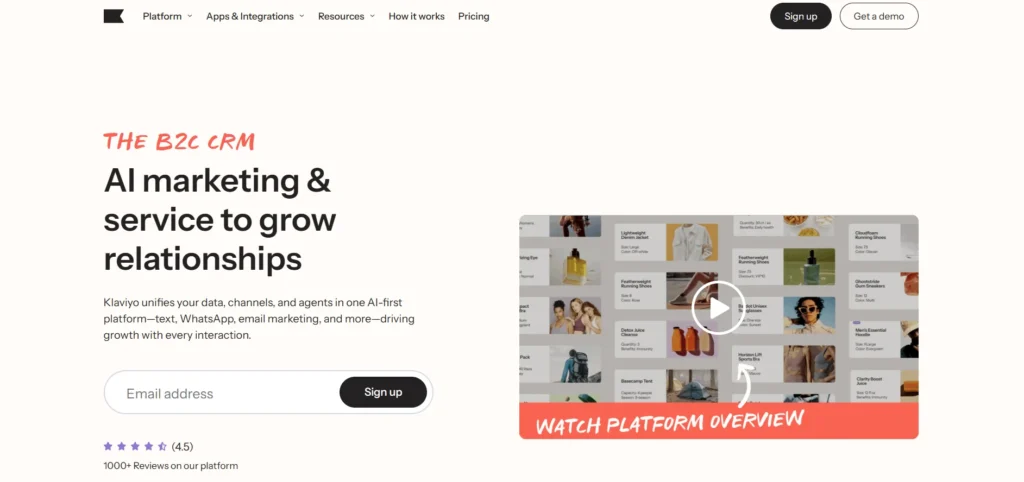
Klaviyo is a leading marketing automation platform built specifically for e-commerce businesses. It combines email marketing, SMS marketing, customer segmentation, predictive analytics, and personalised automation. The platform integrates deeply with online stores, enabling businesses to create highly targeted campaigns based on browsing behavior, purchase history, and customer engagement.
Features such as abandoned cart recovery, product recommendations, and customer lifetime value analysis help increase revenue and retention. Klaviyo is particularly popular among Shopify and e-commerce merchants seeking data-driven marketing strategies and advanced customer personalisation.
Key Features:
- E-commerce email automation
- SMS marketing support
- Predictive analytics
- Customer segmentation
- Product recommendations
- Revenue tracking
- Customer lifecycle marketing
Pros:
- Excellent for e-commerce brands
- Deep Shopify integration
- Powerful personalization features
- Strong revenue reporting
- Advanced customer insights
Cons:
- Can become expensive quickly
- Steeper learning curve
- Best suited for online stores
Pricing:
- Free– $0
- Marketing– $45 per month
- Enterprise– Custom Pricing
13. Omnisend
Website: https://www.omnisend.com/
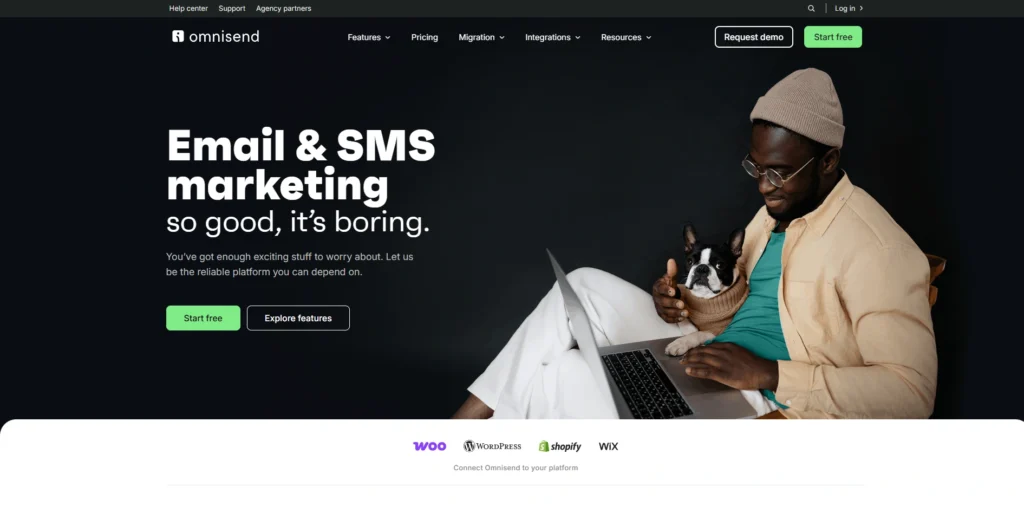
Omnisend is an omnichannel marketing platform designed to help online retailers engage customers through email, SMS, push notifications, and other communication channels. It provides pre-built automation workflows, audience segmentation, product recommendation tools, and detailed campaign reporting.
Omnisend integrates with major e-commerce platforms, making it easy for businesses to create personalised shopping experiences. Features such as cart abandonment automation, welcome series, and customer retention campaigns help improve conversions and repeat purchases. It is an excellent choice for e-commerce brands seeking multichannel customer engagement.
Key Features:
- Email and SMS marketing
- E-commerce automation workflows
- Push notification support
- Customer segmentation
- Product recommendation tools
- campaign analytics
- Multi-channel marketing features
Pros:
- Designed for e-commerce businesses
- Easy automation setup
- Good omnichannel capabilities
- Free plan available
- Strong Shopify compatibility
Cons:
- Limited features for non-e-commerce users
- Advanced features require upgrades
- Reporting could be deeper
Pricing:
- Free– $0
- Standard– $11.20/mo
- Pro– $41.30/mo
14. Benchmark Email
Website: https://www.benchmarkemail.com/
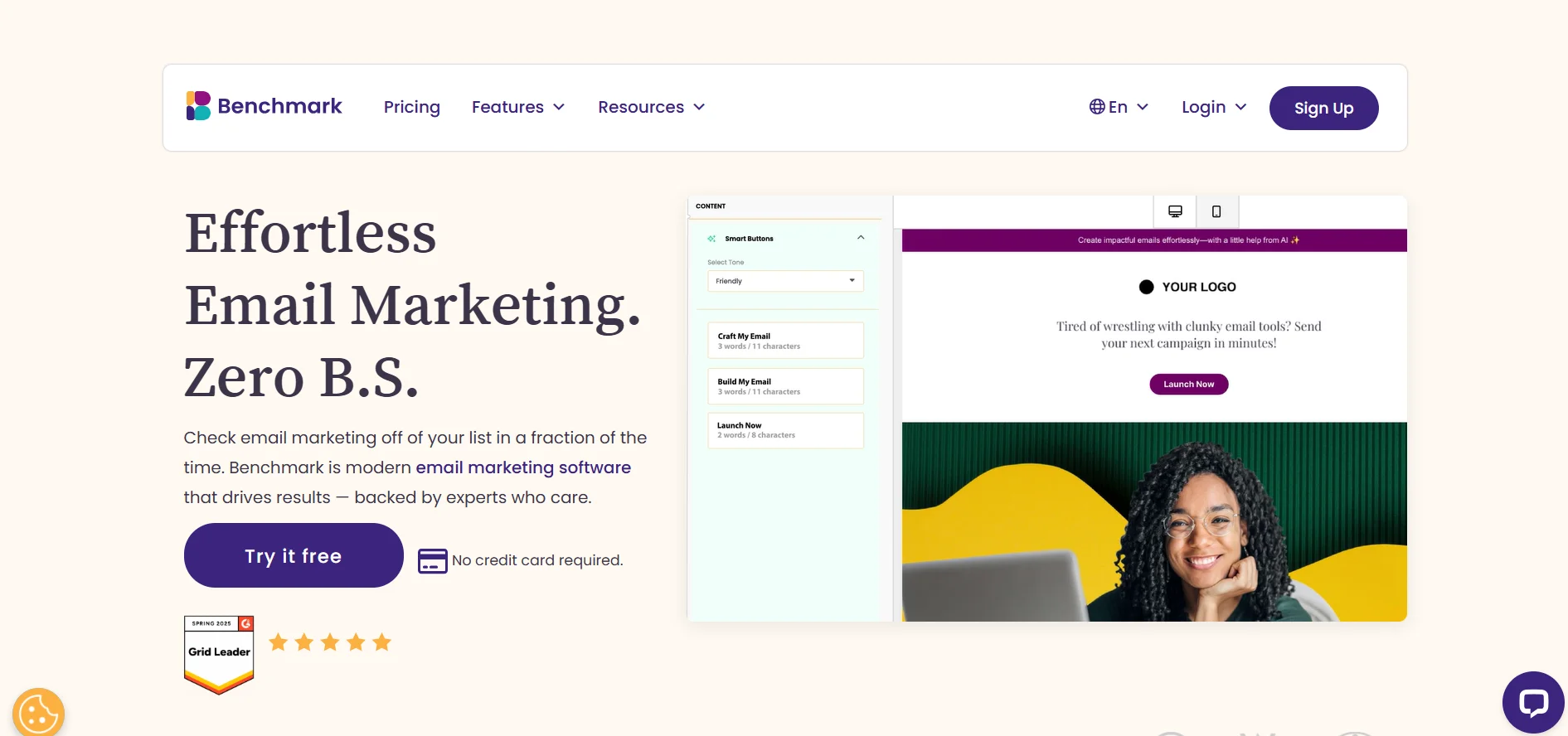
Benchmark Email is a straightforward email marketing platform that focuses on simplicity, accessibility, and efficient campaign management. It offers responsive email templates, automation tools, contact list management, landing pages, and reporting features. The platform enables businesses to create professional email campaigns quickly without requiring advanced technical skills.
Benchmark Email also supports A/B testing and audience segmentation to improve marketing performance. Its intuitive interface and affordable pricing make it a suitable option for small businesses, nonprofits, educational organisations, and marketers looking for a simple yet capable email marketing solution.
Key Features:
- Drag-and-drop email editor
- Marketing automation
- Contact list management
- Responsive email templates
- A/B testing tools
- Reporting dashboard
- Landing page builder
Pros:
- Easy-to-use platform
- Affordable pricing plans
- Free version available
- Good template collection
- Suitable for small businesses
Cons:
- Limited advanced automation
- Fewer integrations than competitors
- Basic analytics features
Pricing:
- Free Plan– $0
- Pro Plan– $19/mo
- Enterprise Plan– Contact Sales
15. Drip
Website: https://www.drip.com/
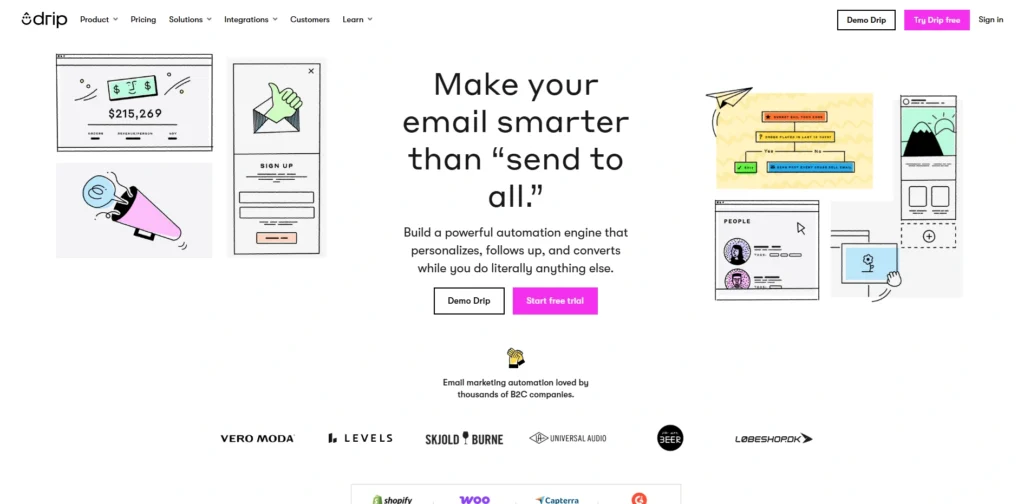
Drip is a customer relationship management and email marketing platform built primarily for e-commerce businesses. It specialises in customer lifecycle marketing, allowing businesses to create highly personalised email campaigns based on shopping behavior and customer data.
The platform offers advanced segmentation, automation workflows, revenue attribution reporting, and integration with major e-commerce platforms. Drip helps businesses nurture leads, recover abandoned carts, increase repeat purchases, and build long-term customer relationships. Its focus on data-driven personalisation makes it particularly valuable for growing online stores and digital-first brands.
Key Features:
- E-commerce CRM functionality
- Customer lifecycle automation
- Advanced segmentation tools
- Revenue attribution reporting
- Personalized email campaigns
- Workflow automation
- E-commerce platform integrations
Pros:
- Excellent for online stores
- Strong automation features
- Detailed customer insights
- Powerful segmentation tools
- Revenue-focused reporting
Cons:
- No free plan available
- Higher starting price
- Primarily focused on e-commerce businesses
Pricing:
- Pricing is based on your list size and send volume
Best Email Marketing Tools for Different Use Cases
Different businesses have different email marketing requirements. Some prioritise automation, others focus on e-commerce, content creation, CRM integration, or affordability. The following categorisation can help you identify the most suitable tools based on your specific use case.
Best for Small Businesses and Beginner
These tools offer user-friendly interfaces, affordable pricing, and easy campaign management:
- Mailchimp
- MailerLite
- AWeber
- Benchmark Email
- Constant Contact
Best for Marketing Automation
These platforms provide advanced workflows, customer journeys, behavioral triggers, and lead nurturing capabilities:
- ActiveCampaign
- GetResponse
- Moosend
- Brevo
Best for Content Creators and Bloggers
These tools are designed for audience building, newsletters, memberships, and creator-focused monetisation:
- ConvertKit
- MailerLite
- AWeber
Best for E-commerce Businesses
These platforms offer abandoned cart recovery, product recommendations, customer segmentation, and e-commerce integrations:
- Klaviyo
- Omnisend
- Drip
- Brevo
Best for CRM and Sales Integration
These solutions combine email marketing with customer relationship management and sales automation:
- HubSpot Marketing Hub
- ActiveCampaign
- Brevo
Best for Agencies and Advanced Marketers
These tools provide robust reporting, client management capabilities, advanced segmentation, and enterprise-level features:
- HubSpot Marketing Hub
- ActiveCampaign
- Campaign Monitor
- GetResponse
Best Budget-Friendly Options
These tools deliver strong functionality while maintaining competitive pricing:
- MailerLite
- Moosend
- Brevo
- Benchmark Email
This categorisation helps businesses choose an email marketing platform that aligns with their goals, technical requirements, and budget rather than focusing solely on popularity.
How To Choose The Right Email Marketing Tool For Your Business
Choosing the right email marketing tools requires evaluating your budget, business size, marketing goals, and automation needs. The ideal platform should support growth, improve engagement, and deliver measurable results efficiently.
- Define Your Goals: Identify whether your focus is newsletters, lead generation, automation, customer retention, or sales growth.
- Consider Your Budget: Compare subscription costs carefully and ensure pricing remains affordable as subscriber numbers increase.
- Check Automation Features: Choose tools offering automated workflows, behavioral triggers, customer journeys, and personalised email sequences.
- Evaluate Ease of Use: Select a platform with intuitive navigation, simple setup, and minimal learning requirements.
- Review Integration Options: Ensure compatibility with CRM systems, e-commerce platforms, analytics tools, business applications, and other digital marketing tools that support your overall marketing strategy.
- Analyse Reporting Capabilities: Look for detailed analytics covering open rates, conversions, click-through rates, and engagement metrics.
- Assess Scalability: Choose software capable of supporting larger subscriber lists and advanced marketing requirements.
- Test Customer Support: Reliable support through chat, email, knowledge bases, and training resources improves user experience.
Email Marketing Best Practices To Get More from Any Tool In 2026
Email marketing continues to deliver one of the highest returns on investment in digital marketing. Following proven best practices helps businesses improve engagement, increase conversions, and maximize campaign performance.
- Build a Quality Email List: Focus on collecting permission-based subscribers genuinely interested in your content, products, services, and long-term communication efforts.
- Personalise Every Campaign: Use customer names, preferences, purchase history, and behavior data to create more relevant email experiences consistently.
- Segment Your Audience: Divide subscribers into targeted groups based on interests, demographics, engagement levels, and buying behavior patterns.
- Optimise Subject Lines: Create compelling subject lines that encourage opens while remaining clear, relevant, concise, and non-spammy always.
- Automate Customer Journeys: Implement automated workflows for welcomes, abandoned carts, follow-ups, re-engagement campaigns, and customer retention activities.
- Test and Improve Regularly: Conduct A/B testing on subject lines, content, designs, calls-to-action, and sending times for optimization.
- Monitor Analytics Closely: Track open rates, click-through rates, conversions, unsubscribes, and engagement metrics to improve future campaigns.
Final Verdict
Choosing the right email marketing tools can significantly improve customer engagement, lead nurturing, and overall marketing performance. The best platforms offer a combination of automation, audience segmentation, analytics, personalisation, and integration capabilities to help businesses achieve better results.
While some tools are ideal for small businesses and startups, others are designed for growing enterprises with advanced marketing needs. The right choice ultimately depends on your budget, campaign goals, subscriber base, and required features. By evaluating the strengths of these best email marketing tools, businesses can streamline communication, increase conversions, and build stronger relationships with their audience over the long term.