
Have you ever looked through Instagram, YouTube, or TikTok and said to yourself, I could do that too? Well, you absolutely can. How to Become a Content Creator is not about having fancy equipment or possessing some inherent talent. It is all about discovering your voice, expressing what you are passionate about, and finding like-minded people who are interested in the same things.
In the year 2026, the creation of content has become not only another side gig but also a viable career choice followed by millions of people around the world. Cooking, gaming, fashion, fitness, or whatever you are fervent about; there is a group of people who want your unique point of view. This tutorial will take you through all the information you shall consider to begin your interaction with content creation today.
What a Content Creator Is

A content creator refers to an individual who creates and distributes original digital content to the online users. They make videos, write articles, create graphics, record podcasts or make social media posts with trending tools that entertain, educate or inspire people. As opposed to the conventional media professionals, content creators usually operate on their own, developing their own brand and audience.
They turn their interests, competences, or character into entertaining materials that appeal to particular viewers. It is the beauty of the content creator’s creative freedom and the direct contact with the audience.
What Does a Content Creator Do?
They brainstorm, generate information, revise their work, interact with their community, study performance indicators, and always respond to the desire of their audience.
They do not only create content, they also establish connections with their followers, partner with brands and their online presence can easily become the source of several income streams. It is a dynamic position that is a combination of creativity and strategy.
- Creates engaging content for platforms like YouTube, Instagram, TikTok, blogs, and podcasts
- Researches trends, topics, and audience interests
- Plans, scripts, records, and edits content
- Builds and grows an online audience or community
- Collaborates with brands for sponsorships and promotions
- Earns through ads, affiliates, products, and memberships
- Analyzes performance using views, reach, and engagement metrics
- Maintains a consistent posting schedule
- Develops a personal brand and niche authority
Types of Content Creators
Video Content Creators
Video creators create content on such platforms as YouTube, Tik Tok, and Instagram Reels. They capture all kinds of tutorials, vlogs, and entertainment skits and documentaries. The production of videos demands a knowledge of storytelling, mental ease with a camera, and fundamental editing.
Such creators tend to have the most active community since video allows establishing a personal connection that is not possible in other forms. The visual medium has incredible possibilities of creativity and expression.
Blog Content Creators
Articles, guides, reviews, and stories are published on websites or platforms such as Medium and Substack by bloggers. They are based on good writing skills, knowledge of SEO, and skills of conducting research on the issue. Detailed and valuable written material in blogs helps blog creators to become authority figures in their niches.
Blogging is no longer a new concept, but at the same time, it is exceedingly profitable and efficient in accumulating expertise and channeling organic traffic to money-making platforms.
Social Media Content Developers.
The creators of social media are experts who design content on Instagram, Twitter, LinkedIn, or Pinterest and engage in a conversation. They learn to write short form content, visuals and interact with the community.
These creators tend to become an influencer in a certain niche and work with brands through sponsored content. The development of social media demands consistency, trends sensitivity and genuine personality that will shine through short content.
Platforms They Work On
- YouTube (long and short-video)
- Instagram (photos, reels, stories).
- TikTok (short videos)
- Twitter/X (text, threads)
- LinkedIn (business information)
- Written articles (Medium and Substack).
- Pinterest (visual inspiration)
- The platform of podcasting (Spotify, Apple Podcasts).
- Twitch (live streaming)
- Facebook (social groups, video)
Why Content Creation Is a Real Career Today
Growing Digital Economy
The global creator economy is valued at $250+ billion, with brands rapidly shifting ad budgets to influencer and content-led marketing. There are over 207 million content creators worldwide, including 162 million in the U.S. About 45 million U.S. creators work professionally, and 46.7% of creators are full-time, clearly positioning content creation as a primary career rather than a side hobby.
Multiple Monetisation Opportunities
Creators today earn through ads, brand deals, affiliate marketing, digital products, courses, memberships, and merchandise. Platform support continues to grow—Spotify has invested over $10 billion in creator monetisation and content programs through 2026.
Low Barrier, High Scalability
Content creation requires no formal degree or significant upfront investment. A smartphone and internet access are enough to start, which has fueled rapid creator growth and professionalisation across markets.
Global Reach & Demand for Authenticity
Creators can reach global audiences instantly while working flexibly from anywhere. Consumer trust now favours authentic individual creators over traditional ads, making real voices more effective for brand engagement and revenue generation.
Can Anyone Become a Content Creator?
Yes, No Special Talent Required.
You need not be very smart, very pretty or very funny. Realness defeats idealism. Individuals relate to authentic personalities who post useful information or entertainment despite the quality of production in the first place.
Age Is Just a Number
The creators of the content are teenagers, as well as retirees. You are 15 or 65, you have an audience to your opinion. Diversity in age presents different experiences and insights that appeal to specific groups of people.
No Costly Parts of Equipment to Start With.
Start with what you have. A majority of phones in the market take quality video. With the help of free editing applications and tools, it is possible to create professional-looking content. Gradually upgrade equipment as you develop and know better what you need.
Passion is More Important than Expertise.
You do not have to be a skilled person to begin to create content. By sharing your learning process, writing about starting the learning process, or just becoming passionate about something you enjoy, you draw audiences. Human beings like seeing people develop.
Stasis is Better than Excellence
The highly successful creators are not necessarily the geniuses but the most persistent. Consistency in content creation makes the audience trust them and the algorithms of the platform prioritize those who are active creators. Being there is more important than producing masterpieces every now and then.
How to Become a Content Creator (Step-by-Step)
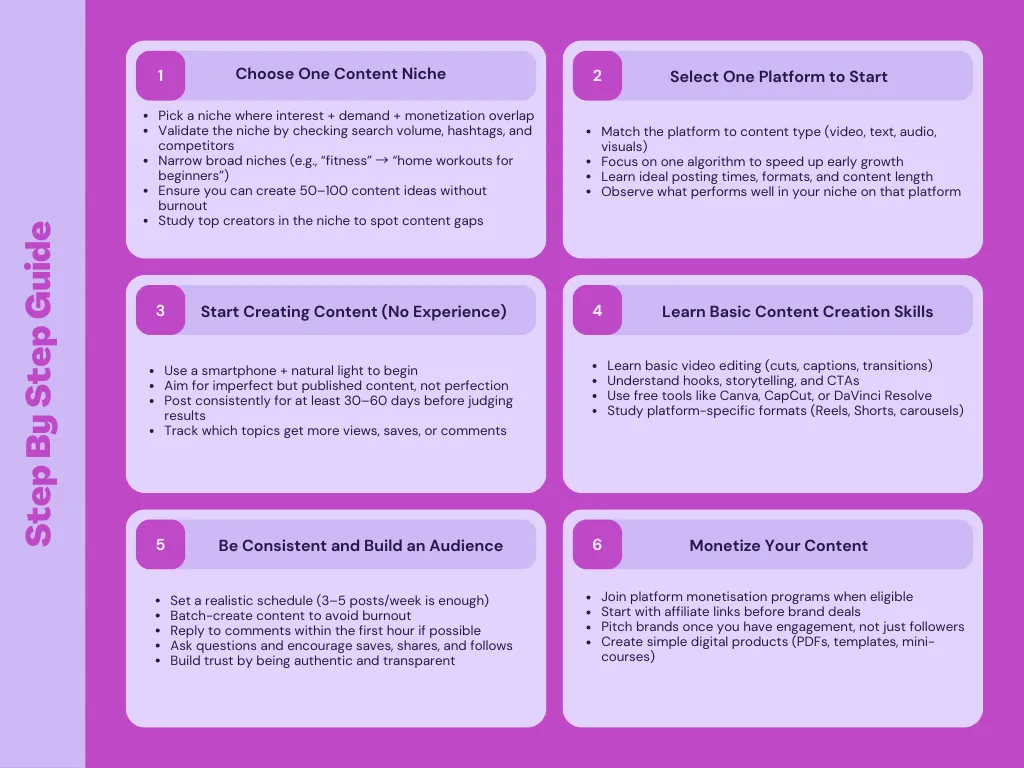
Step 1: Choose One Content Niche
Choose one of the topics that you are passionate about and can make content on it regularly. This is a key step in How to Become a Content Creator, as consistency matters more than perfection. Examples of your niche would be fitness, personal finance, gaming, cooking, parenting, and technology, just to name a few. Specificity makes you unique and helps you find a loyal audience more easily compared to creating generic content.
- Pick a niche where interest + demand + monetization overlap
- Validate the niche by checking search volume, hashtags, and competitors
- Narrow broad niches (e.g., “fitness” → “home workouts for beginners”)
- Ensure you can create 50–100 content ideas without burnout
- Study top creators in the niche to spot content gaps
Step 2: Select One Platform to Start
Starting out with numerous platforms at once is a bad idea. Select one depending on what you are going to write about as well as where your target market spends time. Get to know the algorithm, features and the community of that platform first before going to other platforms. This targeted strategy is a fast way of growing.
- Match the platform to content type (video, text, audio, visuals)
- Focus on one algorithm to speed up early growth
- Learn ideal posting times, formats, and content length
- Observe what performs well in your niche on that platform
- Save time by repurposing later, not at the start
Step 3: Start Creating Content (No Experience Needed)
Stop thinking and begin acting. You are likely to have clumsy and unrefined content in your early posts and that is all right. Any successful artist has embarrassing first-time news. The only solution is to write, post, receive feedback, and write more and more regularly.
- Use a smartphone + natural light to begin
- Aim for imperfect but published content, not perfection
- Post consistently for at least 30–60 days before judging results
- Track which topics get more views, saves, or comments
- Improve one thing per post (hook, thumbnail, caption, or edit)
Step 4: Learn Basic Content Creation Skills
Taking time to master some of the basics of video editing, photography basics, writing techniques or graphics design based on the type of content you are creating. YouTube tutorials, practice, and free courses will teach you all that you need. Skills can be acquired as a result of constant production and deliberate practice.
- Learn basic video editing (cuts, captions, transitions)
- Understand hooks, storytelling, and CTAs
- Use free tools like Canva, CapCut, or DaVinci Resolve
- Study platform-specific formats (Reels, Shorts, carousels)
Step 5: Be Consistent and Build an Audience
Produce and post material at a regular frequency that your audience can depend on. Consistency creates trust and custom with your viewers whether on a daily, weekly or bi-weekly basis. Connect in a real way with comments, messages and your community to build real relationships other than content consumption.
- Set a realistic schedule (3–5 posts/week is enough)
- Batch-create content to avoid burnout
- Reply to comments within the first hour if possible
- Ask questions and encourage saves, shares, and follows
- Build trust by being authentic and transparent
Step 6: Monetize Your Content
When you have an audience that was engaged, begin to look into the monetization options that can fit your platform and niche. Apply to platform partner programs, contact collaborate with relevant brands, generate affiliate content, or create digital products, which your audience desires and would pay.
- Join platform monetisation programs when eligible
- Start with affiliate links before brand deals
- Pitch brands once you have engagement, not just followers
- Create simple digital products (PDFs, templates, mini-courses)
- Track income sources to avoid reliance on one stream
Step 7: Scale and Build Authority
Go to other platforms, partner with other makers, produce more and better content, and become an authority figure in your niche. Expand revenue basis, consider outsourcing either editing or management, and concentrate on strategic expansion without losing the genuine interaction with your audience.
- Repurpose top-performing content across platforms
- Collaborate with creators in the same or adjacent niches
- Outsource editing or scheduling to save time
- Build an email list or community for long-term ownership
- Position yourself as an expert through guides, case studies, or tutorials
How Content Creators Make Money
| Revenue Stream | Typical Earnings Range (Monthly) | Who Usually Earns This? |
|---|---|---|
| Ad Revenue (YouTube, Blogs) | $50 – $5,000+ | Small to mid creators |
| Brand Sponsorships | $200 – $20,000+ per deal | Mid to large creators |
| Affiliate Commissions | $50 – $10,000+ | Affiliate niche creators |
| Merchandise Sales | $100 – $8,000+ | Established creators |
| Subscriptions (Patreon, OnlyFans, Etc.) | $100 – $15,000+ | Loyal community creators |
| Course/Workshop Sales | $500 – $30,000+ | Expert/educator creators |
| Digital Products (Ebooks, Templates) | $50 – $12,000+ | Niche creators |
| Live Stream Donations & Tips | $10 – $5,000+ | Streamers & interactive creators |
| Podcast Sponsorships | $200 – $15,000+ | Popular podcasters |
| Platform Creator Funds (YouTube Shorts, TikTok) | $50 – $4,000 | Growing social media creators |
Ad Revenue from Platforms
Youtube Partner Program, Tik Tok creator funding and Facebook monetization reward creators using views, watch time and engagement. Although the revenue is not very great at the beginning of your career, the ad revenue is a significant income as your audience expands and can reach thousands of dollars monthly with popular creators.
Brand Sponsorships and Partnerships.
Companies also compensate creators to use their work in content to promote products or services, which is an important aspect of How to Become a Content Creator. Rates of sponsorships vary from free products to thousands per post, based on the number of people reached and the level of engagement. When established, these collaborations often become the main source of income for creators.
Affiliate Marketing Commissions.
Share special links to products you wholeheartedly recommend and receive commissions on the purchasing of products by your links. This opportunity is provided in Amazon Associates, ShareASale, and hundreds of brand affiliate programs. Affiliate revenue is passive and it grows perfectly well with the size of your content library.
Online Products and Coursework.
Sell online courses, templates, presets, and/or ebooks that your audience wants. The profit margins of digital products are incredible because it does not include inventory, shipping or production costs. As soon as they are created, they yield an income over again with minimum efforts.
Memberships and Premium Content.
Subscriptions such as Patreon, YouTube Memberships and Substack allow fans to pay to access exclusive content, early access or special privileges every month. This will generate a consistent recurring revenue and stronger bonds with your most loyal fans who appreciate being able to have special access to you.
Physical Products and Merchandise.
Design and sell branded items such as clothing, accessories, or tangible merchandise that is related to your niche. Print-on-demand companies deal with the manufacturing and distribution of products, and merchandise can be sold even by smaller artists. The merch also acts as a free promotion when your fans are using your brand.
Tools & Setup Needed to Start
- Your Smartphone: The phones of today are superior in cameras which are more than sufficient to get started in content production on any platform.
- Free Editing Software: CapCut, DaVinci Resolve or Canva offer professional editing functions at no cost.
- Good Lighting: Natural light through the window is initially good, or under $30 ring lights enhance the video quality significantly.
- Basic Microphone: Phone mics are fine, but a $20-50 lavalier microphone or USB microphone are much better at improving the quality of audio, which is more important than video quality.
- Consistent Internet Connection: To maintain constant presence, a good internet connection to upload your content and connect with your audience is required.
- Content Calendar Tool: Free programs such as Notion, Trello, or Google Calendar are used to plan and organize content schedules in order to be consistent.
- Analytics Tools: Built-in analytics Platforms provide insights into what content is performing and how this understanding can help you know what audiences prefer and provide it.
Common Mistakes Beginners Make
- Waiting until it is perfect: Beginners will wait to get better equipment, knowledge and perfect conditions which will never arrive. Begin now with what you possess and get better with it.
- Unpredictable Posting Timeline: The production of every now and then perplexes both viewers and software. Infrequent posting destroys the momentum, and growth is hardly possible. Content perfection is not as important as consistency at first.
- Replicating Other Creators Verbatim: It is clever to learn the tips of successful creators, but plagiarize them by copying their style or subject matter and personal traits, and you become a forgotten face. Be inspired and define your own voice and way.
- Disregard of Analytics and Feedback: Most novices produce content that they desire and not what the audience wants. Monitor metrics, comments and patterns of engagement so as to effectively drive content strategy.
Tips to Grow Faster as a Content Creator
- Analyze Your Metrics Faithfully: Learn what content is doing best, when your viewers are most and what engages. Bet on what is working and dump what is not appealing.
- Connect Authentically to Your Community: Respond to comments, pose questions, generate polls, and also make your audience feel appreciated and attended to. Engaging in the community is a sign of algorithms and developing core fans that share your content.
- Cooperate with Other Creators: You reach new audiences and get variety in your content by partnering. Identify complementary niches with creators of similar levels of audiences to collaborate mutually.
- Maximize Platform Algorithms: Get familiar with the functionality of each platform algorithm and produce content based on the platform. Appropriate hashtags, keywords, trending sounds, and the best time to post should be used to ensure the content is most visible and reaches the maximum number of people.
- Secure Viewers at a Glance: The initial three seconds will make the difference between those viewing your work and people scrolling by. Begin with persuasive hooks, questions, or shocking statements that will attract attention immediately followed by providing value.
Conclusion
One of the most convenient and satisfying opportunities that are offered today is learning how to become a content creator. You do not require permission, credentials and huge investments to begin. The entry barrier has never been decreased, and the opportunities of influence and revenues have never been greater. The most important thing is the first step, be consistent during that difficult initial period, and never give up as you keep on getting better according to what you are learning.
The process of becoming a content creator is not about becoming successful in a day or two but creating something valuable throughout a lifetime through hard work and sincerity. Someone somewhere is waiting to find you with your extraordinary views, experiences and personality. Then quit thinking, begin creating, and keep in mind that all the content creators you envy made it to where you are today, having no followers and something to dream of.
FAQs
What is the duration of becoming a successful content creator?
Most creators achieve substantial traction in 6-12 months of regular input, however, some may develop at a higher or slower pace, again, based on niche, quality, and consistency.
Should I reveal my face to be a content creator?
No, there are lots of successful creators who create their respective audiences without displaying their face in voiceovers, animation, recording the screen or for focusing on their hands during their demonstration skills.
What is the amount of money that content creators can earn?
The income can be several hundred dollars every month or millions every year. The average full time creators will make $30,000-100,000 per year when they have multiple sources of revenue.
Which is the most appropriate platform to begin with content?
It hinges on the type of content and the audience that you are targeting. The platform that fits long video content is YouTube, visual contents, Instagram, short entertaining videos, Tik Tok, and written expertise is best used in blogs.
Is it possible to be a content creator and work full-time?
Absolutely. The vast majority of creators begin doing it part-time and make content on evenings and before changing to full-time when their content income surpasses or equals their work income.