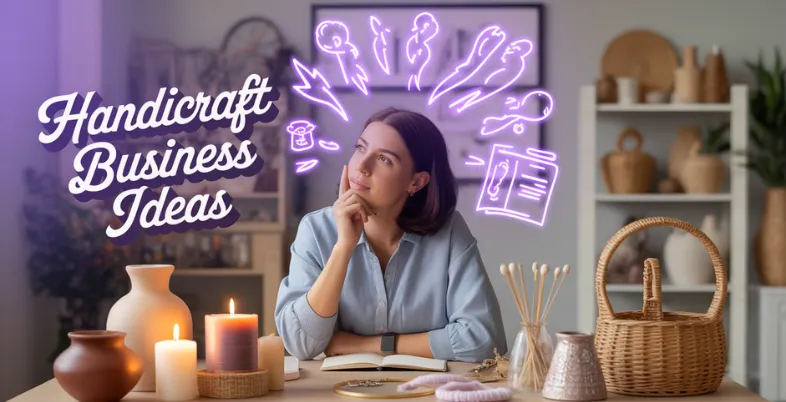
Handicraft businesses are becoming one of the most profitable and creative small business opportunities today. With growing demand for handmade, eco-friendly, and customized products, starting a handicraft venture can turn your artistic skills into a steady source of income. From handmade jewelry and home décor items to traditional art pieces and personalized gifts, countless handicraft business ideas require low investment and offer high profit potential.
The best part is that many of these businesses can be started from home with minimal equipment and raw materials. Online platforms and social media have also made it easier than ever to reach customers across India and globally. Whether you are a student, homemaker, or aspiring entrepreneur, a handicraft business allows flexibility, creativity, and scalability. With the right strategy, pricing, and marketing approach, you can build a successful brand in the growing handmade products market.
Is a Craft Business Profitable?
Yes, handicraft business is a good business to venture into, particularly in India, due to the increasing demand, low capital to start, and high profitability, whereby the business remains profitable to entrepreneurs like you who like engaging in creative business. The profit margins are usually between 30 and 50 percent due to the high prices of unique handmade products sold through e-commerce.
Market Growth
The industry of handicrafts in India has reached US4.56 billion by 2024 and is anticipated to reach US8.19 billion by 2033 with a six percent CAGR, which has been driven by exports to more than 100 countries and tourism. The local market, such as Amazon Karigar or Etsy, increases availability, whereas the trends in the global market are on the sustainability of products and crafts.
Profit Factors
- Minimal initial capital (e.g., home-based installations) is matched with high ROI due to uniqueness at the premium and the scalability of e-commerce.
- Some of the niches, such as jewelry, textiles (Chikankari, Bandhani), pottery, and wooden crafts, are high-paying, particularly through exports.
- Training, credit, and marketing assistance are provided through government initiatives (NHDP, CHCDS) and increase the viability of clusters such as Surat or Varanasi.
How to Choose the Best Handicraft Business Idea
The sale of the handicraft business idea involves consideration of demand in the market, individual ability, start-up costs, and profitability. Pay attention to concepts that fit the trends of sustainable, personalized, and home items, such as decorations, which are popular in India.
- Assess Your Skills: Begin by enumerating the handicrafts you are good at or feel enthusiastic about, like pottery, beadwork, macramé, or embroidery- these capitalize on the skills you already have, so that you need not learn much. For low-cost crafts, focus on materials with low material prices, such as tufted rugs or resin art, which require low-cost materials such as yarn or epoxy. Prefer small-scale prototyping to achieve test proficiency first.
- Research Market Demand: The tendencies in the research on websites like Etsy, Shopify India, or local markets of high-need products like customized jewelry, candles, or woven decorations. Check regional needs in Delhi – think about environmentally friendly, cultural items like upcycled furniture or hand-painted signs that are trendy among the urban customer base.
Google Trends or Instagram to confirm the volume of search on such concepts as macramé wall hangings or custom gift baskets.
- Evaluate Profit Potential: Calculate cost: look at ideas with 50-70% margins, i.e., beadwork ( 2000-100000 start up ) or ceramics, where the selling price is significantly more than the material cost. Scalable products that Target can target are seasonal wreaths or pet accessories that can be used in both seasons and have higher prices (₹500-5,000 per item).Factor ROI by determining the sales volume- classes in pottery or online stores can be fast earned through online platforms.
- Take into account the Startup Feasibility. Select home-based concepts that require small space/equipment, such as jewelry design or needle-felted products, which are suitable as low-start businesses and do not require large investments, such as ₹50, 000. Choose flexible crafts in favor of online sales (e.g., through Shopify) and local pop-ups, which fit IT professionals in balancing the digital marketing perspective. Make sure that the standards of Indian handicraft export are adhered to in case of an expansion to other regions beyond Delhi.
- Validate and Test: Test 3-5 concepts and sell in small batches on Instagram or Meesho to get feedback and sales. Measures such as customer repeat rate of such products as epoxy resin crafts or custom mugs.Judge by data- Kill small fishes such as niche cuts when more mainstream attractors, such as soy candles, are performing better.
List of 12 Best handicraft business ideas
1. Handmade Jewelry
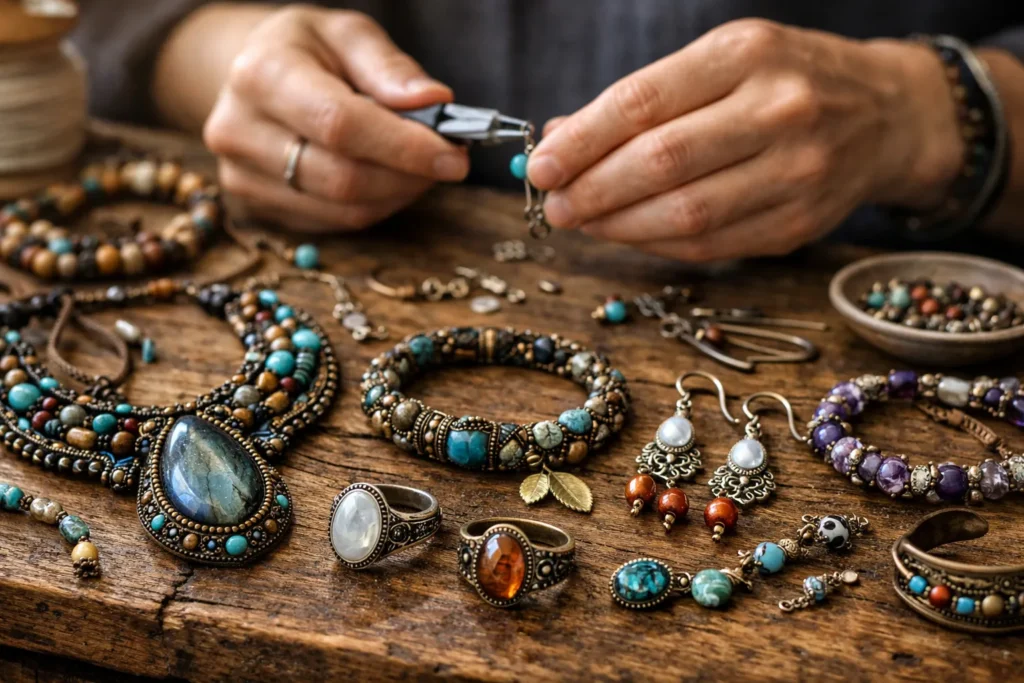
Jewelry handicraft industry is a low entry-level, creative type of business where the artisans make one of a kind piece of jewelry using different materials such as beads, gemstones, wires, climays and metals, and in most cases with reference to traditional Indian motifs (e.g, Kundan, Temple, or tribal design) to appeal to local as well as foreign markets.
You get cheap raw materials at the wholesale market, like the Sadar Bazaar in Delhi, or online, like IndiaMART, and create custom products using the hand tools, and sell them via e-commerce platforms (Etsy, Instagram Shops), local craft fairs, pop-up kiosks or B2B to the boutiques, where digital marketing tools like Instagram Reels and Google Analytics are used to identify interested customers.
Key Advantages
- Easy entry barriers: Home-based and less skills or no skills; train through free YouTube tutorials or short courses.
- High margins: 20-30 percent selling price in raw material; most profit margins are typically 50-300 percent per piece.
- Design flexibility: It can be unrestricted designs, bespoke (e.g., birthstones), or trends (e.g., boho or minimalist).
- Digital capabilities: Go digital, use Shopify/Instagram; go pan-India/export through SEO and targeted advertising.
- Sustainability worth: Greener materials are attractive to conscious consumers; comply with Make in India to grant.
- Low overheads: The storefront was not necessary; the flexible hours suited to integrate the side hustles with IT/digital marketing employment.
Startup Cost
| Item | Estimated Cost |
| Raw Materials (beads, stones, wires, clasps for 500 pieces) | 15,000 – 25,000 |
| Basic Tools (pliers, cutters, molds, polishing kit) | 5,000 – 10,000 |
| Workspace Setup (table, storage, lighting) | 3,000 – 5,000 |
| Packaging & Branding (boxes, tags, labels) | 2,000 – 4,000 |
| Online Presence (domain, basic Shopify/Instagram setup) | 5,000 – 8,000 |
| Marketing (initial ads, photography gear) | 5,000 – 10,000 |
| Legal/Registration (GST, trademark basics) | 2,000 – 5,000 |
| Total | 37,000 – 67,000 |
2. Macramé & Wall Hangings
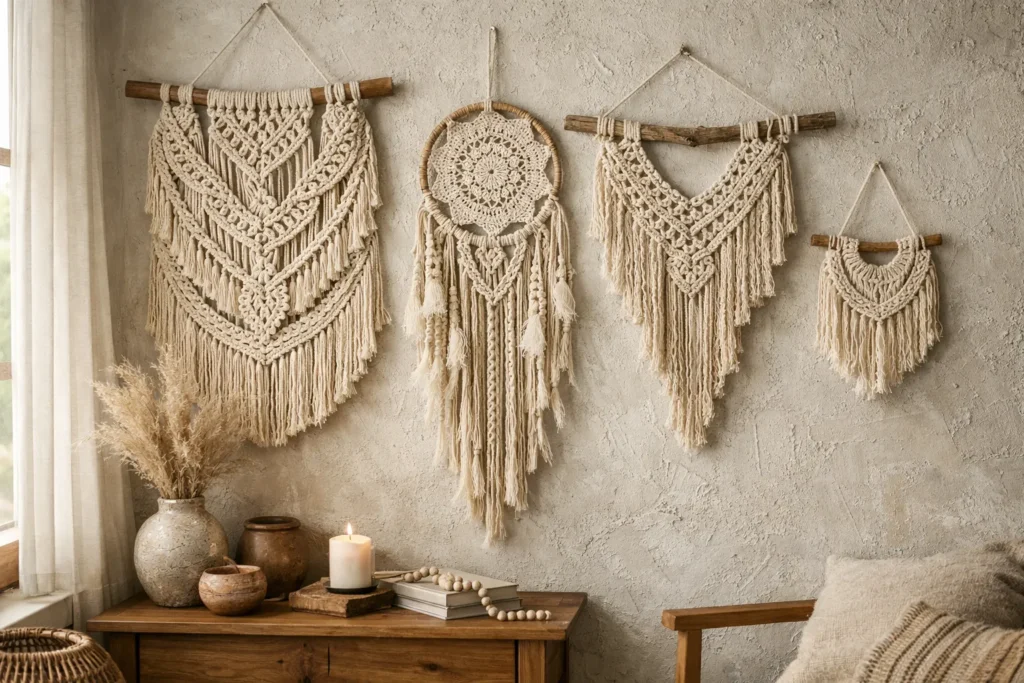
Macramé & Wall Hangings is a creative and low-investment option among handicraft business ideas. It involves making decorative pieces using knotting techniques with cotton cords, jute, or wool. Popular products include wall hangings, plant holders, dreamcatchers, and keychains that suit modern bohemian and minimalist interiors.
You can begin from home with simple tools like scissors, measuring tape, and wooden dowels. Raw materials are affordable and easily available in local wholesale markets or online platforms. These handmade décor items can be sold through Instagram, Etsy, craft fairs, and home décor boutiques. With unique designs and strong social media promotion, this business offers good profit potential.
Key Advantages:
- Low entry barriers: You can be one of them at home, and you do not require many skills, hence you can acquire them as you are taught through free tutorials on YouTube, or during short courses.
- High margins: raw material prices are 20- 30 percent of the sale price; profit margins are often 50- 300 percent per unit.
- Creative alternative: An endless amount of designs, customizations (e.g., birthstones), trends, including boho or minimalist.
- Digital scalability: Sell online using Shopify/Instagram; consider pan-India geographic follow-up ads; pan-India/export using SEO.
- Sustainability attraction: Green materials are attractive to the conscious consumer; they can be included in grants of the Make in India project.
- Minimal overheads: No brick and mortar is needed; any schedule can fit side hustles and IT/digital marketing jobs.
Startup Cost
| Item | Estimated Cost |
| Raw Materials (beads, stones, wires, clasps for 500 pieces) | 15,000 – 25,000 |
| Basic Tools (pliers, cutters, molds, polishing kit) | 5,000 – 10,000 |
| Workspace Setup (table, storage, lighting) | 3,000 – 5,000 |
| Packaging & Branding (boxes, tags, labels) | 2,000 – 4,000 |
| Online Presence (domain, basic Shopify/Instagram setup) | 5,000 – 8,000 |
| Marketing (initial ads, photography gear) | 5,000 – 10,000 |
| Legal/Registration (GST, trademark basics) | 2,000 – 5,000 |
| Total | 37,000 – 67,000 |
3. Hand-Painted Home Décor
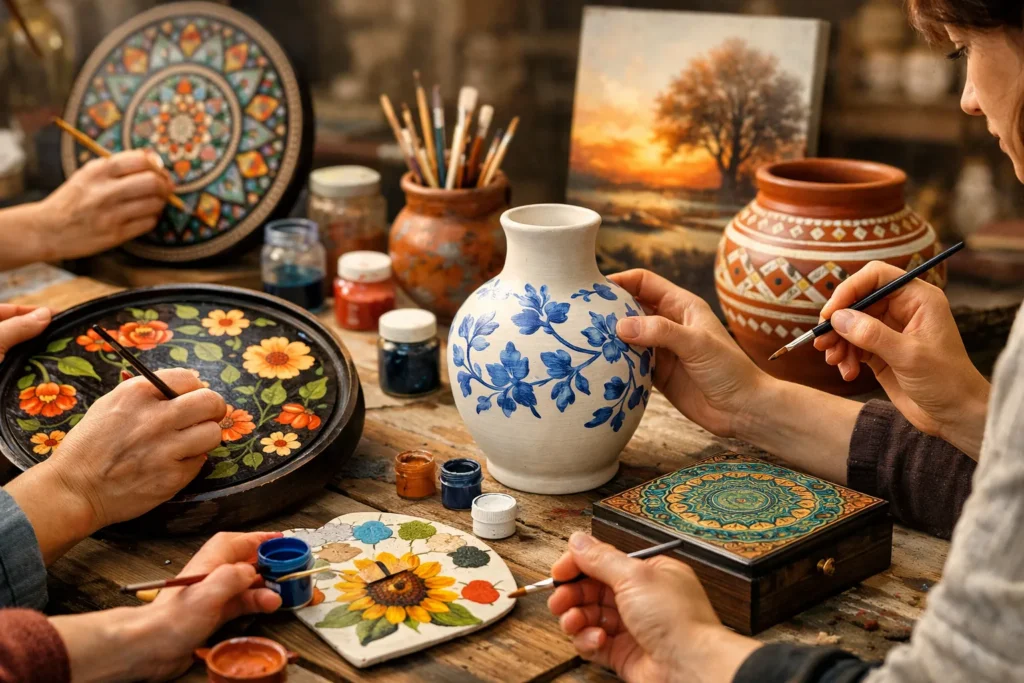
Hand-Painted Home Decor is a handicraft company, in which artists paint elaborate designs on household objects such as vases, trays, wall plates, furniture, lampshades and ceramic pots by hand using either folk art (e.g., Madhubani style, popular in India) or acrylics or enamels to create customizable, unique objects, which are also a blend of traditional art and modern aesthetics.
Middle-class homes, boutique shops, online platforms such as Etsy or Flipkart, and gifting markets are all examples of markets that the business has focused on, where personalization is the primary force, with bespoke designs offered based on the customer themes such as ethnic motifs, nature scenes, minimalist patterns, and low-material costs and high margins played off through direct sales via Instagram shops, craft fairs, or wholesale to interior decorators.
Key Advantages:
- Large profit margins: 20-30-percent of the selling price is raw materials, pieces may sell 3-5-x up because of the uniqueness of handmade.
- Low barrier to entry: It needs simple artistic abilities; it does not require any heavy machinery, hence it can be run in homes.
- Customization appeal: Custom orders increase customer loyalty and sell at higher prices (20-50% higher).
- Online scale: The scale of the ethnic designs is easy to sell using e-commerce, social media, and export markets like the US/Europe.
- Sustainability benefit: Paint consisting of non-toxic colors made out of natural materials; targeted at the environmentally conscious consumers who do not use plastic decals.
- India: The leverage of culture in India Rides on regional art in the country as a source of authenticity, exploits government programmes like subsidies on handicrafts.
- Flexible labor force: Using women/self-help groups in the rural setting, lower labor expenses, and generates social impact.
Startup Cost
| Item | Estimated Cost |
| Paints & Brushes | 15,000 – 25,000 |
| Blank Items (vases, trays, etc.) | 30,000 – 50,000 |
| Workspace Setup (table, storage, kiln if needed) | 20,000 – 40,000 |
| Tools & Supplies (varnish, stencils) | 10,000 – 15,000 |
| Packaging & Branding (boxes, labels) | 8,000 – 12,000 |
| Marketing (website, social ads, photography) | 15,000 – 30,000 |
| Legal/Registration (GST, trademark) | 5,000 – 10,000 |
| Total | 1,03,000 – 1,82,000 |
Suggested Read:
4. Candles & Wax Art
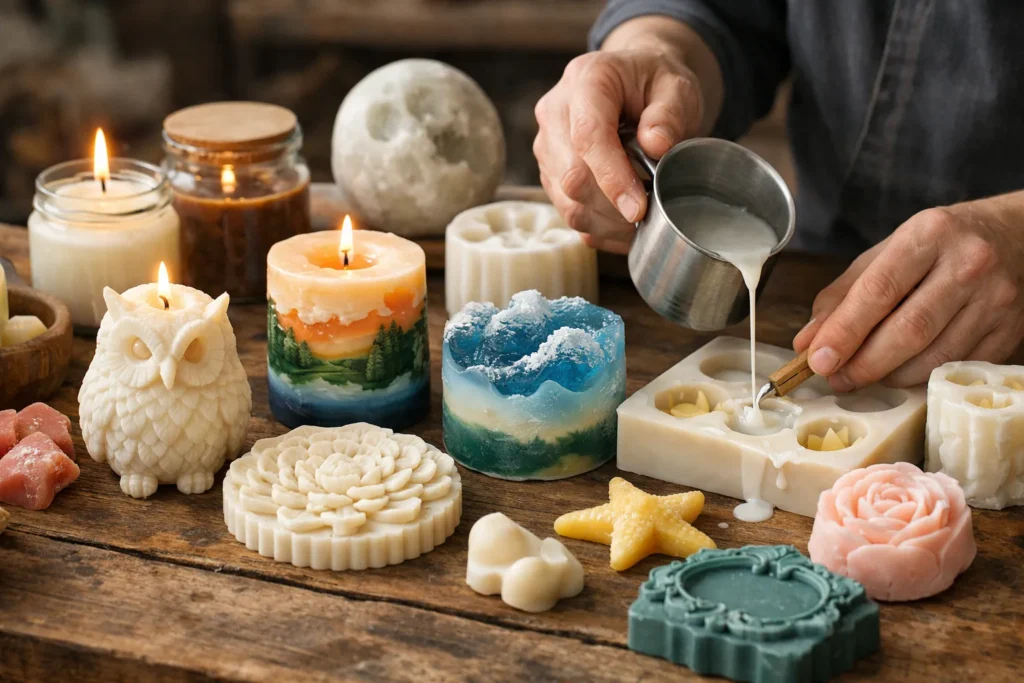
Candles and Wax Art is a handicraft company that produces and sells decorative, aromatic, or artistic candles and wax sculptures using some natural wax (soy, beeswax, or paraffin), which can be optional essential oils, dyes, embeds (dried flowers or crystals), and molds to achieve a desired shape (floating candles, pillar arts, or custom wax figurines).
Based in Delhi, starting small out of home, you can get cheap raw material in the local markets (e.g. Sadar Bazaar) or online through the IndiaMART site, test your designs based on the Indian motifs (e.g. diyas or mandala patterns) and sell with the help of Instagram, Etsy, WhatsApp groups or craft fairs or online through Meesho where there is always demand and the low entry barriers mean high margins of the creative.
Key Advantages
- Small start-up capital: Minimal cost of less than 50 000 with an easy home setup where there is no need for fancy equipment.
- Profit margins of raw materialare 20-30 cents of the selling price; appeal of craft will allow 2-3 times markup (e.g. 100 cost candle sells at 300+).
- Imaginative elasticity, Unlimited ability to tailor niches like eco-friendly soy candles or personalized wax art presents.
- At home sscalable Sign up as an individual, then expand to workshops or drop shipping online, and do not need to maintain a big stockpile.
- Seasonal demand: The season is active during the festivals (Diwali, Christmas), though it is stable due to the home decor, aromatherapy, and corporate gifts.
- Eco-trend fit: Non-toxic, natural waxes will be very appealing to sustainability-oriented consumers in the city of India.
- Easy marketing: Social media images, use of UGC on Instagram Reels, and cheap pop-ups in the area are all options to get exposure fast.
Startup Cost
| Item | Estimated Cost (₹) |
| Waxes (soy/beeswax, 50kg) | 15,000 – 20,000 |
| Essential oils & dyes | 5,000 – 8,000 |
| Molds, wicks & embeds | 5,000 – 7,000 |
| Packaging & labels | 3,000 – 5,000 |
| Tools (double boiler, thermometer, etc.) | 4,000 – 6,000 |
| Marketing (website/domain, initial ads) | 2,000 – 5,000 |
| Total | 34,000 – 51,000 |
5. Pottery & Clay Products
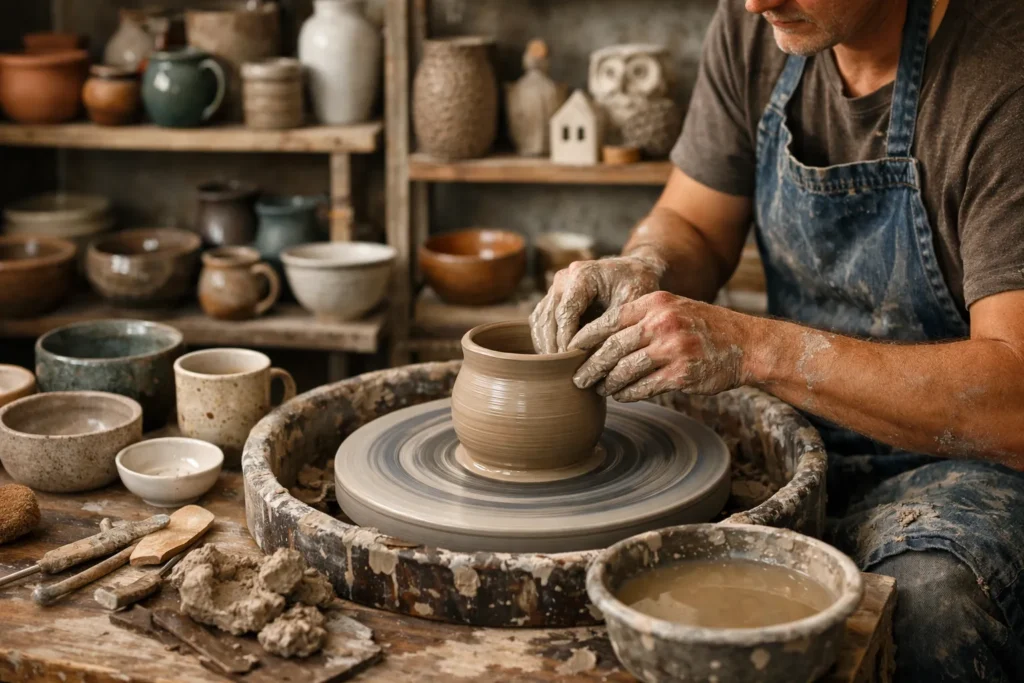
A handicraft business with pottery and clay products entails the production of both functional and ornamental products such as pots, vases, planters, terracotta jewelry, and home décor through traditional molding, wheel-throwing, glazing, and firing techniques using locally available clay materials.
It is one of the most sustainable handicraft business ideas, frequently incorporating ancient Indian craft underpinnings with modern designs to meet the growing demand for eco-friendly handcrafted products. Entrepreneurs can start from home or a small workshop and sell through local markets, online platforms, craft fairs, or exports. They can further expand by collaborating with artisans and leveraging government support programs like MSME for funding, training, and market promotion.
Key Advantages:
- Low barriers to entry with low skills required; study through workshops, YouTube, and government centers.
- Exploits local resources such as clay that are ample and inexpensive, and maintains its expenses at that level as an aspect of sustainability.
- Existence of unique and environmentally friendly products being in high demand both in thedomestics and export markets, particularly the planters and the decor.
- Operates all year round with artistic flexibility of special design, festivals, or combination packages such as plant+potter kits.
- Online sales, reels, and bulk orders are profitable margins; scalable to workshops or high-end exports.
Startup Costs
| Item | Min Cost (₹) | Max Cost (₹) |
| Workspace/Lease | 50,000 | 1,50,000 |
| Equipment (Wheel, Kiln) | 1,00,000 | 3,00,000 |
| Raw Materials (Clay, Glazes) | 10,000 | 40,000 |
| Tools & Supplies | 5,000 | 20,000 |
| Marketing/Inventory Software | 5,000 | 15,000 |
| Total | 1,70,000 | 5,25,000 |
6. Handloom & Textile Crafts
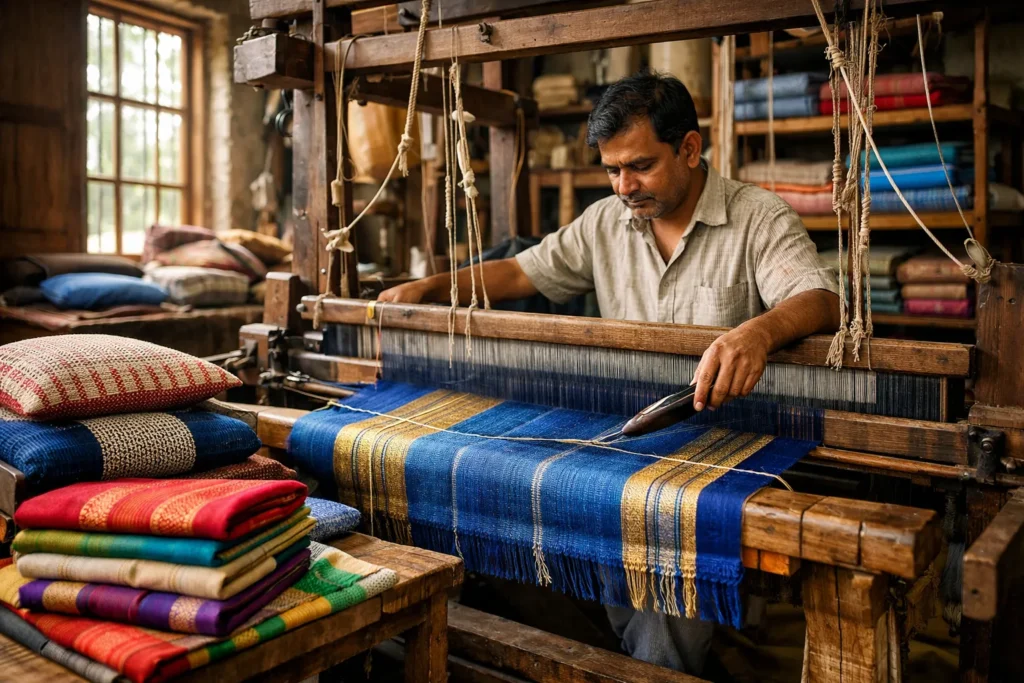
A handloom and textile crafts handicraft enterprise will be a business that produces and markets traditional hand-woven fabric, clothes, household items such as sarees, scarves, and upholstery made using manual weaving tools and made using natural dyes to exploit the rich cultural heritage, whilst satisfying a growing demand for sustainable and eco-friendly products.
The low-tech production, online sales, craft shows, and exports are the main channels of sales of this home-based or small-scale venture, which works with preserving age-old techniques in the context of the increasing popularity of slow fashion and artisanal products.
Key Advantages
- Creates jobs,s particularly among rural women, and creates financial and social cohesiveness.
- Conserves culture by using regional designs and methods that are generational.
- Adjusts to increasing demand in the world market for sustainable, hand-crafted textiles with low environmental impact.
- Provides constant revenue through local export, e-commerce, and GDP.
- Minimal machinery is required, and it allows operations to be scaled to be run at home using local raw materials.
Startup Costs:
7. Wooden Handicrafts
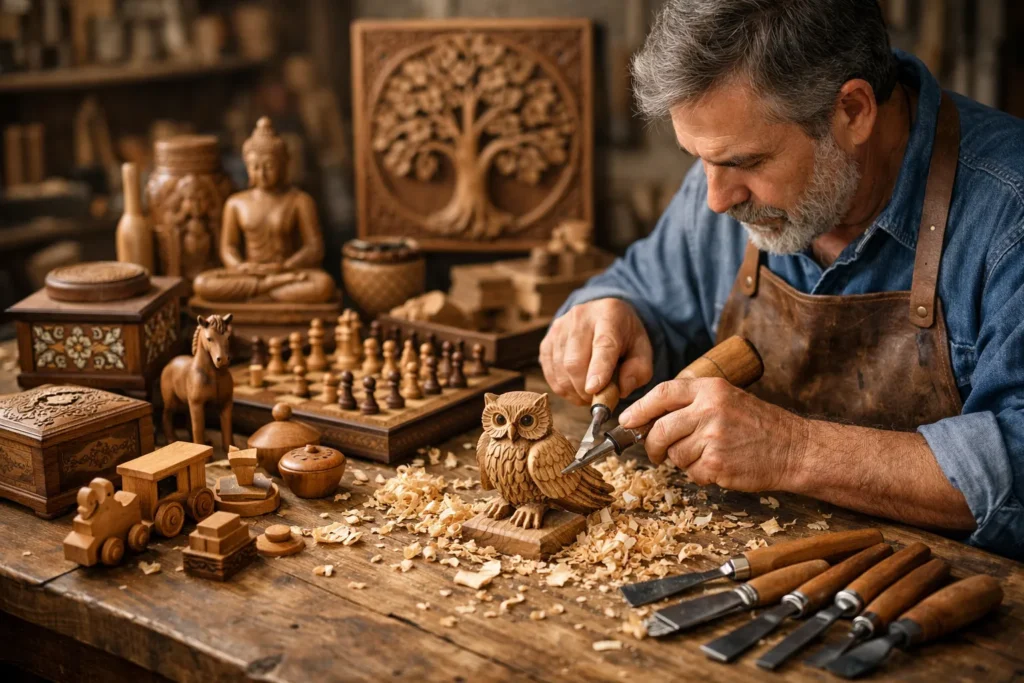
The idea of opening a wooden handicrafts venture means creating and marketing unique, hand-carved products such as furniture, décor items, toys, and utensils using sustainable sources of wood like teak, sheesham, or mango wood, capitalizing on India’s rich artisanal heritage and the thriving multibillion-dollar global market.
This is one of the most profitable handicraft business ideas for areas with skilled carpenters or hobbyists, especially in cities like Delhi, where raw materials are easily available. Entrepreneurs can create custom-made products by blending traditional motifs with modern designs and sell through online stores, craft fairs, or exports. With relatively low material costs and high perceived value due to authenticity and eco-friendliness, profit margins can range between 30–50%.
Key Advantages
- Low entry, usually under 75,000Rs, beginner or side hustle.
- Good profitability (30-50) of value-added craftsmanship and the perceived uniqueness.
- Increasing demand in domestic (₹4.56B market) and export markets (₹31,095 crore in FY24).
- Green appeal with sustainable reclaimed wood of low carbon footprint.
- Providing subsidies to local economies and maintaining inter-generational cultural skills.
- Easy online global sales and home-based operation with a flexible nature.
Startup Costs
8. Paper Craft Products
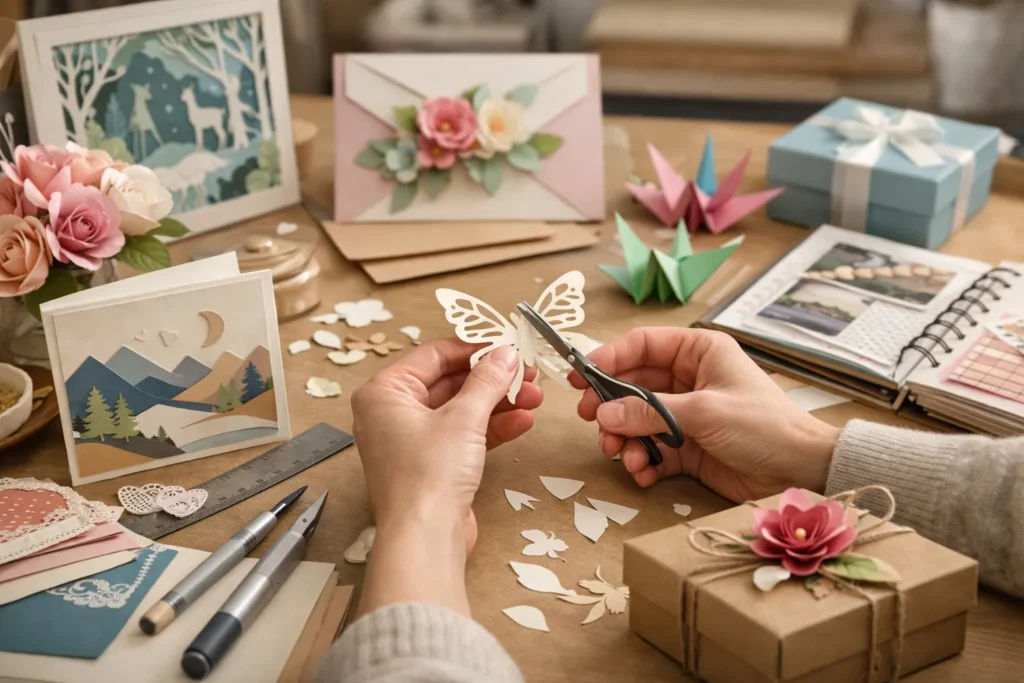
Paper craft products handicraft business is a venture that focuses on creating handmade items using affordable materials like colored paper, cardstock, glue, cutters, and decorative embellishments. It includes products such as greeting cards, origami decorations, paper flowers, scrapbooks, gift boxes, and customized stationery. This is one of the most beginner-friendly handicraft business ideas, as it requires low investment and basic crafting skills.
The business benefits from the growing demand for personalized, eco-friendly, and customized gifts and décor items. Entrepreneurs can sell through platforms like Etsy, Instagram, and local markets across India. With creative designs, online marketing, and even small workshops, this business can scale quickly while maintaining good profit margins.
Key Advantages:
- Entry barriers are minimal, and skills are not many; anyone can begin to use household objects.
- High profit margins can also be realized to 70-80, where low cost of raw materials (paper costs pennies per unit) can be used to produce high profit margins.
- Home-based flexible work is ideal, and part-time is appropriate in the situation of women or part-time side work in Delhi.
- Efficient online sales prospects via Etsy/Instagram and the local craft fairs, whereby its customers can be easily reached.
- Recycled paper green marketing will attract green customers and ordinary businesses.
- Basic bespoke wedding, activities (Diwali, Rakhi), boosting high prices.
Startup Costs
| Expense | Minimum | Maximum |
| Equipment (cutters, tools) | $100 | $1,000 |
| Raw Materials (paper, glue) | $50 | $500 |
| Legal/Registration | $50 | $300 |
| Marketing/Branding | $100 | $500 |
| Packaging/Shipping | $50 | $200 |
| Total | $350 | $2,500 |
9. Resin Art Products
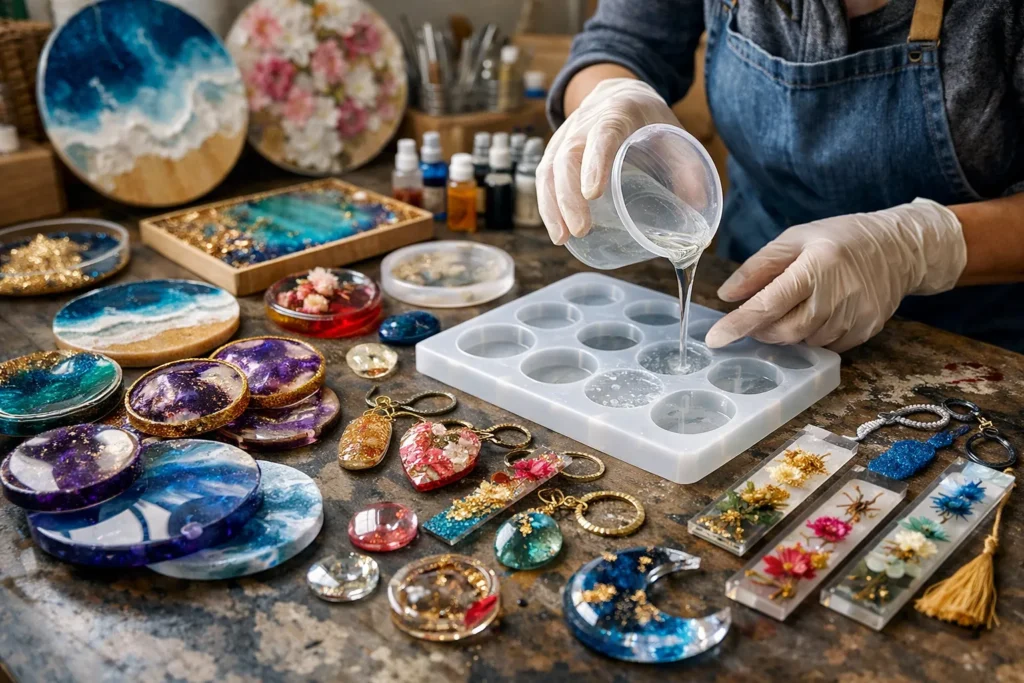
Resin art products are colorful and glossy ornamental products that are poured into silicone molds with pigments, dyes, glitter, or dried flowers, and then cured and finished to have a durable, modern appearance thatise popular in the home decor and gift market.
It is a type of online shop that appeals to creative entrepreneurs, especially in India, whose demand is increasing due to the social media trends, including Instagram and Etsy sales, which implies that a novice can start his or her business with a small scale using only the internet (only online sales) or craft fairs or WhatsApp groups and scale up with custom orders and workshops.
Key Advantages
- Easy barriers to entry and unskilled; they can learn in several days through free tutorials on YouTube.
- Flexibility due to the operation of the home being based, which is ideal in a situation where the woman’s or side job lacks any specific hours.
- Large profit margins (as much as 70-80) because products sell 3-5 times higher than the cost of material.
- The high productivity of the production process (24-48 hours in a batch) eases timely inventory.
- The unlimited personalization is what brings about viral social media marketing and loyal niche customers.
- Production may reach as much as solo or team, and may have numerous channels of sale, e.g., Etsy or local markets.
Startup Costs
| Category | Estimated Cost (INR) |
| Epoxy Resin & Hardener | 800 – 2,000 |
| Pigments, Glitter, Dyes | 300 – 800 |
| Silicone Molds | 500 – 1,500 |
| Tools (mixing cups, stirrers, torch) | 200 – 500 |
| Safety Gear (gloves, mask) | 200 – 400 |
| Workspace Setup | 300 – 700 |
| Packaging & Marketing | 200 – 500 |
| Total | 3,500 – 7,000 |
10. Fabric Painting & Custom T-Shirts
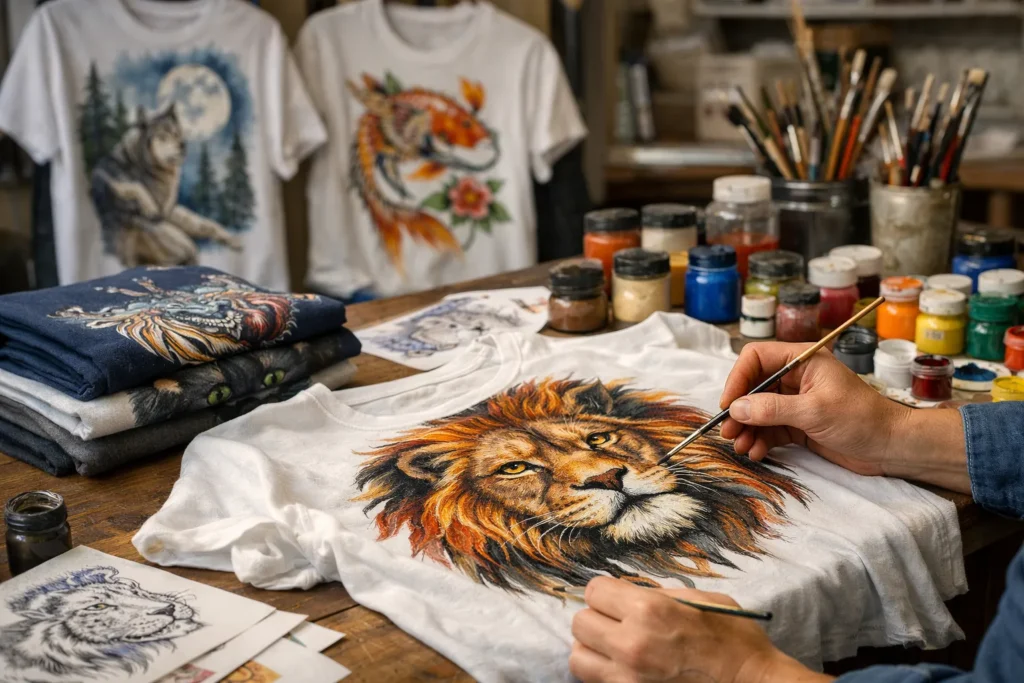
A fabric painting and custom T-shirt handicraft business is an artistic and low-investment venture where entrepreneurs design and paint T-shirts, hoodies, tote bags, and other apparel using fabric paints, brushes, stencils, screen-printing, or heat-transfer techniques based on customer requirements. It is one of the most creative handicraft business ideas, ideal for hobbyists with artistic skills who want to turn their passion into income.
Products can be customized with logos, quotes, pop-culture themes, or event-specific designs for schools, corporations, and fashion enthusiasts. Sales channels include Instagram, WhatsApp, local fairs, and online marketplaces like Etsy and Meesho. As demand grows, the business can scale by adding digital printing equipment for bulk and professional orders.
Key Advantages:
- Minimal barrier to entry: It starts with basic artistic drawing performance, and the equipment used is minimal; no college degree is required.
- High customization appeal: Customers would like personalized products to be utilized as a present, uniform, or self-expression that raises repeat business.
- Flexible operations: Home-based, partially friendly, and low overheads and expansion capability to online sales.
- Good profit margins: 50-70% on special order (e.g., sell a T-shirt at 500, 150 cost).
- Creative outlet: commercialises hobbies; it is not difficult to identify, as the motifs of the Indians or the trends on this basis are really unique.
- Market demand: The Indian market is booming on the trend of social media, events, and youth culture, and has low competition in the niche like ethnic fusion designs.
Startup Cost:
| Item | Estimated Cost (₹) |
| Fabric paints & dyes (starter kit) | 2,000 – 5,000 |
| Plain T-shirts & fabrics (50 pcs) | 5,000 – 10,000 |
| Brushes, stencils, sponges | 1,000 – 2,000 |
| Heat press/screen printing kit | 5,000 – 15,000 |
| Workspace setup (table, racks) | 2,000 – 5,000 |
| Marketing (social media ads, packaging) | 2,000 – 5,000 |
| Total | 17,000 – 42,000 |
11. Bamboo & Jute Products
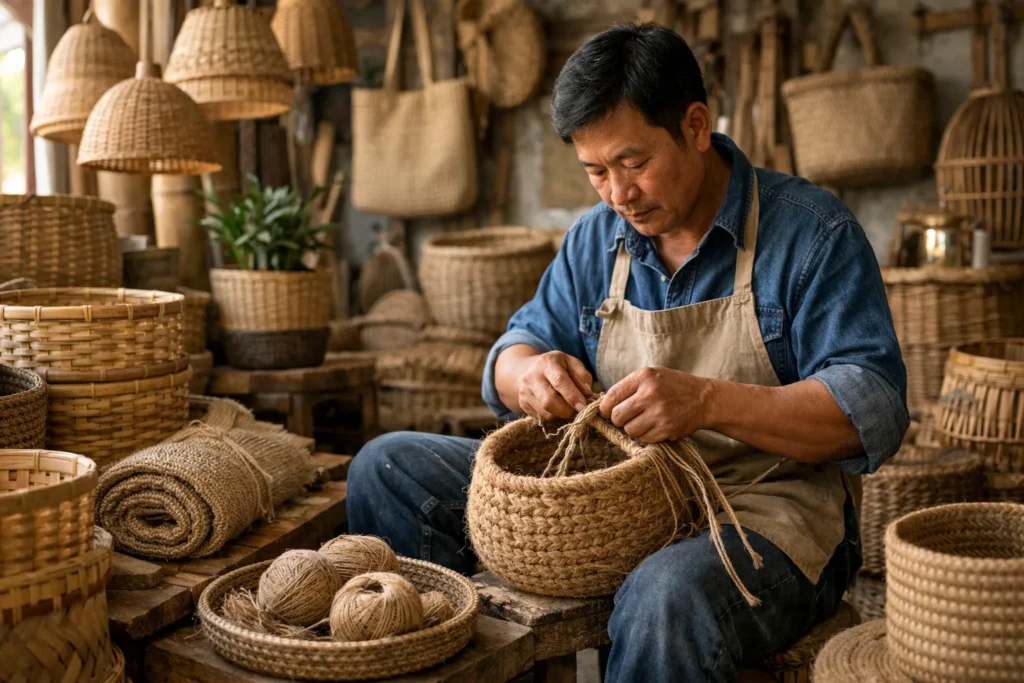
The handicrafts business on bamboo and jute products is founded on the production of non-pollutant and sustainable products made out of fast-growing and renewable fibre, e.g., the bamboo split, and jute fibres, which do not require many processes to be turned into strong and versatile products.
It is a small or hhome-based operationwhich can tap growing demand in plastic substitutes following environmental awareness, government subsidies, including the MMUY scheme in India, and also overseas markets in Europe and the US, therefore empowering entrepreneurs in specific areas of the country like Uttarakhand or Bengal.
Key Advantages
- Green and sustainable: Bamboo and jute are renewable, eco-friendly materials that are biodegradable and will satisfy the global ban on plastic and the eco-conscious trends of consumers.
- High entry barriers: High skill levels; can work out of the house with a little training, most appropriate to self-employment or women.
- Excellent profitability: Averages below 100.00 returns during the first year of the products, such as bags or any decor, to be sold with a high sales margin; the net profitisf up to 5 lakh annually.
- Government help: subsidies, loans, lower the cost of setting the business up; export tax incentives open the door more.
- Product selection: Due to a range of materials, baskets, furniture, jewelry, and custom paintings are sold expensively in the exhibitions.
- High market demand: The local and global market is growing in terms of demands of home decor, gifts, and utilities; low competition in the specialized crafts.
Startup Costs:
12. Crochet & Knitted Items
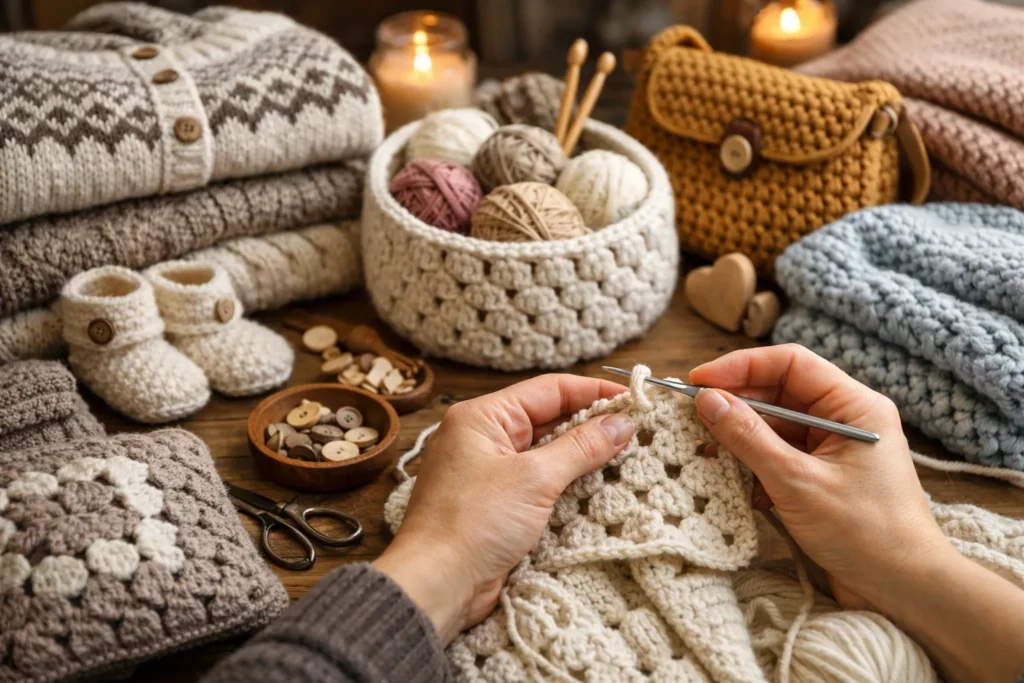
One such type of handicraft business is a crochet and knitted items handicraft business, which is the production and selling of handmade goods in the form of baby blankets, scarves, hats, sweaters, plush toys, home decor, and accessories, made using either yarn, or hook, or needles, and can be run as a home-based business.
It is a low entry venture using personal crafting abilities to create personalizable, high demand stuff which sells on platforms such as Etsy, Instagram, or local markets in India, where the burgeoning popularity of sustainable, handmade items are a source of business revenue, you can enter on your own or contract with local artisans to scale, concentrating on specific segments such as personalized gifts or seasonal wear to get consistent business.
Key Advantages:
- Low startup fees, usually 50-100 dollars,s to run the business out of simple materials such as yarn and equipment.
- Owing to premium pricing (2-5x material costs) that ensured high profit margins.
- Home-based operation without the necessity of a physical store.
- Creative freedom to be a specialist in trending products, such as amigurumi or eco-friendly products.
- Dropshipping supplies or online sales are scalable,e and local knitters can be hired.
- High demand in India for customized, green handicrafts.
Startup Costs
| Item | Low-End Estimate | High-End Estimate |
| Yarn & Materials | $2,000 | $8,000 |
| Tools (hooks, needles) | $100 | $500 |
| Website/Online Setup | $1,000 | $5,000 |
| Marketing & Branding | $6,000 | $17,000 |
| Total | $9,100 | $30,500 |
Conclusion
Handicraft businesses are emerging as one of the most promising small-scale opportunities in India, driven by rising demand for handmade, eco-friendly, and customized products. With the Indian handicrafts market projected to grow from US$4.56 billion in 2024 to US$8.19 billion by 2033, the scope for growth is significant. From jewelry and textiles to candles, pottery, and wooden décor, numerous handicraft business ideas require low investment and offer attractive profit margins of 30%–70%.
The flexibility of starting from home, combined with digital selling platforms like Etsy and Amazon Karigar, makes scaling easier than ever. With the right skills, smart pricing, and strong online marketing, entrepreneurs can build a sustainable and profitable handicraft brand in both domestic and international markets.
FAQs
Q.1 What Are The Initial Actions To Start A Handicraft Business?
Market research should be used to define the demand and competition, then you should choose a niche product,t such as jewelry or textile according to your expertise. Then proceed with legal registrations like a business license or GST in India, and get quality materials.
Q.2 What Is The Start-Up Capital Required In A Handicraft Business?
Initial capital can generally be 50000 to 5 lakhs, which can be used up during the startup phase in materials, tools, packaging, and basic marketing; keep it minimal by working out of their home. Increase sales via internet channels.
Q.3 What Products Can Best Be Made By A Beginner?
The most popular ones are crochet products (scarves, bags), custom jewelry, candles, soaps, and quilts because these are made with low-cost materials and target the gifting markets. Pay attention to unusual, home-grounded bends to become unique.
Q.4 Where Shall I Market My Handicraft Products?
Begin with online marketplaces such as Etsy, Amazon Karigar, or Craftsvilla so that one can reach out easily and then create their own Shopify/WooCommerce websites. Pop-ups and local craft fairs also develop loyal customers.
Q.5 What Are The Legal Issues In Handicraft Businesses In India?
Register as a sole proprietor/LP, apply GST if your turnover is more than 20 lakhs, and receive Udyam benefits for MSME. Reported designs are safeguarded by trademarks.