
The property market has been changed radically by the appearance of iBuyer companies that buy houses directly from the sellers and pay in cash, without the problems of a listing. Opendoor was the first to introduce this model; however, many Opendoor alternatives have now surfaced, and each has its own benefits for homeowners who want to sell their homes in a speedy and convenient manner.
You may be moving due to work reasons, you are avoiding foreclosures, or just wish to avoid open houses and protracted negotiations, but you need to know your options. This is a complete list of the 10 Opendoor competitors in 2026, their services, fees, where they are available in the market, and the best situations in which they can be used to guide you towards making the wisest decision in the process of selling your home.
What Is the iBuyer Model?
What iBuying Means in Simple Terms
iBuying (instant buying) is a breakthrough in home sales, with the help of technology, instant cash offers on residential property are made. Homeowners are given algorithmic values within hours or days instead of waiting months to be listed by an agent, waiting to have buyers, and negotiating endlessly with buyers.
The iBuyer buys the property directly, does repairs and staging, and resells it. This model does not focus much on maximizing sale price, but rather on speed and certainty, which is why it is best suited to the sellers who may prefer convenience as well as certain closing dates, rather than the potentially higher traditional sale proceeds.
How Opendoor Works
- Request an instant offer: Enter your house information on the platform created by Opendoor, and within 24 hours, the platform will provide an automated valuation.
- Look at your cash offer: Look at the amount of your offer, fees on the service (they are usually 5-6% ), and the number of dollars that are likely to be deductible as repairs against your proceeds.
- Select your closing date: Select any closing date within 60 days that will work best with your schedule, being as flexible as never before.
- Full house inspection: Opendoor performs a quick check to ensure the condition of the property and modifies the price accordingly.
- Close and Take cash: Finish the sale with bare minimum paperwork and collect cash proceeds in person and in less time, usually closing within one week.
Pros & Cons of iBuyers vs Traditional Agents
Pros:
- Speed and certainty: Within days, but not months, with assurances of offers that do not put buyers through financing contingencies.
- Time Convenience: Bypass showings, open houses, necessary staging, and even a lot of repair or cleaning.
- Different closing date: Have your own closing date to ensure that you can move out with a job or purchase a new home.
Cons:
- Reduced net proceeds: the net deductions of iBuyer (5-8%) and repair deductions often mean that 10-15% lower net proceeds than traditional sales.
- Small markets: iBuyers are active in a few metros, and they do not cover numerous rural and suburban regions.
- Property limitations: Homes should fit certain conditions (price range, condition, age) in order to get instant offers.
Who Is Opendoor’s Biggest Competitor?
Opendoor has a stiff competitor in the field of iBuyer in the form of Offerpad, who compete based on the volume of transactions, market reach, and technical advancement. Both of them apply advanced AI algorithms to price the property and have spread to various metropolitan areas around the country, making Offerpad one of the most closely watched Opendoor competitors in this segment.
Offerpad stands out with flexible closing dates, free local moving services, and slightly lower service fees in some markets. Whereas Opendoor continues to have a bigger market penetration, the customer-based model and operational effectiveness of Offerpad have earned the company a massive market share, which is likely to make the company the main competitor that homeowners seeking instant cash deals will consider in 2026.
Also Read: Free Linktree Alternatives
Opendoor vs Competitors – Comparison Table (2026)
| Name | Speed of Sale | Cash Offer | Buy Before Sell | Market Availability | Best For |
| Offerpad | 8-60 days | Yes | No | 35+ markets | Flexible closing dates |
| Zillow Group | Varies | No (marketplace) | No | Nationwide | Research and listings |
| HomeLight | 10-14 days | Yes (marketplace) | No | 48 states | Comparing multiple offers |
| Redfin | 30-90 days | Limited | No | 95+ markets | Full-service experience |
| Clever Offers | 14-30 days | Yes (marketplace) | No | Nationwide | Fee-free offer comparison |
| Homeward | 60-90 days | Yes | Yes | 15+ markets | Buying before selling |
| Knock | 75-120 days | No | Yes | 75+ markets | Bridge financing needs |
| Orchard | 60-90 days | Yes | Yes | 30+ markets | Equity advance programs |
| Anywhere Real Estate | 30-120 days | No | No | Nationwide | Traditional brokerage |
| eXp World Holdings | 30-120 days | No | No | Nationwide | Agent-supported sales |
Top 10 Opendoor Competitors in 2026
1. Offerpad

- Founders: Brian Bair, Jerry Coleman
- Founded In 2015
- Business Model: Direct iBuyer purchasing homes for cash
- Main Competitor Type: Direct iBuyer competitor
Offerpad is one of the largest iBuyers in America, which competes directly with Opendoor in terms of instant cash offerings and simplified sales, positioning it among the most prominent Opendoor competitors in the iBuyer space. The business also differentiates itself through customer-oriented benefits such as flexible closing times of 8-60 days and free local moving services. The AI-based valuation technology at Offerpad has been refined to a higher level in 2026, which can provide more precise initial offers and minimize post-inspection corrections that annoy sellers.
How It Works:
- Online valuation of homes.
- Receive a cash offer quickly.
- Arrange arbitrary closing dates.
- Full whole-house evaluation.
Pros:
- Complimentary local transport services.
- Ability to work with flexible closing hours.
- Structured Competitive Service Fee.
Cons:
- Limited to select markets
- Lower than market value
- Repair deductions may apply
Best For: Homeowners who require a flexible closing date with moving assistance.
Website: http://offerpad.com
2. Zillow Group

- Founders: Rich Barton and Lloyd Frink
- Founded In 2006
- Business Model: Real estate marketplace and data platform
- Main Competitor Type: Marketplace competitor
Zillow no longer has its Zillow Offers iBuyer program, but it is still a strong competitor to Opendoor due to its commanding presence in the online marketplace with millions of buyers, sellers, and agents, placing it among notable Opendoor alternatives despite not operating as a direct iBuyer. The Zestimate algorithm of Zillow, which is constantly being enhanced with artificial intelligence and machine learning, gives instant value to homes that shape the market expectations. Mortgage services, rental solutions, and a complete property data set comprise the platform to form an ecosystem that captures high real estate transactions.
How It Works:
- Filter through extensive real estate properties.
- Home valuations at Access Zestimate.
- Connect with local agents.
- Use combined mortgage instruments.
Pros:
- The biggest real estate marketplace.
- Free property information in detail.
- Available integrated financial services.
Cons:
- No direct cash offers
- The zestimates are not accurate.
- A conventional selling schedule is necessary.
Best For: Sellers who are interested in the highest exposure and price in the market.
Website: https://www.zillow.com/
3. HomeLight

- Founder: Drew Uher
- Founded In 2012
- Business Model: Agent matching service and offers marketplace
- Main Competitor Type: Hybrid marketplace competitor
HomeLight is a company that runs a unique business, Simple Sale, which matches homeowners to a group of cash buyers and institutional investors at once, positioning it as one of the marketplace-based Opendoor competitors. Instead of coming up with direct offers like Opendoor, HomeLight compiles bids so the seller can contrast instant cash offers with agent listings. This transparency enables homeowners to make informed decisions, which in many cases leads to superior terms compared to single-iBuyer situations, in addition to ensuring the speed benefits compared to traditional sales.
How It Works:
- Post property information on the Internet.
- Get numerous cash bids.
- Competitiveness with traditional listing.
- Take the most suitable course of action.
Pros:
- Various competitive cash bids.
- No obligation or fees
- Comparison of the agent listing involved.
Cons:
- Not a direct home buyer
- Offers vary by investor
- Market availability is not that extensive.
Best For: Sellers need to make comparisons between two or more cash offers.
Website: https://www.homelight.com/
4. Redfin
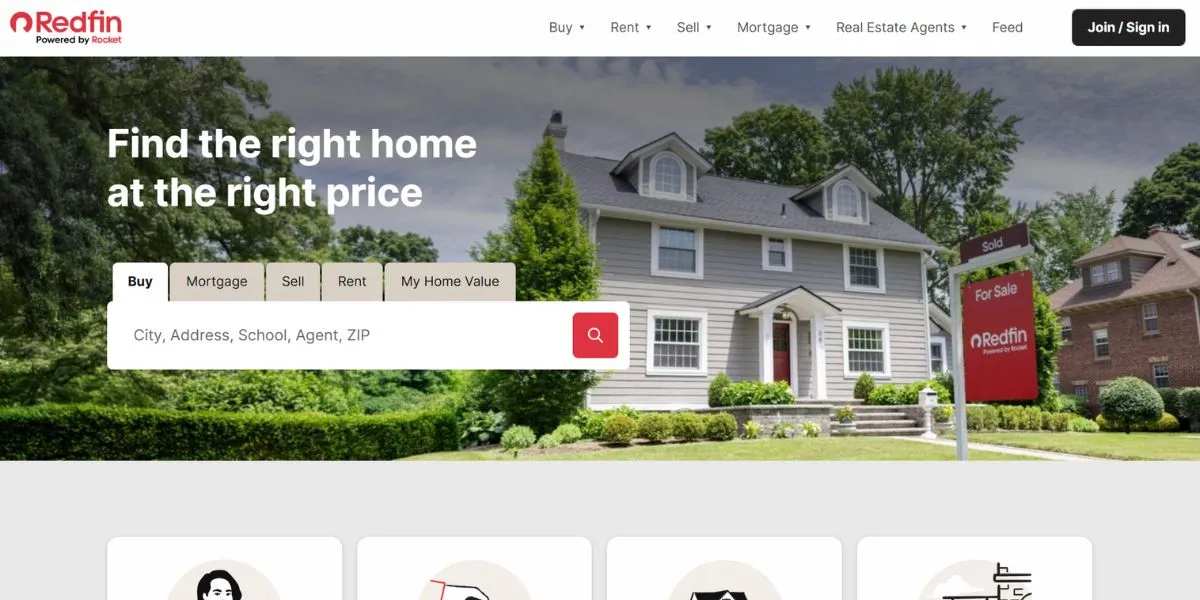
- Founders: David Eraker, Michael Dougherty, and David Selinger
- Founded In 2004 (Acquired by Rocket Companies in 2025)
- Business Model: Technology-powered real estate brokerage
- Main Competitor Type: Tech-enabled traditional brokerage
Redfin will provide a combination of traditional agent services with the latest technology at a lower commission rate (usually 1-1.5) than traditional brokerages. After being acquired by Rocket Companies in March 2025, Redfin has merged mortgage and closing services at a more integrated level, building a complete home buying and selling platform. Although not an instant-cash offer like Opendoor alternatives in the iBuyer category, Redfin is a tech-focused company that appeals to sellers wanting modern experiences featuring agent knowledge.
How It Works:
- List with a Redfin agent
- Take advantage of technology to be exposed.
- Use the in-built mortgage facilities.
- Close with an in-house title.
Pros:
- Reduced commission rates charged.
- There is available technology-enhanced agent support.
- This is an integrated mortgage and closing.
Cons:
- A conventional selling schedule is necessary.
- A few instant cash solutions.
- The availability in the market is regional.
Best For: Best suited to Tech-savvy sellers who require agent support at reduced commissions.
Website: https://www.redfin.com/
5. Clever Offers

- Founders: Ben Mizes and Luke Babich
- Founded In 2017
- Business Model: Cash offer marketplace platform
- Main Competitor Type: Fee-free marketplace competitor
Clever Offers changes the cash offer environment by matching sellers to various investors, iBuyers, and institutional buyers with no platform fees and no commitments. Homeowners get competing bids within a few days, which is natural market pressure that tends to produce better deals than the offers of specific companies such as Opendoor. The transparent nature of the platform and the zero-cost organization will attract cost-conscious sellers who explore quick-sale options and do not lose bargaining power.
How It Works:
- Post property details on the web.
- Get various competing offers.
- Compare terms without fees
- Accept the best offer available
Pros:
- Completely free for sellers
- Various competitive cash bids.
- No obligation or commitment
Cons:
- Offers may still be discounted
- Not a direct buyer
- Processing time has a minor variation.
Best For: Sellers who desire to have a variety of cash offers comparisons free of charge.
Website: https://cleveroffers.com/
6. Homeward

- Founder: Tim Heyl
- Founded In 2018
- Business Model: Buy-before-sell bridge financing
- Main Competitor Type: Bridge financing competitor
Homeward provides the answer to the chicken-and-egg issue of having to have home equity to sell in order to buy. The company offers cash advances before the start of the non-contingency offers on new homes, as the old houses are offered in a traditional manner that offers the highest possible value. This model is a lot different than competitors in the iBuyer market, Opendoor, positioning Homeward among specialized Opendoor competitors that target move-up buyers who desire competitive advantages in hot markets without taking discounted instant offers. Homeward charges a fee for this service but does not deny the seller the market price.
How It Works:
- Apply for an equity advance
- New purchase not contingent.
- List the present home traditionally.
- Repay after the original sale.
Pros:
- Buy before you sell
- Competitive new home offers
- Sell the current home fully
Cons:
- The service fees are charged at a considerable amount.
- Only the lack of availability in the market.
- Necessary qualification requirements.
Best For: Move-up buyers who require equity access prior to selling.
Website: https://www.homeward.com/
7. Knock

- Founders: Sean Black, Karan Sakhuja, and Jamie Glenn
- Founded In 2015
- Business Model: Trade-in bridge loan solution
- Main Competitor Type: Bridge financing competitor
Knock was the first to introduce the home trade-in model, which operated as the automotive trade-ins, which promoted equity in the purchasing of new homes and also the selling of the current property. Knock does not purchase homes as its direct competitors in the Opendoor business, but offers bridge financing and listing services, placing it among alternative of Opendoor that allow sellers to realize the full value of the market and enjoy buying power. The Home Swap program of the company has been successful within the competitive markets, where non-contingent offers are much more successful.
How It Works:
- Access home equity upfront
- Purchase a new home first
- Knock manages the old listing
- Settle after the original sale
Pros:
- Prior access equity prior to sale.
- Full market value potential
- Available non- contingent buying power.
Cons:
- Bridge loan fees apply
- There was a high constraint on market availability.
- Should have been first to qualify finance-wise.
Best For: Buyers who require bridge financing to buy new houses initially.
Website: https://www.knock.com/
8. Orchard
- Founders: Court Cunningham and Phil DeGisi
- Founded In 2017
- Business Model: Buy-before-sell equity advance
- Main Competitor Type: Bridge financing competitor
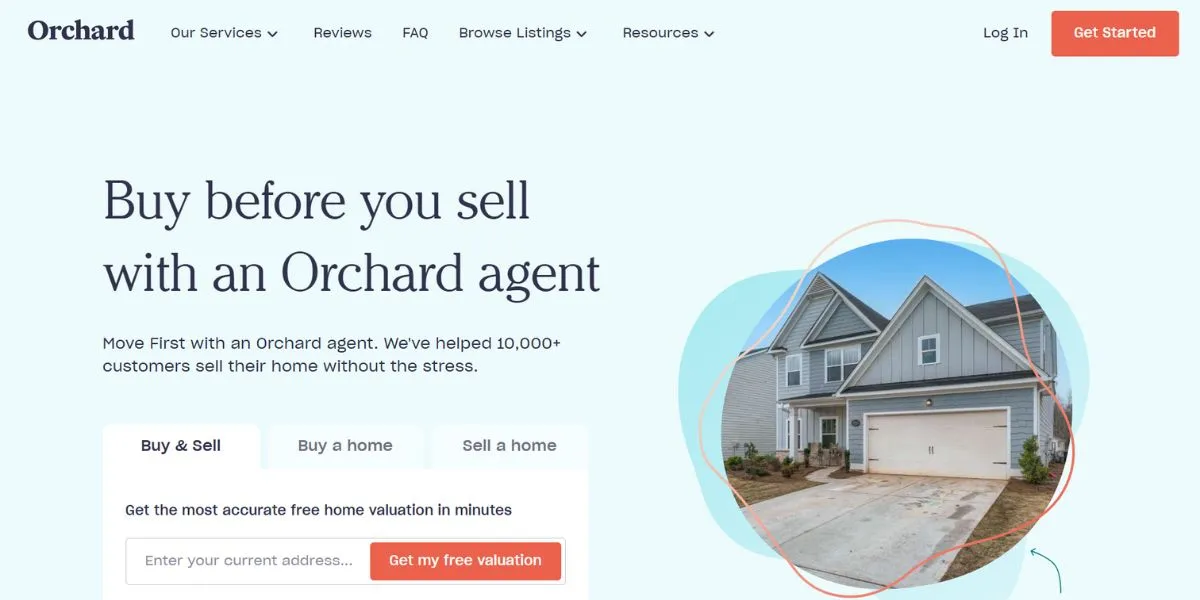
Orchard has equity advance programs that allow homeowners to buy new homes under non-contingent offers before selling their existing homes. Just like Homeward and Knock, Orchard responds to the problem of timing in competitive markets, but leaves traditional listings to add value. The technology platform of the company simplifies the process of coordinating purchases and sales and minimizes the stress related to the simultaneous transactions. The availability of Orchard in large metros makes it an emerging competitor to instant-offer Opendoor competitors.
How It Works:
- Apply for an equity advance
- Secure a new home purchase
- Market existing homes competitively.
- Clear the transactions with ease.
Pros:
- New offers may exist that are not contingent.
- Traditional sale for value
- Co-ordinated transaction management available.
Cons:
- Service fees and interest
- Geographical constraints are relevant in a substantial way.
- Requirements of financial qualification.
Best For: Sellers who require access to equity and value their home at its highest.
Website: https://orchard.com/
9. Anywhere Real Estate Inc.

- Founders: Colbert Coldwell, Arthur Banker
- Founded in 1906 (as Coldwell Banker parent)
- Business Model: Traditional real estate franchise network
- Main Competitor Type: Traditional brokerage competitor
Anywhere Real Estate (previously Realogy) manages such large brands as Coldwell Banker, Century 21, Sotheby’s International Realty, and Better Homes and Gardens Real Estate. Anywhere has contested competitors in the Opendoor market with its massive volume of transactions and nationwide agreements of agents, positioning it among traditional-service Opendoor competitors that focus on local knowledge, personalized marketing, and maximum sale prices. Although there are no immediate offers, the brand name and well-developed systems of Anywhere attract those sellers who do not value technological progress and prefer to use the proven methodology.
How It Works:
- Associate with a franchise agent.
- List property conventionally sold.
- Making showings and negotiations.
- Close by means of established procedure.
Pros:
- An expansive network of agents in the country.
- Good brand recognition extensively.
- Conventional full-service experience present.
Cons:
- The increased commission rates normally.
- Increased selling schedules were needed.
- No instant offers available
Best For: Sellers desiring brand support and conventional service.
Website: https://anywhere.re/
10. eXp World Holdings, Inc.

- Founder: Glenn Sanford
- Founded In 2009
- Business Model: Cloud-based real estate brokerage
- Main Competitor Type: Virtual brokerage competitor
eXp World Holdings is the provider of eXp Realty, a virtual-based brokerage that has thousands of agents across the country in a virtual setting. The innovative model that the company uses to minimize overhead expenses could translate into a competitive commission structure without losing full-service capabilities. Although this does not provide immediate cash like iBuyer Opendoor competitors, the agent-based system and technology platform of eXp is appealing to sellers who require both modern and traditional agent relations and experience in local marketplaces.
How It Works:
- Connect with an eXp agent
- Take advantage of existing cloud-based solutions.
- Advertise on the market on a large scale.
- Close with agent support
Pros:
- Cutting-edge virtual brokerage model.
- Big agent network in place.
- Structures of competitive commission feasible.
Cons:
- No instant offers provided
- The timeline still needed to be traditional.
- The virtual model is unknown at the beginning.
Best For: Sellers who are not afraid of virtual brokerage and cooperation with agents.
Website: https://expworldholdings.com/
How to Choose the Right Opendoor Competitor
- Determine your timeline urgency: In case you have to close in a matter of weeks, give priority to iBuyers such as Offerpad or marketplaces such as HomeLight that can provide an immediate offer of cash. The average time in the traditional brokerages is 60-90 days.
- Make a comparison of net proceeds: Add up gross take-home proceeds after all fees, commissions, repairs, and concessions. Traditional sales are at times more profitable, even with increased upfront commission percentages, than the iBuyer service fee.
- Look at the state of your house: Houses that require major repairs tend to be massively discounted as an iBuyer. Properly maintained homes in desirable areas could get improved results using conventional listings that maximize bids.
- Evaluate market presence: Check what Opendoor competitors are in your target market, since location constraints matter a lot. The smaller markets and rural markets usually have no iBuyer coverage at all.
- Get to know whether you require bridge financing: When buying before selling, consider Homeward, Knock, or Orchard instead of instant-offer firms, as they are designed to offer specifically equity access without sacrificing traditional sale potential.
Conclusion
The development of home-selling alternatives will offer more choices than ever to homeowners in 2026, and there will be a multitude of Opendoor competitors providing a variety of solutions to different situations for the impatient buyer who values quick closings over high proceeds. HomeLight and Clever Offers are marketplaces where competition in the form of bidding can be seen between two or more cash buyers. Homeward, Knock, and Orchard are examples of bridge financing companies that eliminate timing issues in move-up buyers.
The local expertise and full-service strategies make traditional brokerages such as Anywhere Real Estate and eXp World Holdings relevant. The knowledge of competitors of Opendoor, their advantages, weaknesses, costs, and the best applicability will give you the power to choose the most suitable selling tool based on your financial priorities, timing, and personal needs in the contemporary real estate environment that is equally dynamic and competitive.
FAQs
Do iBuyers such as Opendoor and its rivals pay off?
iBuyers are most effective when it comes to maximizing sale price, which is not as important as convenience and speed. Net proceeds will be 10-15% lower than under traditional sales, but will have certainty and need not exhibit hassles.
What is the best deal among Opendoor’s competitors?
Competition may gain greater advantages in marketplaces such as HomeLight and Clever Offers, which usually offer superior conditions due to the rivalry between several buyers. Offerpad and other direct iBuyers are more convenient but less flexible.
Is it possible to use several competitors of Opendoor at the same time?
Yes, it is usual and desirable to request offers from various companies. Multiple cash offers and the conventional agent’s estimates can be compared to find the optimal financial situation.
Do competitors of Opendoor purchase homes in any markets?
No iBuyers are concentrated in the big cities. Coverage of bridge financing companies is even lower. The traditional brokerages are present all over the country, but might not have the instant-offers feature.
What are the charges of the competitors of Opendoor?
iBuyers generally offer a service fee of 5-8% and a deduction for repair, which is a common cost structure among many Opendoor competitors. Markets can be free for the sellers. Bridge financing companies impose fees and interest on loans. Conventionally, agents impose a 5-6% fee shared between buyer and seller agents.