
Selling a home traditionally can take time, especially when the seller has to prepare the property, arrange photography, handle showings, negotiate with buyers, and wait for mortgage approval. Opendoor changed this process by introducing an iBuyer model, where technology is used to provide homeowners with a cash offer and simplify the sale.
However, Opendoor is not the only option available to homeowners. Other companies now offer direct cash purchases, investor networks, agent-assisted selling, reduced-commission listings, and buy-before-you-sell programs. These services solve different problems, so comparing them only by the size of their cash offer can be misleading.
This guide covers 10 of the leading Opendoor competitors and explains their business models, fees, selling processes, advantages, and limitations. The goal is to help sellers compare the actual trade-offs instead of simply looking for the company that advertises the fastest sale.
What Is Opendoor?
Opendoor is a technology-driven real estate company that buys homes directly from sellers through an iBuyer model. Homeowners can request an offer online, review the estimated net proceeds, and choose a closing date within the available window. Opendoor says its service charge varies by market and property rather than using one fixed percentage for every seller.
Unlike a traditional sale, sellers do not have to list the property, arrange open houses, or manage a long buyer search. Opendoor purchases the property, handles the resale process, and takes on the market risk. This convenience is the main reason homeowners consider Opendoor, although sellers should compare the final net proceeds with what they could receive through other selling methods.
Why Look For Opendoor Alternatives?
Opendoor can be convenient, but convenience is not the only factor that matters when selling a home. The amount a seller ultimately receives depends on the offer price, service charges, repair adjustments, closing costs, and the amount the home could potentially sell for through a traditional listing.
One important point is that Opendoor’s service charge is not a single publicly advertised percentage for every property. Opendoor states that the exact service charge is displayed in the seller’s offer breakdown and varies according to the home, market, and current conditions. Sellers may also see deductions for estimated repairs and standard closing costs.
Another reason to compare alternatives is that not every seller wants the same type of transaction. Some homeowners want a fast cash sale without repairs. Others want to expose their home to the open market to potentially achieve a higher selling price. Some are not actually looking for a cash buyer at all; they need help buying their next home before their current property sells.
Opendoor vs Competitors: Quick Comparison
| Company | Business Model | Selling Method | Fees | Best For |
| Opendoor | iBuyer | Direct cash purchase | Variable service charge + closing/repair costs | Fast and convenient home sale |
| Offerpad | iBuyer | Direct cash purchase | 5% service fee + approx. 1% closing costs | Flexible closing and moving support |
| HomeLight Simple Sale | Cash-buyer marketplace | Matches seller with cash buyers | No HomeLight fee; buyer terms vary | Comparing cash offers |
| Orchard | Buy-before-you-sell platform | Equity advance + open-market sale | Move First fee starts at 1.9% + brokerage costs | Buying the next home before selling |
| Knock | Bridge-financing platform | Bridge loan + open-market sale | 2.25% Purchase Offer fee + applicable financing costs | Move-up buyers |
| Homeward | Equity-access platform | Buy-before-sell + open-market sale | Program fees vary | Accessing home equity before selling |
| HomeVestors | Investor franchise network | Direct cash purchase | No seller commission/fee; offer reflects investor margin | Distressed and as-is properties |
| HomeGo | Direct cash buyer | Direct cash purchase | No seller commission/service fee stated | Fast as-is sales |
| Clever Real Estate | Agent-matching platform | Traditional MLS sale | 1.5% listing fee through participating agents | Sellers wanting agent support at a lower fee |
| Flyhomes | Buy-before-you-sell platform | Equity access + open-market sale | Starts around $2,500 for applicable programs; financing costs vary | Buying before selling |
List Of 10 Best Opendoor Competitors
1. Offerpad
- Website: Offerpad
- Business Model: iBuyer and technology-enabled real estate services
- Main Competitor Type: Direct cash-buying competitor
- Best For: Sellers who want a fast cash sale with flexible closing and moving support
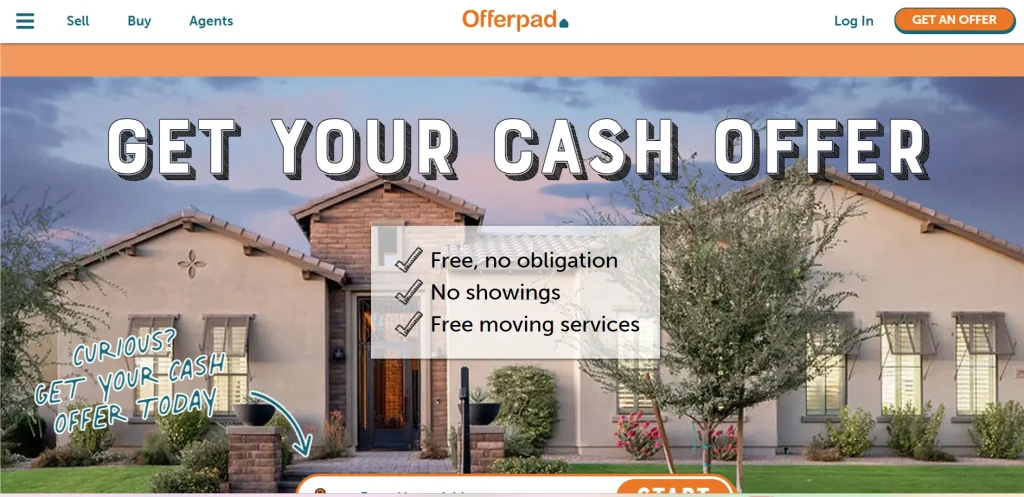
Offerpad is one of the closest direct competitors to Opendoor because it also purchases homes directly for cash. The company allows homeowners to request an offer online and then choose a closing date. Unlike a traditional sale, sellers do not need to prepare the property for open houses or wait for a buyer to obtain mortgage financing. Offerpad currently says it operates across 16 metropolitan markets covering more than 1,700 cities and towns.
One feature that makes Offerpad different is the additional moving support attached to its direct-sale service. Eligible sellers can receive free moving services for moves of up to 80 miles and can stay in the home for up to three days after closing. The company says its cash offer process can close in as little as eight days or as far as 60 days out, depending on the seller’s needs and transaction.
Key Features
- Direct cash offers
- Online offer request
- Flexible closing date
- No traditional showings
- No seller-paid agent commission on direct cash sales
- Free local moving services up to 80 miles
- Up to three-day post-closing stay
- Repair costs handled through offer adjustments
Pros & Cons
| Pros | Cons |
| Fast cash-sale process | Not available in every U.S. market |
| 5% service fee is clearly stated | Offer price may be below open-market value |
| Flexible closing dates | Closing costs still apply |
| Free moving service in eligible transactions | Final offer depends on property condition and market |
| No traditional showings | Not necessarily the highest-net-proceeds option |
How It Works
- The process starts with an online request where the seller provides information about the property. Offerpad reviews the information and sends a cash offer along with other selling options where applicable. The seller can then review the offer, complete a property assessment, select a closing date, and complete the transaction.
Pricing
- Offerpad currently states that its direct cash offer service includes:
- 5% service fee
- Approximately 1% in standard closing costs
- No traditional agent commission
- No out-of-pocket repair costs, although repair adjustments can affect the final amount
- Free moving services for eligible local moves
Why Better Than Opendoor?
- Offerpad can be a better choice for sellers who value a more flexible moving experience. Its clearly stated 5% service fee, flexible closing window, three-day post-closing stay, and free local moving service can make the transition easier for homeowners who are more concerned about convenience than maximizing the sale price.
2. HomeLight Simple Sale

- Website: HomeLight Simple Sale
- Business Model: Cash-offer marketplace and agent-matching platform
- Main Competitor Type: Cash-buyer network
- Best For: Sellers who want to compare a cash offer with a traditional agent-assisted sale
HomeLight Simple Sale takes a different approach from Opendoor and stands out among Opendoor competitors. Instead of purchasing every property itself, HomeLight connects sellers with a network of cash-offer home buyers and investorsThe platform also gives sellers information about what they might receive through a traditional listing, making it useful for homeowners who are unsure whether a direct cash sale is the right choice.
This comparison feature is particularly useful because a cash offer is not automatically the best financial option. HomeLight says sellers can receive a cash offer while also seeing recommendations for top-performing local agents. This gives the homeowner a way to compare speed and convenience against potential open-market proceeds.
Key Features
- Nationwide cash-buyer network
- Cash offers
- No listing preparation
- No open houses
- Agent recommendations
- Comparison between cash and traditional selling options
- As-is selling
Pros & Cons
| Pros | Cons |
| Helps compare different selling routes | HomeLight does not directly buy every property |
| Cash offers available quickly | Final offer depends on participating buyer |
| No HomeLight seller fee | Buyer-specific terms can vary |
| Can sell as-is | Cash offer may be below open-market price |
| Traditional agent option available | Less predictable than a single direct buyer |
How It Works
- The seller enters the property address and answers questions about the home’s condition and selling timeline. HomeLight uses its network to identify potential cash buyers and presents the seller with an offer. Sellers can accept the offer or choose to work with a recommended real estate agent instead.
Pricing
- No HomeLight fee for using Simple Sale
- No traditional agent commission when accepting a Simple Sale cash offer
- Individual buyer terms can vary
- Sellers should review closing costs and the final purchase agreement before accepting an offer
Why Better Than Opendoor?
- HomeLight can be a better choice if you do not want to depend on a single buyer. Its ability to connect sellers with a network of cash buyers and compare that route with an agent-assisted sale gives homeowners more options before committing.
3. Orchard
- Website: Orchard
- Business Model: Buy-before-you-sell real estate platform
- Main Competitor Type: Trade-in and equity-advance competitor
- Best For: Homeowners who need to buy their next house before selling their current one
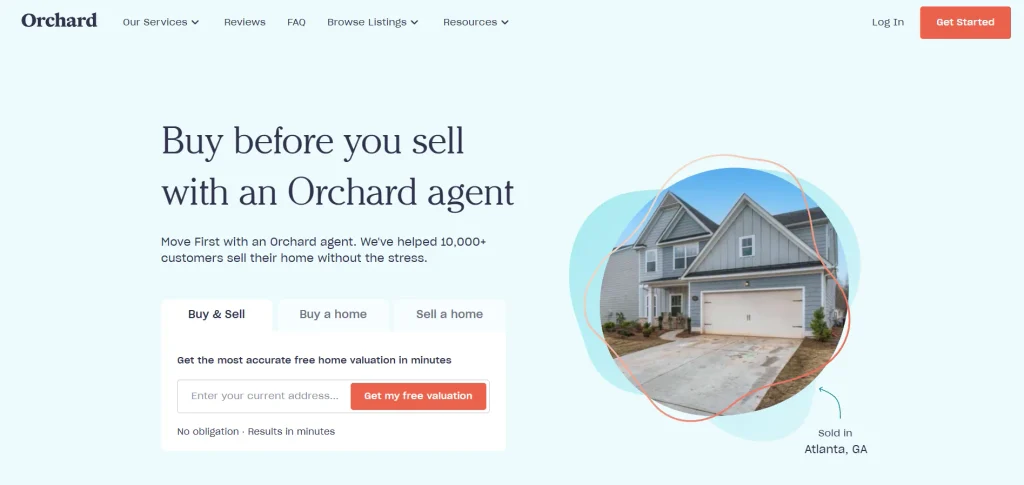
Orchard is not a direct iBuyer in the same way as Opendoor. Its main product, Move First, is designed for homeowners who need to sell their current house but do not want that sale to prevent them from purchasing their next property. Orchard provides access to home equity so the seller can make a stronger, non-contingent offer on a new home.
Once the homeowner moves into the new property, an Orchard agent handles the sale of the old home. This means the old property can still be marketed through the traditional market rather than being sold directly to Orchard at an iBuyer-style offer.
Key Features
- Buy before selling
- Equity advance
- Non-contingent purchase offer
- Dedicated agent
- Home preparation support
- Professional photography and marketing
- Open-market sale
- Cash-offer marketplace
Pros & Cons
| Pros | Cons |
| Buy your next home before selling | More complicated than a simple cash sale |
| Open-market exposure for old home | Fees can be higher than a simple listing |
| Avoids a sale contingency | Available only in selected markets |
| Professional agent support | Qualification requirements apply |
| Equity can be accessed before sale | Not designed for sellers who simply want immediate cash |
How It Works
- Orchard first helps the homeowner unlock equity from the current property. The homeowner can then use that money toward the purchase of the next home. After moving, the Orchard agent prepares and markets the old home, and the equity advance is repaid once the property sells.
Pricing
- Orchard currently states that:
- Typical selling brokerage fee is 3%
- Typical buying brokerage fee is 3%
- Move First adds a program fee starting at 1.9%
- Exact fees depend on the provider and transaction
Why Better Than Opendoor?
- Orchard is a better fit than Opendoor when the real problem is not simply selling quickly. If you need the equity in your current home to purchase your next property, Orchard’s buy-before-you-sell model can provide a solution that a straightforward cash sale does not.
4. Knock
- Website: Knock
- Business Model: Bridge financing and home-trade-in service
- Main Competitor Type: Buy-before-you-sell competitor
- Best For: Move-up buyers who need their existing home’s equity before buying another property
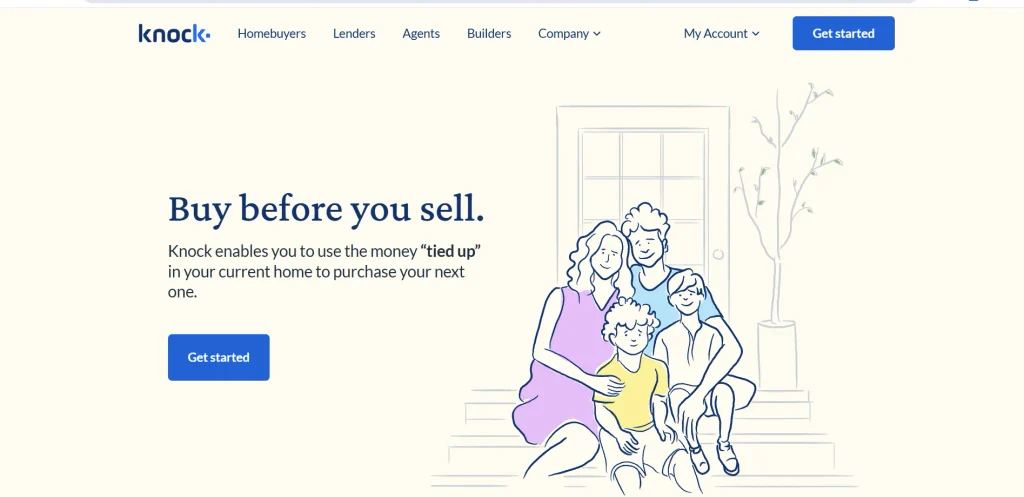
Knock approaches the problem from the financing side rather than simply buying the seller’s house. Its Bridge Loan allows qualified homeowners to access equity from their current home so they can make a stronger offer on another property without waiting for the first home to sell.
The model can be useful in competitive markets where sellers are reluctant to accept offers that depend on another property selling first. Knock says its bridge loan does not charge interest for six months, subject to the program’s conditions.
Key Features
- Bridge loan
- Buy-before-you-sell model
- Non-contingent purchase offers
- Equity access
- Six-month interest-free period under stated conditions
- Existing-home sale support
- Purchase Offer option
Pros & Cons
| Pros | Cons |
| Buy another home before selling | Qualification and underwriting required |
| Six months without bridge-loan interest under conditions | Financing costs still apply |
| Helps remove sale contingency | 2.25% Purchase Offer fee applies when that option is used |
| Keeps current home on open market | Carrying costs remain important |
| Can preserve potential market value | More complicated than a direct cash sale |
How It Works
- Knock determines the amount of equity that can be used through its bridge loan. The homeowner then makes an offer on the new property without waiting for the old property to sell. The existing home is listed for sale, and the bridge loan is repaid when the old home sells. Knock says that if the home has not sold after six months, its purchase structure can provide an agreed-price backstop for eligible transactions.
Pricing
- Bridge-loan interest is 0% for six months under the stated program conditions
- Knock Purchase Offer fee: 2.25% of the departing home’s estimated list price
- Third-party closing and other transaction costs may apply
- Exact costs depend on the borrower’s situation and state
Why Better Than Opendoor?
- Knock can be better than Opendoor when the homeowner wants to buy another house while still trying to maximize the sale price of the current home. Instead of selling immediately to an iBuyer, the seller gets financing support and can expose the old property to the open market.
5. Homeward

- Website: Homeward
- Business Model: Equity access and buy-before-you-sell platform
- Main Competitor Type: Home trade-in competitor
- Best For: Homeowners who want to unlock equity and buy their next property before selling
Homeward is designed around the same basic problem as Orchard and Knock and is another option among Opendoor competitors for homeowners who need flexibility when moving. Instead of forcing the homeowner to sell first, Homeward can help unlock equity and provide a path to purchase the next home before the existing property sells.
Homeward’s Equity Unlock product currently states that its fee starts at 3.5% of the current home’s market value and can fall to 2.5% when Homeward Mortgage is used for the new purchase. The program covers the first 90 days, with extensions available at an additional monthly cost.
Key Features
- Buy before you sell
- Equity access
- Contingency-free purchase
- Homeward Mortgage option
- Guaranteed offer structure
- Agent support
- Seller leaseback options in eligible situations
Pros & Cons
| Pros | Cons |
| Unlocks existing home equity | Program fees can be significant |
| Allows purchase before sale | Qualification requirements apply |
| Can make a stronger offer | Not designed for every seller |
| Can work with an approved outside lender | Additional carrying costs may apply |
| Open-market sale remains possible | More complex than a direct cash sale |
How It Works
- Homeward helps the homeowner qualify for financing and access equity from the existing home. That money can help fund the new purchase. The homeowner then sells the old property, generally with an agent, and the transaction is settled according to the Homeward program terms.
Pricing
- Equity Unlock fee starts at 3.5%
- Can be as low as 2.5% when using Homeward Mortgage
- Program covers the first 90 days
- Extensions can cost 1% per month
- If Homeward buys the existing home at the floor price, standard 6% agent commission applies according to its current terms
Why Better Than Opendoor?
- Homeward is better suited to homeowners who want to move into a new home first. It can preserve the opportunity to sell the existing property through the market rather than accepting a direct iBuyer offer simply because the seller needs access to their equity.
6. HomeVestors

- Website: HomeVestors
- Business Model: Franchise-based real estate investment network
- Main Competitor Type: Cash buyer and investor network
- Best For: As-is, inherited, outdated, or heavily distressed properties
HomeVestors operates differently from Opendoor. Instead of relying mainly on a centralized technology-driven iBuyer model, it connects sellers with local property investors operating under the HomeVestors brand. The company says it has bought more than 150,000 houses and has 29 years of experience in the home-buying market.
This model can be particularly useful for homes that may not fit the condition requirements of a technology-driven iBuyer. Sellers do not have to clean, renovate, stage, or prepare the property for showings. HomeVestors states that its local buyers purchase properties as-is and handle typical closing costs.
Key Features
- Cash offers
- Local property buyers
- As-is purchases
- No repairs required
- No traditional showings
- Fast closing
- Typical closing costs covered
- Flexible closing timelines
Pros & Cons
| Pros | Cons |
| Buys properties as-is | Cash offer may be below market value |
| No repair spending required | Local franchise buyer experience can vary |
| No commissions or hidden fees stated | Not the same standardized process as a national iBuyer |
| Can handle distressed properties | Seller must carefully review the local purchase agreement |
| Typical closing costs covered | May not maximize proceeds |
How It Works
- A homeowner requests a consultation and meets with a local HomeVestors property buyer. The buyer assesses the property and can make an offer, often on the same day. If the seller accepts, the parties agree on a closing date and complete the transaction.
Pricing
- No seller commission
- No HomeVestors fee for requesting an offer
- Typical closing costs are covered according to the company’s current seller information
- The actual purchase price depends on the property and local buyer’s assessment
Why Better Than Opendoor?
- HomeVestors can be a stronger option for homes that need significant repairs or renovation. A homeowner does not have to spend money making the property market-ready, making the service more relevant for inherited, outdated, vacant, or distressed properties.
7. HomeGo
- Website: HomeGo
- Business Model: Direct cash home buyer
- Main Competitor Type: Local agent-assisted cash buyer
- Best For: Sellers who want an as-is cash sale with no traditional listing process
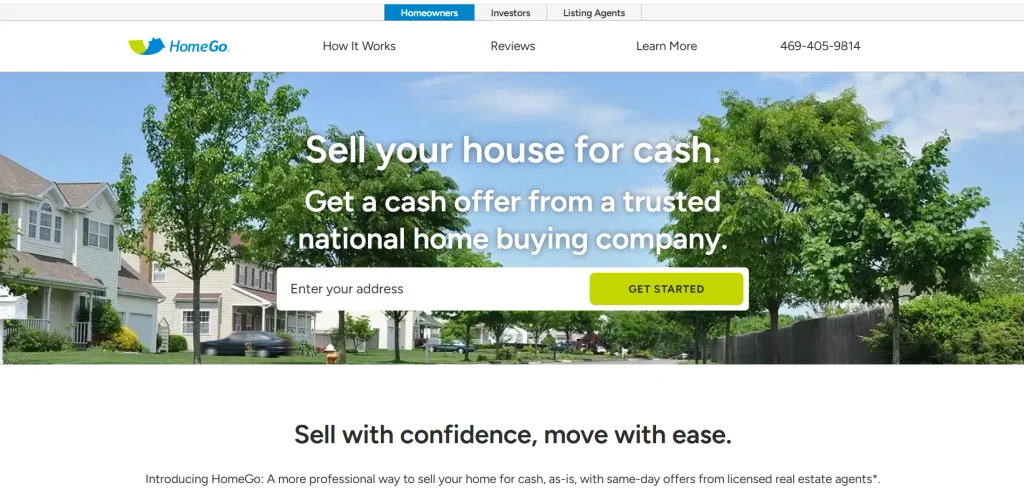
HomeGo combines a cash-buying model with licensed real estate professionals. Rather than requiring homeowners to list their properties and wait for buyers, HomeGo sends an agent to assess the home and provide a cash offer. The company says sellers can sell as-is without paying for repairs, commissions, closing costs, or service charges.
The company focuses heavily on speed and convenience. It says some transactions can close in as little as seven days, although the actual timeline depends on the property and seller’s circumstances.
Key Features
- Same-day or rapid cash offers
- Licensed real estate agents
- As-is selling
- No traditional listing
- No showings
- No repairs
- No commission
- Flexible move-out timing
Pros & Cons
| Pros | Cons |
| Very fast selling process | Offer may be lower than open-market value |
| No commissions or service fees | Availability can vary by location |
| No repairs required | Direct cash model is not ideal for every seller |
| Local agent involvement | Less opportunity for competitive bidding |
| Can sell as-is | Sellers should compare the net offer |
How It Works
- The seller provides basic property information and schedules an in-home consultation. A HomeGo agent reviews the property and provides a firm cash offer. If the seller accepts, the company completes the cash purchase and the homeowner receives the proceeds at closing.
Pricing
- No commission
- No service fee
- No seller closing costs according to HomeGo’s current information
- No repair spending required
- Final purchase price depends on the property and local market
Why Better Than Opendoor?
- HomeGo may be better for sellers who prefer dealing directly with a local professional rather than completing most of the process digitally. Its as-is approach also makes it attractive when the homeowner does not want to invest in repairs before selling.
Also Read:
8. Clever Real Estate

- Website: Clever Real Estate
- Business Model: Real estate agent matching and reduced-commission service
- Main Competitor Type: Traditional-sale alternative
- Best For: Sellers who want professional agent support but want to reduce listing costs
Clever Real Estate is one of the more important Opendoor competitors to include because not every homeowner should use an iBuyer. Clever connects homeowners with local real estate agents who agree to a pre-negotiated listing fee. This means the seller can still use the MLS, professional marketing, showings, and agent negotiation while potentially paying less than a conventional listing arrangement.
Clever currently states that its partner agents provide full-service representation for a 1.5% listing fee. The company says more than 200,000 buyers and sellers have used its service since 2017.
Key Features
- Agent matching
- Full-service representation
- MLS listing
- Professional negotiation
- 1.5% listing fee
- Local agent network
- Seller support
Pros & Cons
| Pros | Cons |
| Lower listing fee | Not a cash sale |
| Professional agent support | Sale can take longer |
| Access to open-market buyers | Showings and preparation are required |
| Potential for higher sale price | Buyer financing can create delays |
| Negotiation handled by agent | Buyer-agent compensation may be separate |
How It Works
- The seller submits information about the property and selling requirements. Clever matches the homeowner with participating local agents. The selected agent then handles the listing, marketing, negotiations, and closing like a conventional agent-assisted transaction.
Pricing
- 1.5% listing fee for participating full-service agents
- Buyer-agent compensation may be separate
- Closing costs and other standard transaction costs may apply
- Exact costs should be confirmed with the selected agent
Why Better Than Opendoor?
- Clever can be better than Opendoor for homeowners who are not in a hurry and want to maximize their exposure to traditional buyers. Instead of accepting an iBuyer offer, the seller gets professional representation and access to the open market while potentially reducing the listing commission.
9. iBuyer.com
- Website: iBuyer.com
- Business Model: Cash-offer marketplace
- Main Competitor Type: Multi-buyer marketplace
- Best For: Sellers who want to compare several cash offers
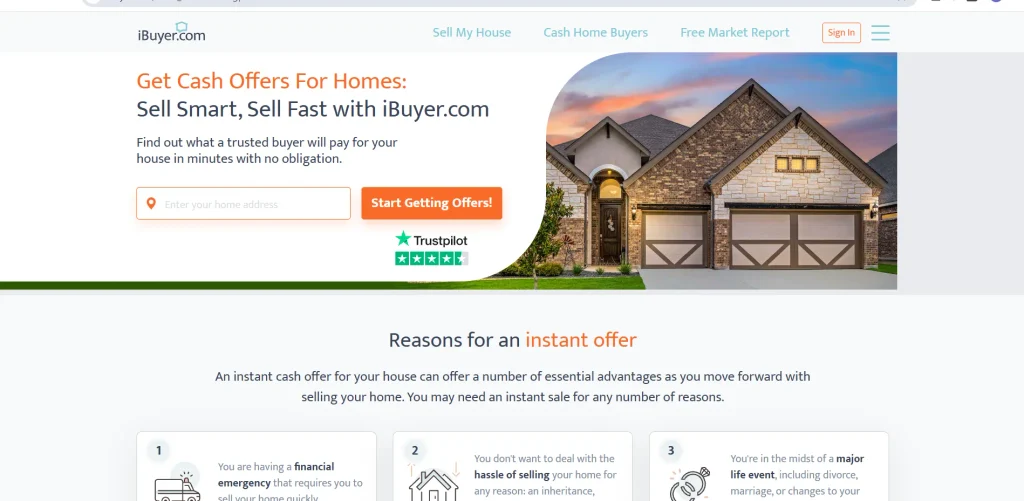
iBuyer.com is different from Opendoor because it operates as a marketplace connecting sellers with cash buyers rather than relying on one company to purchase every home. This can be useful when a homeowner wants a fast sale but does not want to accept the first cash offer they receive.
The marketplace model creates a basic competitive element: multiple buyers can potentially evaluate the same property. The company says sellers can receive offers quickly and do not pay commissions or seller fees for the marketplace service.
Key Features
- Multiple cash-buyer network
- Online property submission
- Cash offers
- No traditional listing
- No seller commission
- Fast closing options
- Investor network
Pros & Cons
| Pros | Cons |
| Multiple buyers can compete | Final offers depend on participating buyers |
| No seller marketplace fee | Not the same as an open-market listing |
| Fast process | Cash offers can be below market value |
| Useful for comparing offers | Availability varies by location |
| Less preparation required | Seller should compare net proceeds carefully |
How It Works
- The seller submits property information through the platform. iBuyer.com works with its network of cash buyers and investors to identify potential offers. The seller can then compare the available options and decide whether the speed and certainty of a cash transaction justify the potential difference from an open-market sale.
Pricing
- No seller commission for the marketplace
- No seller fee stated for the cash-offer service
- Buyer-specific costs may vary
- Final offer depends on property condition, location, and buyer demand
Why Better Than Opendoor?
- iBuyer.com can be better if you want to compare multiple cash buyers rather than receiving one direct offer. Competition between buyers can give sellers a stronger reference point when deciding whether a cash sale is financially attractive.
10. Flyhomes

- Website: Flyhomes
- Business Model: Buy-before-you-sell and home-equity financing platform
- Main Competitor Type: Buy-before-you-sell alternative
- Best For: Homeowners who want to buy their next home before selling their existing property
Flyhomes is different from a traditional iBuyer such as Opendoor. Instead of primarily purchasing the seller’s existing home directly, Flyhomes helps homeowners unlock equity and purchase their next property before selling the current one. This can make the buyer’s offer stronger because it removes the home-sale contingency. After the homeowner moves into the new property, the existing home can be listed and sold on the open market. Flyhomes also offers a Guaranteed Backup Contract in eligible situations, giving sellers another layer of protection if the existing home does not sell within the specified period.
Key Features
- Buy-before-you-sell programs
- Home-equity access
- Cash-like purchase offers
- Non-contingent offers
- Bridge financing
- Guaranteed Backup Contract
- Support from loan officers and agent partners
- Open-market sale of the existing home
- Solutions for downsizing and other specific situations
Pros & Cons
| Pros | Cons |
| Allows homeowners to buy before selling | More complex than a direct cash sale |
| Can remove the home-sale contingency | Financing and transaction costs apply |
| Existing home can be sold on the open market | Not designed primarily for sellers who only want to sell quickly |
| Can help homeowners move only once | Program availability varies by location and product |
| Backup purchase option can provide additional certainty | Requires qualification and underwriting |
How It Works
- The homeowner first submits the current property for program approval. Once approved, Flyhomes helps structure the financing needed to purchase the next home without waiting for the existing property to sell. The homeowner can then make a stronger offer, move into the new property, and list the old home on the open market. Flyhomes says that if the existing home does not sell within 180 days under its applicable program, it can purchase the home at the agreed-upon backup price and manage the resale.
Pricing
- Costs vary by the Flyhomes solution being used.
- Its FAQ says programs generally start at around $2,500.
- Origination fees are based on the loan amount.
- Interest accrues during the short holding period.
- The average holding period is around 55 days.
- There are no prepayment penalties.
Why Better Than Opendoor?
- Flyhomes can be better than Opendoor when the homeowner’s main challenge is buying the next property rather than simply selling the current one. It allows the existing home to be sold on the open market, potentially giving the seller more opportunity to achieve market value while still helping them move first.
Are Opendoor Competitors Better For Sellers?
- Whether an Opendoor competitor is better depends on what the seller values. If speed and certainty are the top priorities, an iBuyer or cash buyer can be attractive because the homeowner does not need to wait for a traditional buyer or manage repeated showings.
- However, the highest cash offer is not necessarily the highest net proceeds. Sellers should compare the purchase price, service charges, repair adjustments, closing costs, moving expenses, and the likely open-market selling price. Opendoor itself recommends looking at net proceeds rather than simply comparing the headline offer.
- For example, Offerpad currently charges a 5% service fee plus approximately 1% in closing costs. Opendoor, on the other hand, does not publish one fixed service-charge percentage and instead shows the applicable amount in each seller’s offer breakdown.
How To Choose The Best Opendoor Alternative?
1. Start with your selling timeline
If you need to close within a few weeks, direct cash buyers and iBuyer-style services are usually more relevant. Offerpad, HomeGo, HomeVestors, HomeLight Simple Sale, and other cash-focused platforms are designed around faster transactions.
If you have several months and your primary goal is maximizing proceeds, a traditional listing through an agent may be worth considering.
2. Decide whether you need cash or maximum market exposure
A direct buyer gives you certainty but controls the offer. A traditional listing gives your property exposure to multiple buyers but introduces uncertainty around timing and final price.
If you are unsure, consider requesting a cash offer as a benchmark while also getting an estimated market value from a local agent.
3. Compare net proceeds
Do not compare only the purchase price. Your calculation should look more like:
Net proceeds = Sale price − service/agent fees − repair adjustments − closing costs − other selling expenses
This is particularly important with iBuyers because a higher headline offer can still produce less money after deductions.
4. Consider your home’s condition
A home needing extensive repairs may be a better candidate for a cash buyer than a conventional listing. Companies such as HomeVestors and HomeGo specifically emphasize as-is transactions, while iBuyers may apply condition-related adjustments to their offers.
If your property is recently renovated and in a desirable market, getting an open-market valuation may be more important because you may have more to gain from competitive bidding.
5. Think about your next home
If you are selling because you need to move into another property, do not automatically choose a cash buyer. Orchard, Knock, and Homeward are designed around the problem of buying a new property before the old one sells.
This can be more useful than selling quickly and then having to find temporary housing.
6. Check the actual service area
Real estate companies rarely operate identically across the entire United States. Coverage, eligibility, minimum property requirements, and fees can vary by state and metropolitan area.
Always enter the property’s address and request the actual terms before assuming a company is available or that a headline fee applies to your property.
Conclusion
Opendoor remains one of the best-known iBuyer platforms, but homeowners have more alternatives than simply choosing between Opendoor and another cash buyer. The market now includes direct iBuyers, cash-buyer marketplaces, investor networks, reduced-commission agent services, and buy-before-you-sell platforms, giving sellers several Opendoor competitors to consider.
Offerpad is one of the closest direct alternatives for homeowners who want a cash transaction. HomeLight Simple Sale and iBuyer.com are useful when comparing multiple cash-buyer options. HomeVestors and HomeGo are worth considering for as-is properties, while Clever is more suitable for sellers who want traditional agent representation with a lower listing fee.
The best option therefore depends on the seller’s priorities. Before accepting any offer, compare the final net proceeds, fees, expected timeline, property condition requirements, and the amount you could potentially receive from a traditional sale. A few extra comparisons can make a significant difference when the asset being sold is your home.
FAQs
1. What Is The Best Opendoor Competitor In 2026?
Offerpad is one of the closest direct competitors to Opendoor because it also buys homes directly for cash. However, there is no single best option for every seller. HomeLight and iBuyer.com are better for comparing cash buyers, while Orchard, Knock, and Homeward are more suitable for homeowners who need to buy their next home before selling.
2. Is Offerpad Better Than Opendoor?
Offerpad can be better for sellers who value flexible closing and moving support. It currently advertises a 5% service fee, approximately 1% in closing costs, flexible closing dates, and free local moving services for eligible transactions. Opendoor’s service charge varies by property and market and is shown in the individual offer breakdown.
3. Does Opendoor Charge A Fee To Sell A House?
Yes. Opendoor charges a service charge when purchasing a home directly from a seller. The company states that the service charge varies according to the property and local market and is shown in the seller’s offer breakdown. Standard closing costs and possible condition-related adjustments can also affect the final net proceeds.
4. What Is The Difference Between An iBuyer And A Cash Buyer?
An iBuyer is generally a technology-driven company that uses data and automated valuation methods to make cash offers on qualifying homes. A traditional cash buyer can be an individual investor, local company, or investor network. Companies such as HomeVestors operate through local investors, while Opendoor operates as a centralized technology-enabled home buyer.
5. Is HomeLight Simple Sale The Same As Opendoor?
No. Opendoor directly purchases eligible homes, while HomeLight Simple Sale connects sellers with a network of cash buyers. HomeLight also allows sellers to compare the cash option with agent-assisted selling, making it more of a marketplace and decision-support service.