
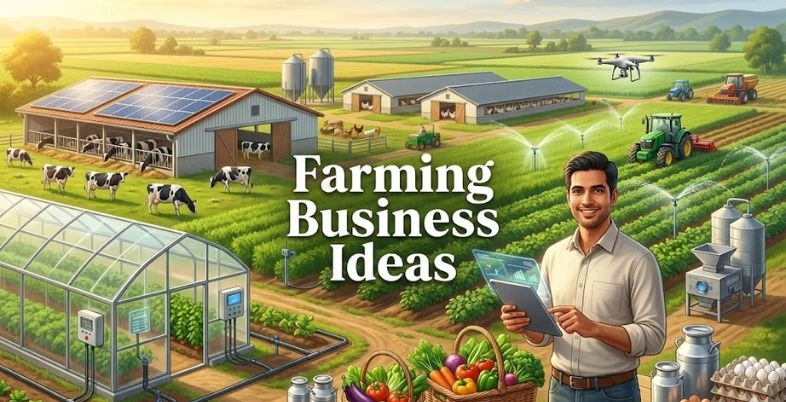
Do you miss selling the bustle of city life as well as the union of the country and the necessity to diversify your investments through a green thumb? Farming Business Ideas are no longer about tilling the soil anymore, but are a booming business enterprise that includes a combination of both traditional and contemporary technology such as hydroponics, organic superfoods, and agri-tourism.
This blog will discuss lucrative agricultural concepts that work for both amateurs and experts, such as low-investment ones like mushroom growing and vermicomposting, and large-scale ones like dairy farming or exporting exotic herbs. Whether in the heartland, urban exurbs, or on main street, find practical actions, start-up costs, and marketing secrets to turn productive acreage into profit.
Why Start a Farming Business Now?
Launching an agricultural enterprise in 2026 will have auspicious prospects, as there will be global food demand and favorable tendencies in the sustainable agribusiness, particularly for in India like yourself with start-up interests and scalable business models.
- Rising Food Demand: The world population is increasing, and the middle class is on the rise, which creates demand in the food, crops, and livestock business has good opportunities to be made. New farms are competitive in terms of efficient use of their resources.
- Profit Potential: The prospects of agriculture business, such as vertical farming, storage service, and traditional crops (wheat, paddy, sugarcane), offer stable income and food security. Vertical arrangements allow production throughout the year, incurring less cost on transportation.
- Lifestyle Benefits: Outdoor activities and nature give fresh air, exercise, community, and relieve stress in farming. It creates values of family-raising and a feeling of success.
- Business Advantages: Farm plan makes sense, helps control risk, find financing, and simplifies transition. New frameworks, such as agritourism and direct sales, are new sources of income.
List of 12 Best Farming Business Ideas
1. Organic Vegetable Farming
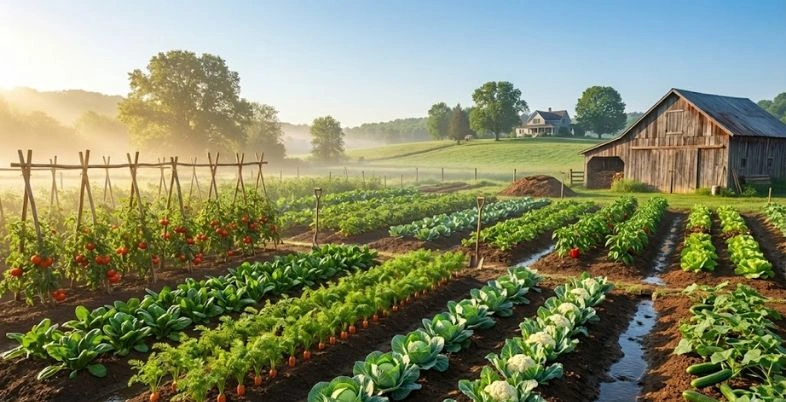
Organic vegetable farming is a sustainable business concept that entails the cultivation of vegetables without the use of chemical pesticides, fertilizers, or GMOs, but through the use of natural farming practices such as composting, crop rotation, and biological pest control to get chemical free high nutrient produce.
This would be attractive to health-conscious consumers, urban markets, and eco-friendly buyers, and would provide a decent entrepreneurial opportunity in such countries as India, where the demand for organic food is taking off, related to the growing concern of food safety and wellness.
Small farmers can begin small on renounced land, grow through direct sales in farmers markets, online markets, or at the behest of supermarkets, and within 1-2 years, once the soil fertility is enhanced and high prices (20-50% over conventional veggies) come into effect, become profitable.
Key Advantages
- Beautify the soil to increase biodiversity and healthy soil by applying natural processes such as composts and cover crops.
- Plants like vegetables that are healthy, rich in antioxidants, polyphenols, and do not have pesticides on their taste should be increased. Manages the environment by reducing pollution of water, conserving resources, and minimizing emissions of greenhouse gases.
- Plants more marketable products, and it is less vulnerable to climatic issues due to the diversity in the products and healthier soils. Reduces long term input costs once the initial setup is done, since less use of expensive chemicals is necessitated.
Startup Costs (Per Acre, India)
| Expense | Cost (₹) |
| Land Preparation | 10,000 |
| Organic Manure | 20,000 |
| Seeds & Nursery | 8,000 |
| Irrigation System | 25,000 |
| Labor | 15,000 |
| Certification | 5,000 |
| Miscellaneous | 7,000 |
| Total | 90,000 |
2. Hydroponic Farming
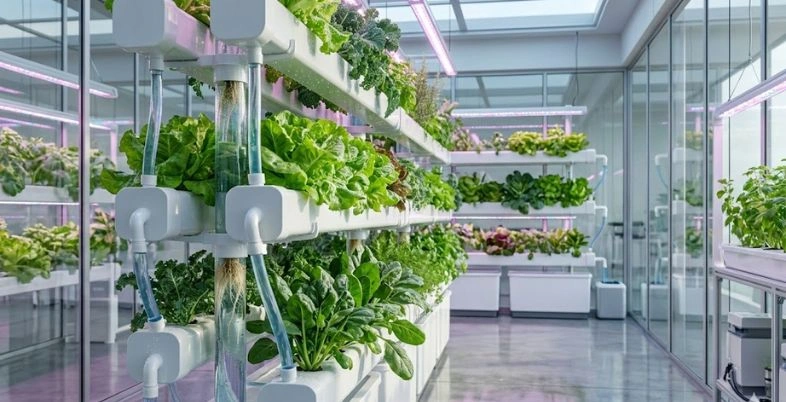
Farming Business Ideas such as soil-less farming include hydroponic agriculture, in which crops are cultivated in a liquid medium, and the root zone of crops is supplied with nutrients (in the form of a nutrient film practice (NFT), deep water culture (DWC), or aeroponics).
It is a new business model, which may be implemented among business owners in an urban area with limited space, such as in Delhi, to cultivate high-value crops all year round, leafy herbs, strawberries, or microgreens in controlled indoor systems illuminated by LED lights, with pumps and pH-balanced reservoirs.
It lessens the dependence on land, makes the most of the existing resources, and capitalizes on the new demand for fresh, pesticide-free food as India grows the urban farming sector, and may sell directly to restaurants and supermarkets, or via e-commerce.
Key Advantages:
- Increased yield: Grows 3-10 times in the same area with a 30-50 percent accelerated growth rate as a result of accurate nutrient delivery.
- Water efficiency: Consumes the least amount of water (up to 90- 98 ) of water through recirculating water solutions, which is suitable in areas that have a limited supply of water.
- No soil required: Kills weeds, soil-based pests and diseases, lowers the use of pesticides/ herbicides.
- The year-round production: The year-round production is a system that does not consider seasons, weather, or external pests, but produces all year.
- Space efficiency: Vertical stacking can be used in locations that are most suitable, like the rooftops or indoors, where urban startups are more appropriate.
- Less labor: The monitoring is automated, and the weeding or tilling is carried out by hand.
Startup Costs
| Scale | Area | Initial Cost (₹) |
| Small | 100-500 sq.m. | 2-15 lakh |
| Medium | 1,000-2,000 sq.m. | 20-50 lakh |
| Large | 1 acre (4,000+ sq.m.) | 80 lakh-1.5 crore |
| Commercial | Multiple acres | 2 crore+ |
3. Mushroom Farming
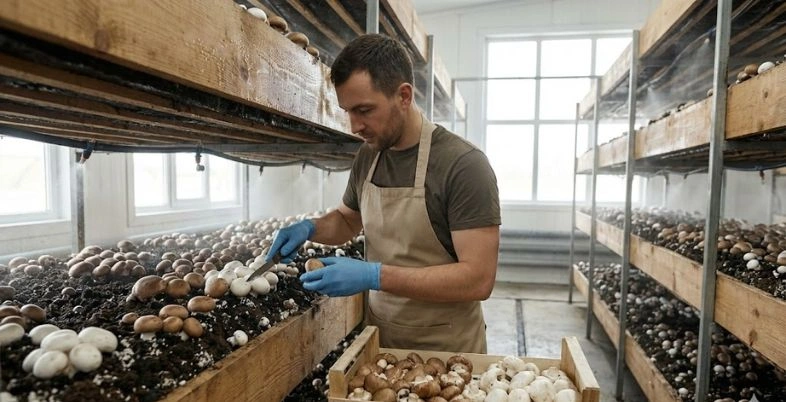
The idea of mushroom farming is a potential agribusiness, especially in India, where it aims to use the agricultural wastes, such as the paddy straw or wheat straw, to grow the highly demanded fruiting mushrooms, such as the oyster or the button mushrooms, in controlled conditions, like under a shade or in a shed.
This will be done by making spawn (mushroom seeds), pasteurizing substrate, spawning in bags or trays, keeping humid (80-90%) and cool (22-28 o C) then harvesting in 45-60 days with multiple cycles in a year that will produce quick returns with increasing urban demand on nutritious mushrooms high in protein used in hotels, markets, and processed food.
Key Advantages
- Minimal space requirements: It grows vertically in small rooms, sheds, or basements (200-1,000 sq ft to start with).
- Fast payback: Small scale (2-3 cycles/yr) is 6-8 weeks, with a net of 25k -30k/month.
- Low cost: Takes low-cost local waste materials; does not need heavy equipment and irrigation.
- High demand: Health-conscious consumers and exports at premium prices (reaching 150-300/kg).
- Scalable and sustainable: Start small, expand easily, Recycling farm waste is eco-friendly.
Startup Costs
| Scale | Total Cost (₹) | Area (sq ft) |
| Small | 50,000 – 2,00,000 | 200-1,000 |
| Medium | 2,00,000 – 10,00,000 | 1,000-5,000 |
| Large | 10,00,000+ | 5,000+ |
4. Poultry Farming
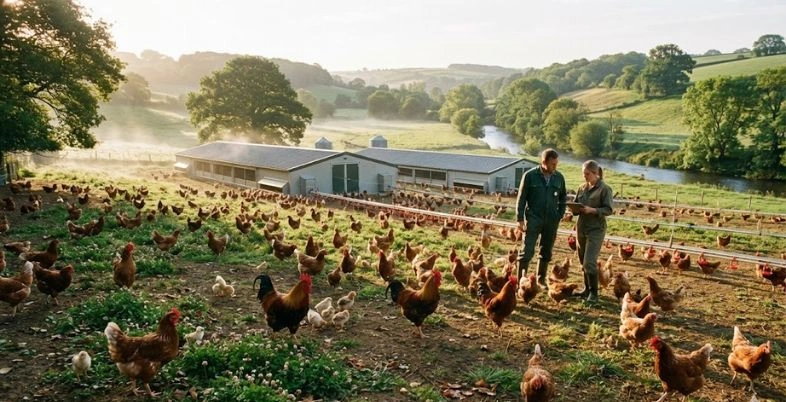
Poultry production is one of the most profitable Farming Business Ideas, involving the farming of domesticated birds such as chicken, duck, turkey, or goose mainly for meat (broilers) or eggs (layers), resulting in a scalable agribusiness sector with high market demand (such as in India).
It involves installing well-ventilated sheds, feeders, waterers, and biosecurity facilities; sourcing day-old chicks, quality feed (60–70 percent of total expenses), and vaccines; managing day-old care and growing cycles (6–8 weeks for broilers, 18–20 weeks for layers); and selling to wholesalers, retailers, or end consumers.
This enterprise can be applied in rural or semi-urban regions such as areas around Delhi and offers fast returns due to consistent protein demand and growing health consciousness against red meat.
Key Advantages:
- The strong demand for poultry meat and eggs in the world and the local market makes the markets stable throughout the year.
- Fast payback, broilers can be sold after 6-8 weeks, and break-even is a frequent occurrence in 6 months.
- Easy entry when compared to other farming, the creation of employment, and the ability to fit small start-ups.
- In India, the government programs are subsidies, loans, and training on how to set up and operate.
- Byproducts of manure are used as organic fertilizer to reduce the expenses incurred by farmers or as a by-product.
Startup Costs
| Component | Estimated Cost (INR) |
| Land (purchase/lease) | 50,000 – 1,00,000 |
| Sheds & Infrastructure | 1,50,000 |
| Day-Old Chicks (1,000) | 40,000 |
| Feed (one cycle) | 1,00,000 |
| Medicines & Vaccines | 10,000 |
| Equipment (feeders, waterers) | 20,000 – 50,000 |
| Labor & Utilities (initial) | 20,000 – 30,000 |
| Total | 3,90,000 – 5,00,000 |
5. Dairy Farming
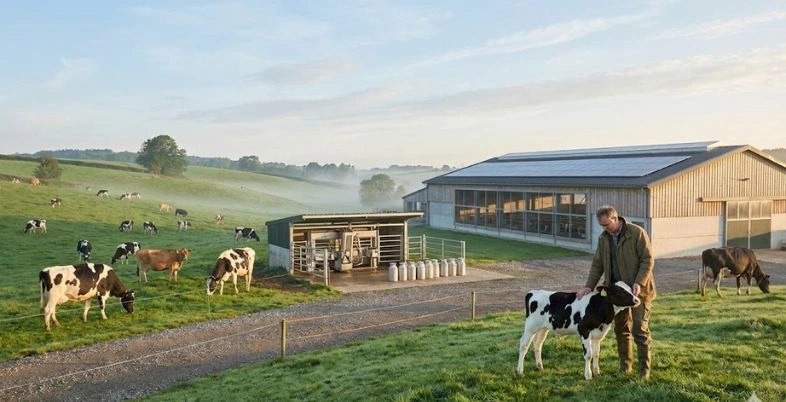
Dairy farming is a lucrative agricultural enterprise that deals with the rearing of animals such as cows, buffaloes, or other animals that are mainly used to produce milk, milk by-products such as ghee, chees,e and manure.
In India, where dairy items are in huge demand (largest milk consumer market in the world), entrepreneurs begin small with 10-20 animals, taking care of daily needs like feeding, milking (2-3 times/day), health inspection and control of wastes and selling milk to cooperatives, local markets or processing into value-added products to fetch better returns.
The key to success depends on the choice of the breed (high-yield crossbreeds), the effective production of fodder, veterinary services, and extracting government subsidies, which will result in stable income with prospects of growth.
Key Advantages
- Strong market demand: India is a major milk producer of more than 146 million metric tons of milk in a year, with an annual growth of 6.4%.
- Various sources of revenue: Enjoy the milk sales, calves, manure, and other items such as ghee (25-35% stronger margins).
- Government assistance: Schemes and subsidies lessen the startup costs and risks.
- Scalable profitability: 35-60 percent returns mean that small farms (10 cows) can make ₹80,000-1.38 lakh each month.
- Additional revenues: Manure increases the crop farming synergy with the fertility of the soil.
Startup Costs
| Component | Estimated Cost (₹ Lakh, for 10-20 Animals) |
| Cattle Purchase | 5-15 |
| Shed Construction | 1-3 |
| Equipment (Milking/Storage) | 0.2-0.5 |
| Fodder Development | 0.1-0.3 |
| Water/Electricity | 0.15-0.4 |
| Miscellaneous | 0.2-0.5 |
| Total | 6.65-19.7 |
Suggest Read:-
6. Goat Farming (Bakri Palan)
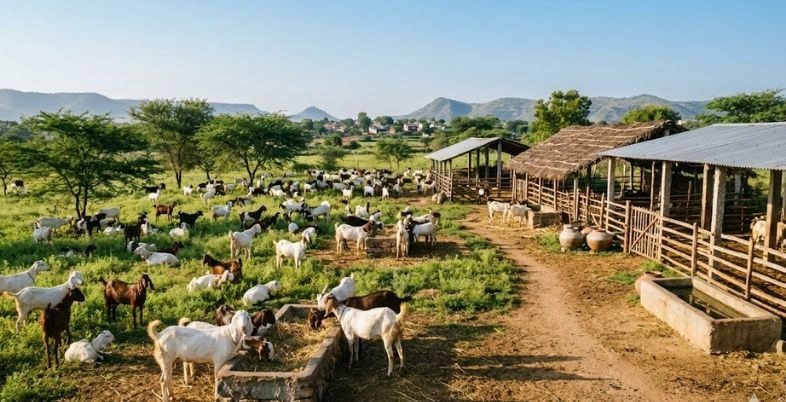
Goat farming is one such Farming Business Ideas in agriculture, Bakri Palan in Hindi, a lucrative and sustainable agricultural enterprise, particularly in rural India, which makes use of goats to meet fluctuating climatic conditions along with low farming maintenance requirements.
It encompasses the rearing of breeds such as Barbari, Jamnapari, or Black Bengal for meat (chevon), milk, and by-products like manure, starting with around 10–50 goats on minimal land and scaling through natural breeding cycles that often result in twins or triplets every 6–8 months. Goat products remain in high demand due to strong cultural preferences for meat among communities without religious restrictions.
Key Advantages:
- Small initial capital compared with cattle or poultry rearing, with the initial capital of 50,000- 1 lakh for goats.
- High markets and universal acceptance and export are demanded in goat meat, milk, and manure.
- Goats multiply very fast, bearing 2-3 times annually; hence, the herd does not need to purchase new goats.
- Requirement of small space and feed; goats graze on weeds, management of crop residues, and do not need large amounts of water.
- The meat sales, milk, kids, skin, and nutrient-fortified organic manure are some of the sources of income.
- Subsidies and loans provided by the government (i.e., 25-33% according to the state schemes) make the costs and risks lower.
- Small or backyard-sized, perfected for women and marginal farmers.
Startup Costs
| Component | Estimated Cost (₹) |
| 10 Goats + 1 Buck | 50,000 – 80,000 |
| Shed/Housing | 20,000 – 40,000 |
| Initial Feed (3 months) | 10,000 – 15,000 |
| Medicines/Vaccines | 5,000 – 10,000 |
| License/Insurance | 10,000 – 20,000 |
| Total | ₹95,000 – ₹1,65,000 |
7. Fish Farming (Aquaculture)
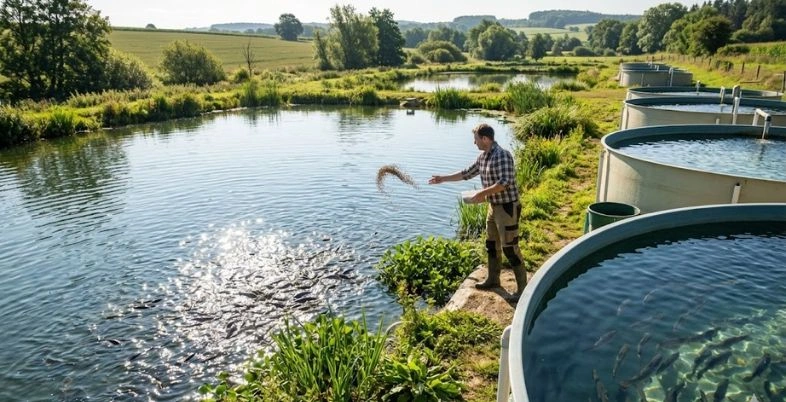
Fish farming or aquaculture can be described as a sustainable business venture in which fish species like tilapia, carp, or catfish are bred and reared in ponds, tanks, or cages and harvested to meet the growing demand for seafood.
It will solve the problem of overfishing by making quality protein locally, frequently combined with agriculture to use the land effectively, and can create a consistent source of income in sales to markets, restaurants, or final consumers. It is especially feasible in parts of India, such as the outskirts of Delhi, where there is easy access to water sources, under government subsidy, and with the increasing demand for fresh fish in urban areas.
Key Advantages:
- Offers high-quality protein food at lower prices than fish grown wild and enhances food security.
- Reduces pressure on natural fisheries, and this increases environmental sustainability.
- Grows throughout the year and has over a single harvest throughout the year, and this ensures that revenues are stable.
- To fit any budget, small backyard ponds may be utilized and expanded to large commercial ones.
- The government subsidies, loans, and training in India are open, leading to fewer barriers to entry.
Startup Costs
| Expense | Small Scale (₹) | Medium Scale (₹) |
| Pond/Tank Construction | 5,000–2 lakh | 5–10 lakh |
| Fish Seed (Juveniles) | 10,000–50,000 | 1–5 lakh |
| Feed & Nutrition (Initial) | 20,000–1 lakh | 2–5 lakh |
| Equipment & Filtration | 15,000–1 lakh | 2–10 lakh |
| Labor (First Few Months) | 30,000–60,000 | 1–3 lakh |
| Land Lease & Misc. | 50,000–1 lakh | 3–10 lakh |
| Total Estimated | 5–7 lakh | 15–40 lakh |
8. Medicinal & Herbal Plant Farming
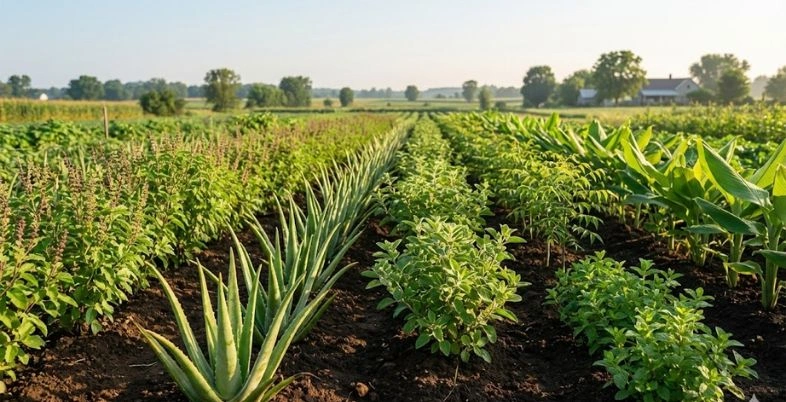
Medicinal & Herbal Plant Farming The potential to grow medicinal and herbal plants as a business is strong, driven by rising global demand for natural remedies, Ayurvedic products, and herbs due to increasing health awareness. Products commonly grown include ashwagandha, tulsi, aloe vera, ginseng, and neem, among others.
The initial start-up costs of this venture include market research to identify high-demand species based on local climate and soil conditions, acquiring 1–5 acres of arable land, soil preparation using organic compost, and adopting sustainable practices such as drip irrigation and minimal pesticide use to ensure high yields.
Key Advantages
- A favorable startup cost in comparison to the traditional crops, which can be as low as a few thousand dollars (seeds, equipment, and simple infrastructure).
- Good potential to be highly profitable with net income ranging between 1-3 lakh per acre in areas such as India, owing to the high price attached to organic herbs.
- Eco-friendly and sustainable, fewer chemicals are needed, and biodiversity is favored in the small land areas.
- Wellness trends have led to strong market demand, which is relatively recession-resistant and has a variety of buyers, including pharma firms and exporters.
- Operations flexibility, such as scalable workload, direct interaction with customers at farmers’ markets, and value addition to achieve higher margins.
- Furthering health and cultural values with traditional knowledge of medicinal plants.
Startup Costs
| Cost Component | Estimated Range (USD) |
| Land Preparation | 500 – 5,000 |
| Seeds/Planting Material | 200 – 2,000 |
| Irrigation System | 300 – 3,000 |
| Tools & Equipment | 100 – 1,000 |
| Operating (1st Year) | 1,000 – 10,000 |
| Total | 2,100 – 21,000 |
9. Vermicomposting Business
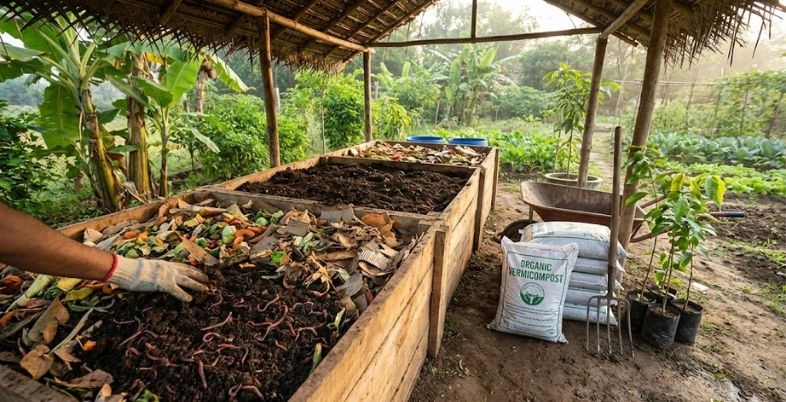
Vermicomposting is a business model of sustainable farming, which is linked to the use of earthworms, such as red wigglers (Eisenia fetida), to convert organic waste products, such as cow dung, vegetable peels, crop residues, and dry leaves, into nutrient-enriched compost relying on a natural decomposition process.
It is an environmental business that can be started in small scale under shady and well-drained conditions with simple systems of having brick beds or plastic bins, or cement tanks, and have the worms stocked with 1000-1500 per cubic foot, at the level of 60-70 per cent moisture and 15-30 C, and harvested after 45 days of aerobic environment and pest control. As more people shift towards chemical-free agricultural methods due to an increased demand for organic fertilizers, I
Key Advantages
- Small business startup fees, which may be less than 50,000 rupees to start with small businesses, and can also be zero in the case of raw materials being free or with low prices, like farm waste.
- Profit margins are high (as high as ₹10-15/kg) and cycles of production and sales are short (45-60 days).
- It is eco-friendly and sustainable, enhances the health of the soil through NPK nutrients, aeration, and microbes, as well as decreasing the use of chemical fertilizers.
- Several sources of revenue, consisting of compost, liquid vermiwash, and worm sales, can be expanded to backyard size and up to 0.5-acre farms.
- Little labor and skills were required; most suited to rural entrepreneurs, farmers, or FPOs with local demand.
Startup Costs
10. Floriculture (Flower Farming)
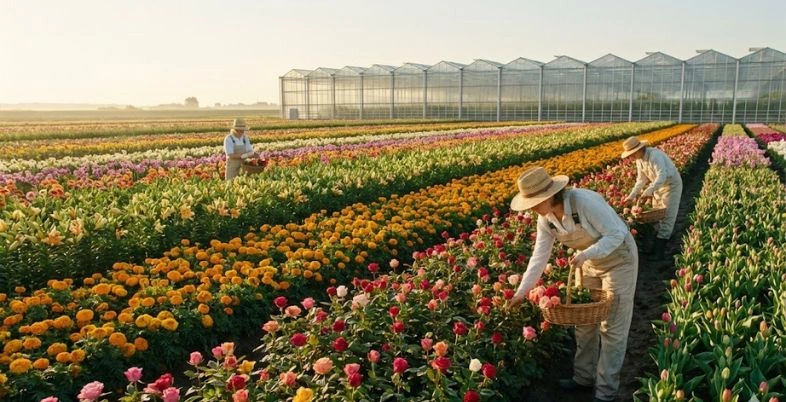
Floriculture is one of the most profitable Farming Business Ideas, involving the commercial growing of flowers and ornamental crops (such as roses, marigolds, lilies, lily and chrysanthemums) as cut flowers, potted plants, garlands, or even for export to meet the demand of weddings, festivals, florists, and urban markets.
This is an expensive farming venture in India because Indian culture requires a high number of flowers for rituals and festivals. Farmers can also have several harvests every year, provided they use effective irrigation, pesticides, and proper soil maintenance.
Key Advantages:
- Profitability and potential revenue of 1-13 lakh per acre per year, which is very high compared to the conventional crops like rice or wheat.
- Festivals and exports will keep the demand constant, which ensures the use of a steady cash flow.
- Reduced water requirements compared to paddy and tolerance to unpredictable monsoons using greenhouse alternatives.
- Scalable since it can be developed on small plots in the backyard to a large farm; suitable in case an entrepreneur has limited land.
- Sell value-added services such as bouquets, subscriptions, or even dried arrangements at a better margin.
- Barriers to entry are low in India due to government subsidies on polyhouses and drip irrigation.
Startup Costs
11. Fruit Orchard Farming
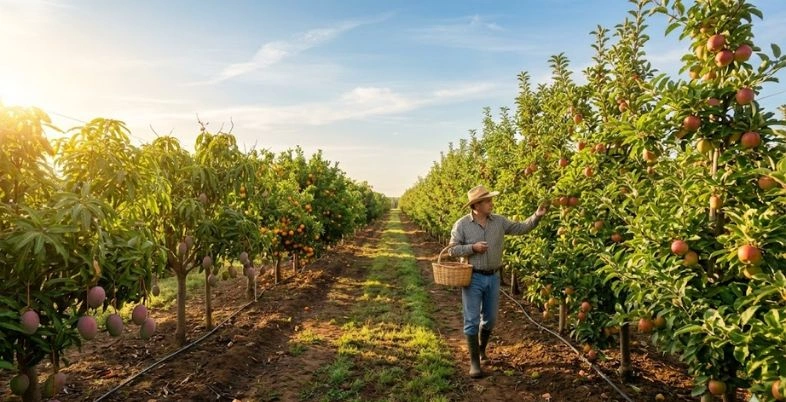
Fruit orchard farming is a process that deals with planting of fruit-bearing trees such as mangoes, apples, oranges, or guavas into a certain piece of land, which is usually a long-term activity to maintain production of the fruits, usually in a few years until they mature.
The business concept can suit business-driven farmers in regions where climates are favorable, such as some parts of India that plant trees in rows at the most suitable space to capture sunlight, irrigation, and pollination, and would use a sustainable approach, such as intercropping with vegetables initially to raise instant revenue.
When properly managed, orchards produce high-value fruits to local markets, processing, or export, providing a reliable income with a series of harvests during the season and improving the biodiversity and soil condition of farms in the long term.
Key Advantages
- Earns higher income per acre than most perennial crops, and fresh or organic fruits are expensive.
- Increases the fertility of soil by leading to natural circulation of nutrients like fallen leaves and roots, thereby making it unnecessary to apply fertilizers.
- Enhances the biodiversity and pollination of the biosphere, bees and birds, among other things, and leads to a healthier ecosystem.Offers market risk insurance through crop diversification and several harvests, which helps reduce risks in the market.
- With less maintenance over time, the trees are mature, and thus they require less labor, water, and inputs.
Startup Costs
| Component | Low Estimate | High Estimate |
| Licenses, Permits, Insurance | $500 | $2,000 |
| Initial Inventory & Supplies | $5,000 | $15,000 |
| Land Acquisition/Lease | $50,000 | $200,000+ |
| Equipment (Tractors, etc.) | $20,000 | $100,000 |
| Irrigation & Infrastructure | $50,000 | $250,000 |
| Total | $77,518 | $275,035 |
12. Spice Farming
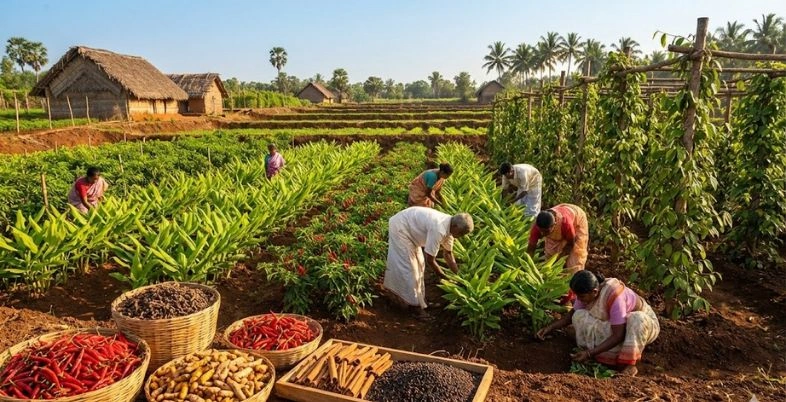
It is practiced by planting aromatic crops of premium value, including pepper, cardamom, turmeric, cumin, and chili, which are normally found in tropical settings such as Kerala, Tamil Nadu, and Karnataka, India, making it one of the most promising Farming Business Ideas today.
The business idea suits the category of smallholder farmers or entrepreneurs who can get access to 1–5 acres of well-drained and fertile soil and can exploit sustainable farming approaches like agroforestry to intercrop fruits or trees, enhancing crop production and resilience.
Planting of seeds or saplings is done during monsoons with low-input management using organic pest control, and harvesting is done after 6–12 months (perennials such as cardamom are harvested annually). Fresh, dried, or powdered products are sold to exporters, processors, or local markets as global demand for organic spices continues to rise.
Key Advantages:
- The prices per kg of the crop are very high and are very profitable compared with staple crops like rice or wheat.
- Decreased production cost since plants are not delicate; they need minimal water, pesticides, and maintenance.
- Against price fluctuations Against fluctuations: Diversification (e.g., many spices or agroforestry).Environmentally friendly and exportable, particularly organic practices, which attract high prices in the world market.
- Scalable to small farms with long payback of the perennials to improve the livelihoods of farmers.
Startup Costs
| Component | Small Scale (₹, 1 acre) | Medium Scale (₹, 5 acres) |
| Land Preparation | 50,000 – 1,00,000 | 2,00,000 – 5,00,000 |
| Seeds/Saplings & Inputs | 30,000 – 60,000 | 1,50,000 – 3,00,000 |
| Irrigation & Tools | 20,000 – 50,000 | 1,00,000 – 2,00,000 |
| Labor (first year) | 40,000 – 80,000 | 2,00,000 – 4,00,000 |
| Licenses & Misc | 10,000 – 20,000 | 50,000 – 1,00,000 |
| Total | 1,50,000 – 3,10,000 | 7,00,000 – 15,00,000 |
Conclusion
And telling you, as an Indian businessman, among the many in the bustling metropolis of India, among others, such as Delhi, that by exploiting Farming Business Ideas in the year 2026, you will get the opportunity to be exposed to a multiplicity of business opportunities, both low-cost ventures, like mushroom farming and vermicomposting, as well as innovative ventures, like those of hydroponics and organic vegetables.
As global food demand increases, government subsidies, and sustainable foods are attractive commodities, like dairy, poultry, and herbal plants, you can earn quick profits (usually in 6–12 months), enjoy lifestyle advantages such as fresh air and community connection, and build long-term wealth by combining traditional practices with modern technology. Just find something interesting that matches your budget (as low as ₹25,000), sell directly through farmers’ markets or e-commerce platforms, and watch your sustainable investment pay off.
FAQs
Q.1 Which Are The Most Lucrative Farming Business Concepts As a Start-Up?
The first in the list are organic farming, vertical farming, and agro-tourism because of the presence of high demand of chemical free produce and experience-based farming. They incur moderate start-up expenses and provide a constant output in terms of direct-to-consumer sales.
Q.2 How Much Money Would You Require To Operate a Small Farming Business?
The price of land, seeds, and simple equipment will be ranging 5 to 20 lakhs depending on the scale. A vertical or hydroponic system may be more expensive in terms of technical expertise but requires less land. Government subsidies (PM-KISAN) could cover 30-50 percent of it.
Q.3 Is Any Previous Farming Experience Required To Start Up a Business?
No, market research and a good business plan are necessary; eFarmony can assist you in finding the match between the idea and your skills and needs. Begin with crops that are in high demand, such as herbs or mushrooms.
Q.4 How Does One Embark on a Farming Business In India?
Register as a sole proprietorship, LLP, obtain FSSAI certification of produce, and request soil testing/NOC of the local agriculture dept. Organic certifications given by APEDA increase credibility.
Q.5 What Are The Typical Hazards When Operating Businesses In The Farm Industry, And Their Possible Remedies?
The weather, pests, and market variations; swap it with crop insurance (PMFBY), the cultivation of crops in hydroponics, and buyer contracts. Split products as a risk mitigating measure.
Q.6 Can Vertical Farming Work In Indian Urban Areas?
Yes, it makes the most of city areas, reduces water consumption by 90, and delivers fresh food to metropolitan areas such as Delhi; recoups the investment in 2-3 years through subscriptions.
Q.7 What Are The Options For Funding An Agricultural Venture?
The NABARD or IFFC Kisan Finance access loans, as well as such schemes as Agri-Clinic, follow ROI with easy-to-use tools and invest the profits into such technology as drip irrigation.