
In the year 2026, the human resources market is undergoing a revolution due to the artificial intelligence technology that is revolutionizing the way human resource departments work. Modern HR professional pressures are piling up, such as the lack of talent, the management of a remote workforce, the engagement issue, and the necessity to achieve a lot with limited resources.
The optimal trending tools in HR departments have become the key solutions that help to automate routine operations, offer information-related insights, and allow HR staff to work on strategic projects instead of administrative overhead. AI Tools for HR Departments play a crucial role in this transformation, streamlining processes and enabling smarter decision-making. As almost 70 percent of HR experts are set to invest more in AI in 2026, companies that embrace these smart solutions get a competitive edge in recruiting, employee retention, performance control, and overall organizational productivity, so the use of AI becomes not an option but a necessity for successful HR in the 21st century.
How HR Departments Are Using AI Today
Contemporary human resources have adopted AI in various activities in an effort to become efficient and make decisions.
- Recruitment automation: takes advantage of AI-based applications to sift through resumes, find applicants relevant to job categories, and screen applicants with pre-recorded interviews, saving up to 30 minutes in time-to-hire.
- Monitoring employee engagement: Uses predictive analytics and sentiment analysis to detect those employees who are disengaged before they leave, and some AI systems can predict turnover with 95 percent accuracy.
- Performance management has been simplified by analyzing feedback using AI and generating automatic reviews, which allows the manager to be more consistent and free of bias in their evaluations.
- Learning and development: AI is currently implemented by programs to customize training plans according to specific skill deficiencies and career goals.
- Automation of administrative tasks: automates schedule keeping, payroll, and benefits administration, and liberates the HR staff to work on strategic initiatives that enhance business growth and organizational culture.
Types of Professionals AI Tools for HR Departments
The most useful AI applications in HR departments can be divided into multiple categories of specialized tools that could be used to solve particular issues.
- Recruitment and applicant tracking systems: apply machine learning algorithms to source candidates, process resumes, and estimate candidate success rates based on past data.
- Employee engagement platform: use natural language processing to process survey feedback, track the workforce mood, and offer real-time information about employee morale.
- Performance management solutions: use AI to automate the review process, identify trends in employee reviews, and propose individual developmental recommendations.
- Learning management systems, through AI training, can be customized to the learning styles of an individual and monitor progress in skill development.
- HR analytics and workforce planning tools: make use of predictive tools to predict hiring requirements, assess retention risks, and allocate workforce optimally so that HR can be proactive instead of reactive, and in line with business goals.
How to Choose the Best AI Tool for HR
There are a number of important factors to be considered when choosing the appropriate AI tool.
- Have clear goals: define the pain points by stating what exactly needs to be improved by cutting down time-to-hire, employee retention, or making the performance review more efficient before evaluating the solutions.
- Evaluate integration skills: to make sure that new tools can easily integrate with the current HR systems and payroll platforms, as well as communication channel,s without leaving data silos.
- Look into the level of data security and compliance: the functionality to safeguard confidential personal data of employees and ensure it complies with the regulations, such as GDPR and labor laws.
- Look at scalability and flexibility: decide on solutions that are scalable and flexible to your organization, and do not need a full upgrade of your system.
- Demo and trials: to evaluate user experience, provide credibility on stated capabilities, and sample the real-world user comments, you need to request demos and experiment with user experience before committing significant financial investment to ensure that the tools you adopt will bring quantifiable value to your HR functions.
10 Best AI Tools for HR Departments (2026 Detailed List)
1. Peoplebox.ai
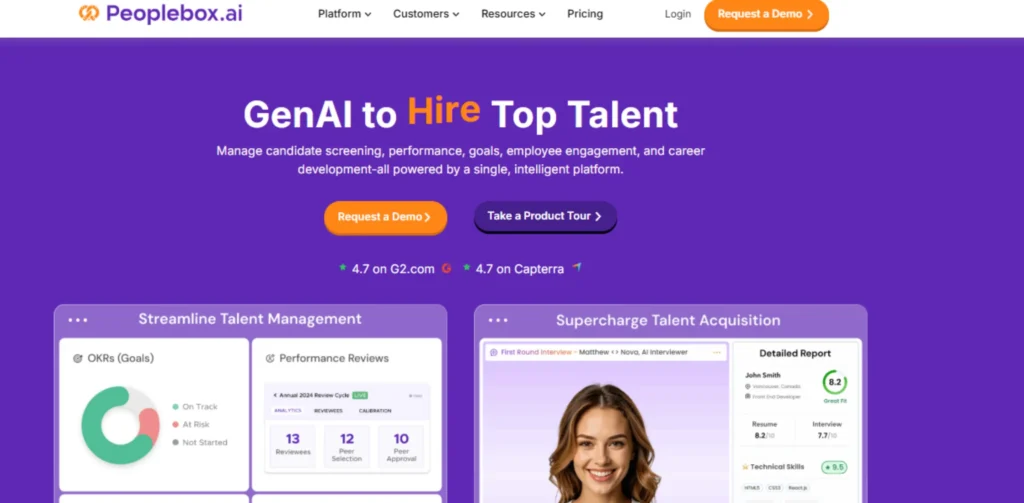
Peoplebox.ai is a broad-based AI-driven platform that transforms the HR processes through intelligent automation and data-driven insights. This new solution simplifies the recruitment activities with highly automated resume screening and candidate matching features, and also improves employee engagement with automated pulse survey and sentiment analysis.
The performance management capabilities of the platform are based on artificial intelligence that creates valuable feedback, goal progress, and actionable recommendations, which assist managers in holding more productive reviews. Peoplebox.ai provides an operational HR ecosystem, integrating smoothly into the most successful workplace applications such as Slack and Microsoft Teams, which removes data silos and improves productivity throughout the lifecycle of the entire employee.
Key Features:
- AI-powered resume screening
- Automated pulse surveys
- Analytics of performance review.
- Live engagement intelligence.
Pros:
- Comprehensive HR solution
- Good Slack integration.
- User-friendly interface
Cons:
- Custom pricing only
- Learning curve initially
- Enterprise-focused features
Best For: mid-market and enterprise organizations.
Website: https://www.peoplebox.ai
2. Workday
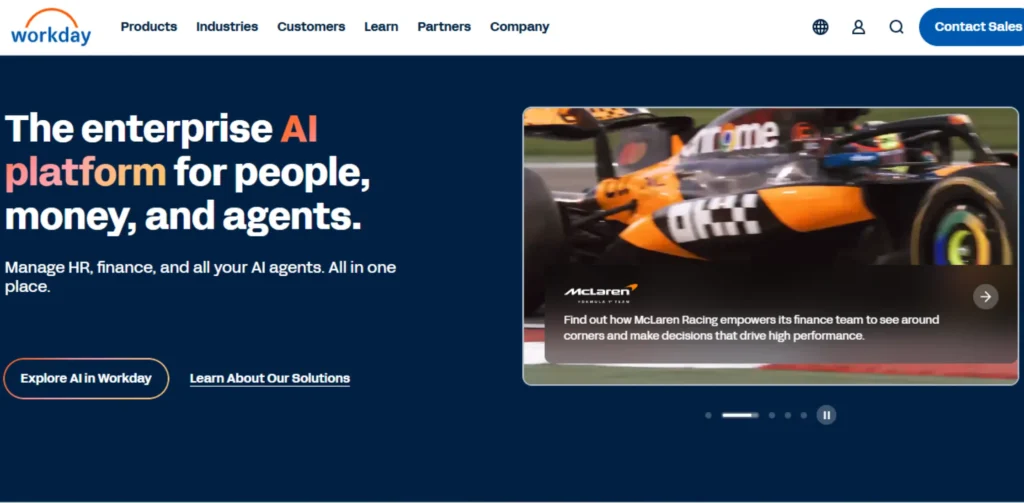
Workday is one of the top enterprise AI engines, which alters the manner in which organizations engage human resources and financial transactions via its pioneering Workday Illuminate technology just like Zoho Books Alternatives. This powerful framework integrates artificial intelligence directly into the core HR operations to automatically streamline the more complicated activities, such as performance appraisal, workforce planning, and talent development, without losing the human factor at the heart of the decision-making process.
The platform uses massive quantities of organizational data to offer unmatched information on workforce tendencies, expertise gaps, and business performance. AI Tools for HR Departments help streamline these processes, enabling smarter insights and more efficient operations. The AI agents in Workday deal with administrative tasks that consume time, letting the HR professionals concentrate on strategic projects that can make organizations successful and their employees satisfied.
Key Features:
- Artificial intelligence workforce management.
- Smart career suggestions.
- Automated Business processes.
- Anticipatory human resource analytics.
Pros:
- Enterprise-grade scalability
- Comprehensive functionality
- Strong compliance features
Cons:
- Higher cost point
- Complicated implementation procedure.
- Demands specific training.
Best For: Intermediate and large enterprises with very complex requirements.
Website: https://www.workday.com
3. HireVue
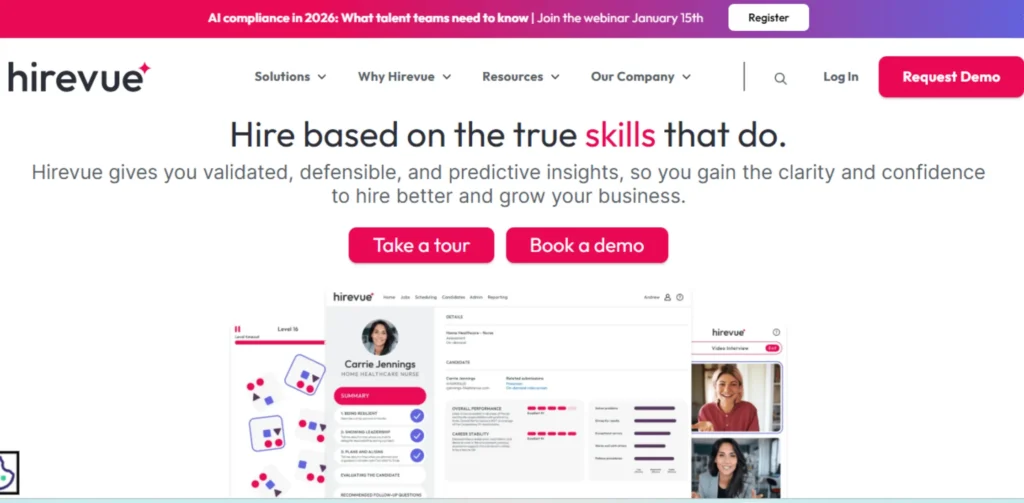
HireVue transforms the recruitment process by using innovative technologies of hiring via video interviews, which apply AI to analyze the reactions of candidates, their facial expressions, and their communication patterns to determine the fitness of the candidate according to the cultural and job characteristics. The new platform will allow organizations to carry out asynchronous video interviews, which can be self-administered by the candidate, and it will save a lot of time-to-hire and broaden the talent pool due to geographic constraints.
The AI programs also analyze thousands of data points in every interview, which gives hiring managers objective information to supplement human judgment and lessen unconscious bias. The technology of HireVue is implemented by hundreds of organizations worldwide that aim at updating their recruitment procedures and making better hiring decisions.
Key Features:
- AI video interview analysis
- Scheduling of interviews asynchronously.
- Tools of behavioral assessment.
- The optimization of candidate experience.
Pros:
- Reduces hiring time
- Scalable interview process
- Informed candidate information.
Cons:
- Premium pricing structure
- Privacy concerns exist
- Learning technology was necessary.
Best For: Enterprise recruiting departments.
Website: https://www.hirevue.com
4. Lattice
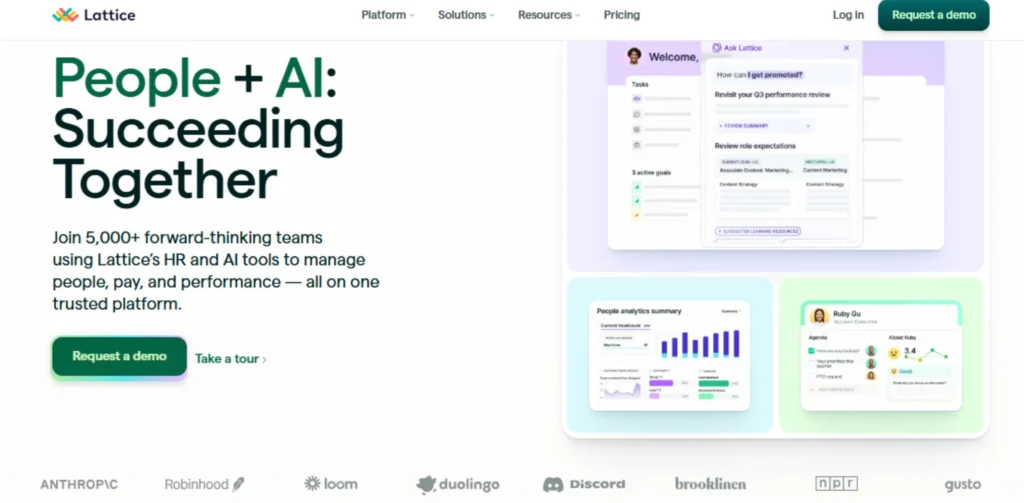
Lattice is a platform of advanced performance management with an artificial intelligence that assists organizations with the creation of high-performing cultures based on ongoing feedback, goal setting, and employee growth. AI Tools for HR Departments, like Lattice’s features, help managers streamline performance management and enhance employee development. Writing Assist is an AI-based feature of the platform that helps managers to write concise, practical, and unbiased performance reviews that inspire meaningful dialogue and personal development.
Lattice is a performance review that seamlessly merges with regular one-on-one meetings, engagement surveys, and career development planning, and gives a comprehensive perspective of both employee performance and satisfaction. Such an integrated mechanism allows HR specialists to observe the trends, proactively resolve problems, and develop an individual developmental strategy that would meet personal interests and the organizational goals.
Key Features:
- AI writing assistance
- Continuous feedback loops
- Goal tracking systems
- Engagement survey analysis
Pros:
- Intuitive user interface
- Well-developed analytical skills.
- Superior mobile experience.
Cons:
- Mid-range pricing tier
- Less customization possibilities.
- Integration is problematic at times.
Best For: SMBs and mid-market businesses.
Website: https://www.lattice.com
5. Paradox (Olivia)
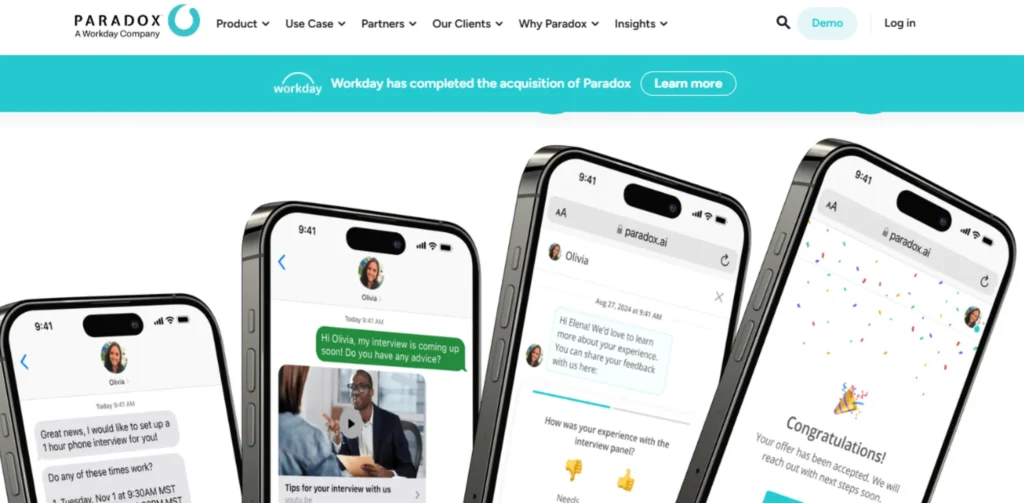
Paradox has redefined recruitment automation with Olivia, an AI-based conversational assistant that manages the engagement of candidates since their first inquiry up to the scheduling of interviews with no human involvement. This smart chatbot will be used to engage with candidates through text messaging, WhatsApp, or web chat and will respond to any questions, request application data, check availability, and schedule interviews automatically depending on the calendar of the recruiter.
Natural language processing capabilities allow Olivia to maintain human-like conversations, which provide positive candidate experiences and reduce recruiter workloads by an enormous margin. Paradox organizations have been seen to maintain a high level of application completion, time to hire, and recruitment efficiency, which is invaluable as a high-volume hiring tool.
Key Features:
- Chatty artificial intelligence.
- Scheduling of interviews is automatic.
- Multi-channel communication with the candidates.
- Automation of the application processes.
Pros:
- Significant time savings
- Great applicant experience.
- High automation level
Cons:
- Requires ATS integration
- Custom pricing model
- Limited to recruitment
Best For: Organizations with high volumes of hiring.
Website: https://www.paradox.ai
6. 15Five
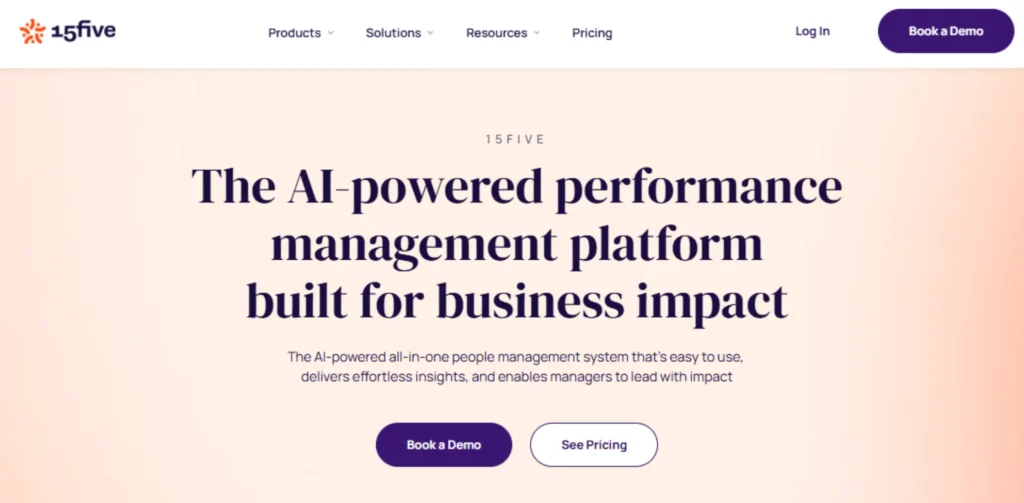
15Five is a complete performance management and employee engagement platform based on artificial intelligence principles that promotes unceasing development by using periodic check-ins, goal monitoring, and reward schemes. AI Tools for HR Departments like 15Five’s features help organizations align employee performance with company objectives more effectively. The AI features of the platform help to analyze the performance data in order to align individual employee goals with the larger company goals so that everyone pursues the same strategic priorities.
By performing weekly check-ins and pulse surveys, 15Five will receive real-time feedback on employee moods, workload, and challenges to respond to issues in a timely manner. The smart algorithms of the system detect the trends in the responses of the employees and offer relevant actions that can assist the HR departments to enhance the retention process, increase engagement, and make the workplace more conducive.
Key Features:
- AI goal alignment
- Weekly check-in automation
- Dashboards on performance tracking.
- Employee recognition tools
Pros:
- Affordable pricing model
- Easy implementation procedure.
- Strong manager support
Cons:
- Limited advanced features
- Ad hoc reporting functions.
- Smaller customer base
Best For: Small companies of 50-500 employees.
Website: https://www.15five.com
7. Eightfold AI
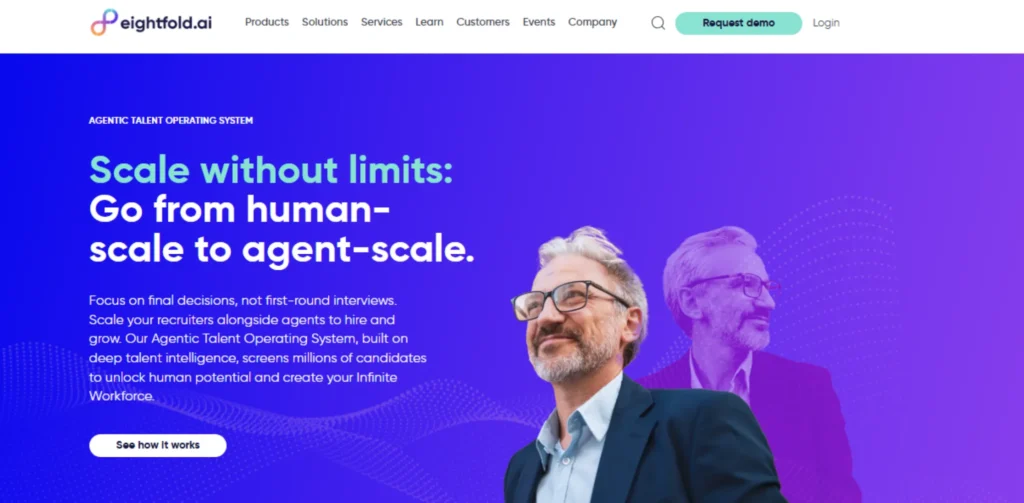
Eightfold AI is a new technology that promises talent intelligence, a domain where deep learning algorithms are used to connect employees with the most ideal career paths, suggest personalized growth strategies, and forecast the trends of the workforce with amazing precision. It is an advanced platform that examines billions of data points in resumes, job descriptions, skills tests and career histories to know the full potential of each employee and candidate.
The AI of Eightfold constantly receives updates based on the organizational hiring trends and flows of employees and improves its suggestions to minimize bias and enhance talent choices. The system is effective at recognizing internal mobility, identifying succession planning candidates, and analytics of skills gaps, making organizations utilize the talent they have effectively and make smarter decisions to remove an employee.
Key Features:
- Talents in deep learning, matching.
- Career path recommendations.
- Skills gap identification
- Bias reduction algorithms
Pros:
- Cutting-edge AI technology
- Complete talent intelligence.
- Strong diversity focus
Cons:
- Enterprise pricing level
- Complex data requirements
- Steep learning curve
Best For: Huge companies that are talent oriented.
Website: https://www.eightfold.ai
8. BambooHR
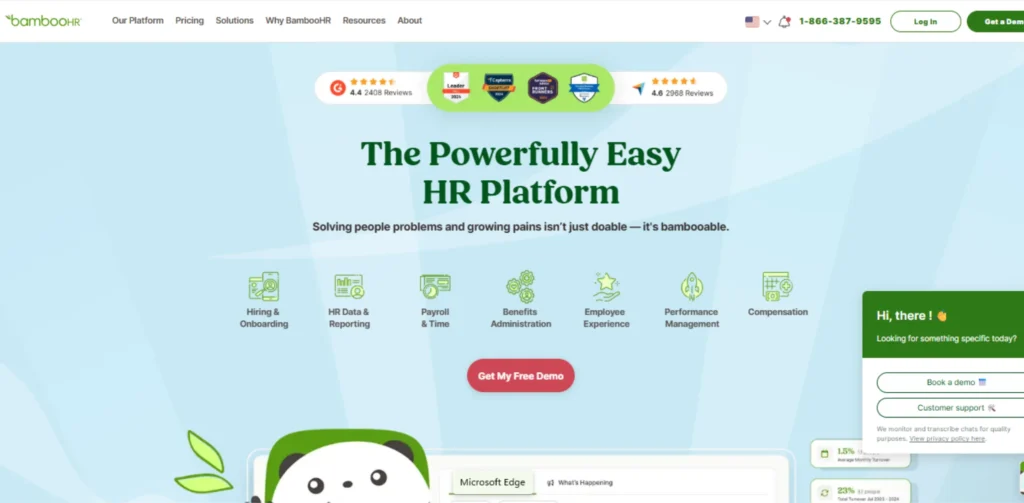
BambooHR provides a human resources information system that is easy to use and access, and that includes the use of artificial intelligence functionalities, specifically targeting small and medium-sized businesses that want to professionalize their human resources operations. AI Tools for HR Departments like BambooHR streamline HR processes, making administrative tasks faster and more efficient. The platform automates many of the time-consuming administrative functions, such as employee record management, time-off, benefits management, and onboarding processes, and allows HR departments to concentrate on strategic efforts.
The AI capabilities of BambooHR help in managing the documents, workflow policies, and other self-service experiences of employees, where information can be readily accessed without compromising the accuracy of data. The system is user-friendly and has a low training requirement thus deployed quickly and adopted by both the employees and the managers.
Key Features:
- Automated HR workflows
- Self service portal of employees.
- Time-off management
- Assistance in document generation.
Pros:
- Affordable for SMBs
- Easy to implement
- Excellent customer support
Cons:
- Minor enterprise characteristics.
- Simple data analysis skills.
- Less integrations in place.
Best For: Small or middle-sized business.
Website: https://www.bamboohr.com
9. Visier
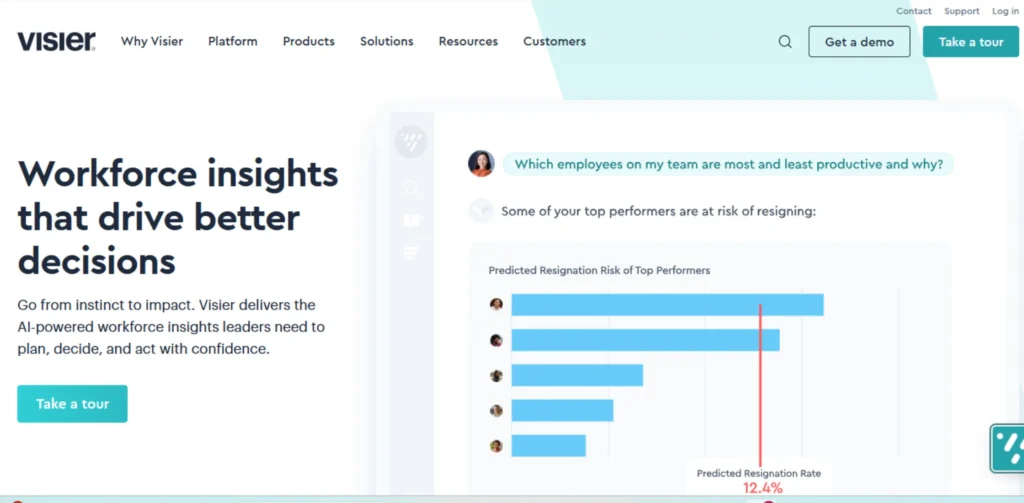
Visier is one of the leading people analytics tools that utilizes artificial intelligence to convert raw workforce information into strategic implications that help make informed business decisions. This is an effective solution that brings together data from various HR systems, payroll systems, and business applications to formulate a whole picture of workforce, cost, and performance measures.
The predictive analytics feature of Visier predicts the future workforce requirement, points at areas where the organization may face retention risks, and models the effect of various HR efforts prior to their implementation. The visualizations and ready analytics templates allow the HR leader to respond to complex questions about the workforce in a few seconds, prove the business contribution of HR, and provide evidence-based suggestions to executive management, using the platform.
Key Features:
- Proactive human resource analytics.
- Turnover risk modeling
- Workforce planning tools
- Dashboard reporting by the executive.
Pros:
- Powerful analytics engine
- Ready-developed industry standards.
- Very good data visualization.
Cons:
- Premium pricing structure
- Requires data quality
- Complex initial setup
Best For: Enterprise HR analytics team.
Website: https://www.visier.com
10. Gusto
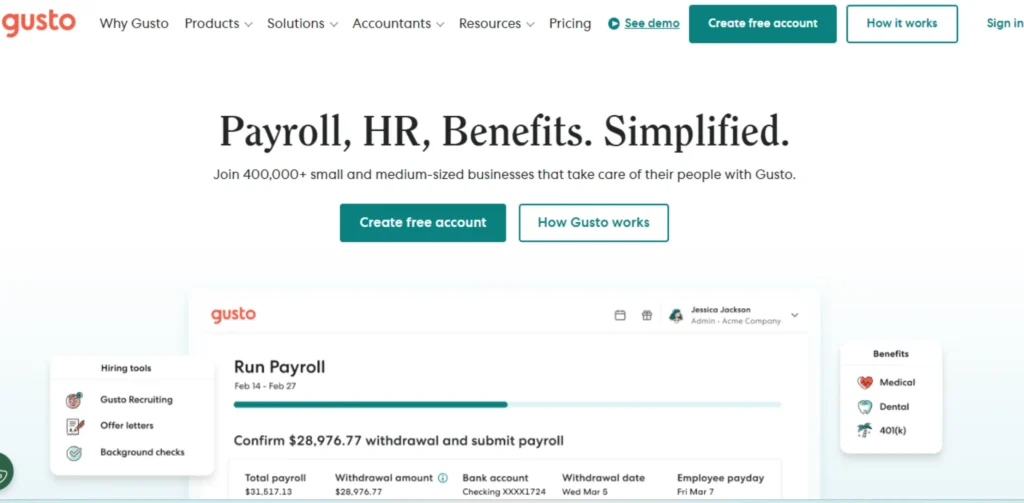
Gusto offers a payroll, benefits, and HR management platform with artificial intelligence, making it easier to perform complicated administrative tasks for small and medium-sized businesses. AI Tools for HR Departments like Gusto help streamline payroll and benefits management while ensuring compliance and efficiency. The AI features of the system give personalized recommendations that are personalized to the employee on the basis of demographics and preferences, of an employee and also automate compliance monitoring to keep employees in line with federal and state regulations.
Gusto also automates payroll processing, filing taxes, time tracking, and benefits administration with an easy-to-use interface and minimal human resource skills. The smart algorithms of the platform identify possible mistakes, offer the best benefit packages, and offer insights on the compensation competitiveness to help growing companies provide the full range of HR services without having to develop bulky HR departments.
Key Features:
- The automated payroll processing.
- AI is advantageous in customization.
- Compliance monitoring
- Optimization of benefits to employees.
Pros:
- Affordable pricing tiers
- Full-service payroll
- Excellent user experience
Cons:
- US-focused primarily
- Weak international backup.
- Basic performance features
Best For: Small businesses and startups.
Website: https://www.gusto.com
Challenges & Limitations of AI in HR
Although it is true that the best AI tools currently available to HR can be transformed into a miracle, AI Tools for HR Departments also come with a number of major challenges that require attention on the part of the organisation to be implemented successfully
Algorithms and fairness Problems:
- Artificial intelligence trained on historical data might reinforce pre-established discrimination in the job market and promotions.
- Needs to be closely supervised and revised with the goal of achieving equal success among the demographic groups.
- May result in discrimination lawsuits in case of unidentified bias.
- Requires various training information and frequent audits.
- Ethical decision-making still requires human intervention.
Data Privacy and Data Security:
- Mishandling of employee-sensitive information is quite a threat to security.
- It is obligatory to comply with the GDPR, CCPA, and others.
- A data breach may lead to expensive fines and brand damage.
- Needs strong encryption and controls on access.
- The trust of the employees is based on open practices of data handling.
Integration and Technical Complexities:
- Linking the AI tools and legacy HR systems poses implementation challenges.
- The efficiencies can be compromised because data silo and workflow interruptions can erode efficiency gains.
- Consumes a lot of information technology and technical skills.
- Movement of data can be cumbersome, and it can be inaccurate.
- Incompatibility between platforms is the norm.
Human Touch and Employee Experience lost:
- Excess dependence on automation forms a personless communication among employees.
- May undermine involvement, spirit, and organizational culture.
- Workers might feel disrespected by operating with AI systems alone.
- There are cases where a human judgment is needed.
- There should be a balance between performance and a personal bond.
Return on Investment Uncertainty Cost:
- The high-end AI is costly to invest in.
- Lack of clarity in matters of payback causes reservations among smaller organisations.
- Other hidden expenses are training, maintenance and system upgrades.
- The adoption and implementation of ROI is critical.
- To be properly committed to cost-benefit.
Conclusion
The top AI tools for HR departments have radically altered the way organisations will attract, develop, and retain talent in 2026 to provide unmatched capabilities to automate administrative functions, create actionable insights, and make strategic decisions. Intelligent recruitment engines that filter perfect hires to engagement technology able to anticipate turnover risks, these applications enable HR managers to cease responding to issues and plan the workforce proactively.
Nonetheless, effective AI adoption must be implemented thoughtfully, balancing both technological capabilities and human judgment in addition to ensuring bias and privacy concerns, and preserving the personal touch that characterises exceptional employee experience. When these tools are well strategised, and the organisations invest in the right training and change management, they set themselves at a competitive edge by increasing their productivity, enhancing employee satisfaction, and providing data-driven talent strategies aligned with business goals and ensuring sustainable growth.
FAQs
What are the principal advantages of AI applications in HR?
They save time, automate repetitive tasks, make better decisions with data, make employees experience better, and costs.
How much do AI HR tools cost?
Small companies: $50-100 per user/month; medium-sized companies: $5-15 per employee/month; large companies: individual fees.
Are HR professionals going to be replaced by AI?
No. AI aids HR in doing mundane tasks, whereas humans can work on the strategy, empathy, and decision-making.
How long would the implementation take?
Rudimentary tools require weeks; enterprise systems are typically 3-6 months.
What are some of the things that should be looked into prior to implementing AI HR tools?
Business requirements, data quality, system integration, expenses, compliance with privacy and user adoption.