Running a SaaS startup implies having several priorities at once product development, customer acquisition, and retention strategies, and revenue growth. The selection of the Best CRM solution in the start-up of a SaaS company is not only an issue of technology but a business move of cost that can make or break your way to success. An effective CRM system changes the way you control your relations with customers, automate sales, and amplify operations with efficiency.
By 2026, the Best CRM tools for SaaS startups has developed beyond just contact management to come up as an intelligent growth engine integrating well with subscription billing and offers predictive analytics and allows a decision maker to make decisions based on data. This is a full-scale guide to the best 10 CRM platforms that will specifically enable SaaS startups to succeed in the current competitive world.
What Is CRM & Why SaaS Startups Need It
Customer Relationship Management (CRM) software is an integrated platform which assists companies to manage their contacts with their existing and prospective customers, in their complete lifespan. In the case of SaaS startups, the CRM is a must-have since the customer data is consolidated, the repetitive processes are automated, and the MRR and churn metrics are monitored, as well as the sales pipeline is visible.
In comparison to traditional businesses, SaaS businesses are run on recurring revenue solutions, which require the constant attention and retention of customers. The Best CRM for SaaS startups has significant solutions to these peculiarities because it provides subscription specifications, customer success, and integration with billing providers, thus becoming an invaluable part of sustainable development.
Key CRM Features Important for SaaS
Comparing the Best CRM for SaaS startups, there are some aspects that cannot be compromised on in order to operate successfully:
- Subscription Analytics Integration: Live integrations with billing systems, such as Stripe and Chargebee, to monitor ARR, MRR, and churn rates and expansion revenue.
- Sales Automation Functionalities: Automated email programs, lead-score, pipeline management and task assignments, minimize manual tasks and quicken deals.
- Customer Success Tools: Inbuilt customer success onboarding tracking, health scores, NPS collection and proactive retention, and churn prevention.
- AI-Powered Insights: Predictive analytics Used to predict churn risk, probabilities of deal, deal forecasting, and recommendations on the next steps, all powered by machine learning.
- Scalability Architecture: Scalable pricing plans and strong infrastructure that supports expansion of your startup 100 to 10,000 customers without devolution.
Types of Best CRM for SaaS startups
Best Free CRM in Startups SaaS
No cost CRM software such as HubSpot Free and ChartMogul Free support basic contact management, basic pipeline management, and minimal automation capabilities. These are best suited to startups with minimal capital that require well-organized data management of its customers, as well as pre-revenue companies.
SaaS Selling CRM
CRM sales automation tools such as Pipedrive and Close have provided sophisticated email sequences, autofollow-ups, activity tracking, and workflow triggers which do not require manual work. The systems also assist expanding SaaS organizations to expand outbound operations effectively and retain personalized customer relationships throughout the sales life cycle.
CRM Built-in Customer Success Tools
The customer-centric CRM like Zendesk Sell and Freshsales are designed to include retention benefits like health score, renewal monitoring, usage statistics, proactive outreach, and renewal delegation. These platforms coordinate sales and support teams to minimize churn and customer lifetime value in order to maximize customer lifetime value.
CRM Subscription and Billing Integration.
CRM systems that are subscription-based, such as ChartMogul, and systems that have Stripe integrations offer direct billing services, revenue recognition, cohort analysis, and growth tracking. The systems provide precise financial transparency that is necessary in SaaS startups on recurring revenue models as well as in investor reporting.
How to Evaluate CRM Tools for SaaS Startups (Checklist)
To choose the Best CRM to use in SaaS startups, it is necessary to evaluate it systematically based on the critical dimensions:
- Budget Alignment: Estimate all expenses such as licenses, onboarding, training and integrations and make sure that the platform is providing a clear ROI path based on your stage of funding.
- Integration Requirements: Check on native integrations with your own technical stack such as email providers, billing software, marketing automation software, analytics software, and support software.
- Scalability Test: Determine whether the CRM can handle 3x the amount of contacts, deals, and users without any painful migrations and performance problems.
- User Adoption Factors: Intuitive test interface, Mobile friendly, Learning Curve- and Training resources to make sure your own staff will start using the system in their day to day activities.
Top 10 CRM Tools for SaaS Startups in 2026
1. HubSpot CRM
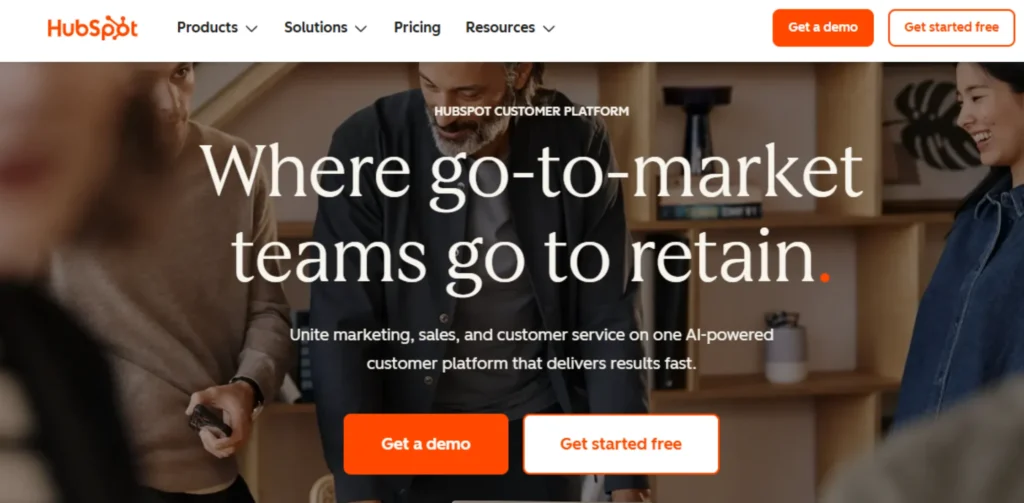
HubSpot CRM is one of the top crm tools for saas startups in the industry that integrates tools of sales, marketing, and customer service in one ecosystem. Its free plan is very generous when a startup is in its early stages, and Professional and Enterprise plans can be scaled as the companies grow. Its user-friendly design, wide-ranging integration market, and strong AI-capability make the platform a great prospect to those startups in SaaS who need an all-encompassing solution.
Contact-based pricing of HubSpot can grow fast, yet the high level of automation and the influence of its native integrations can provide long-term benefits to these teams, which are interested in sustainable growth and efficient operations.
Key Features:
- AI-powered lead scoring
- Anticipatory sales forecasting.
- Marketing automation suite
- Customer service hub
Pros:
- Free tier available
- Intuitive user interface
- Large-scale integration platform.
Cons:
- Pricing scales rapidly
- Contact based cost structure.
- Professional functionalities are costly.
- Best Suited: All-stage SaaS companies.
Best For: All-stage SaaS companies
Website: https://www.hubspot.com
2. Zoho CRM
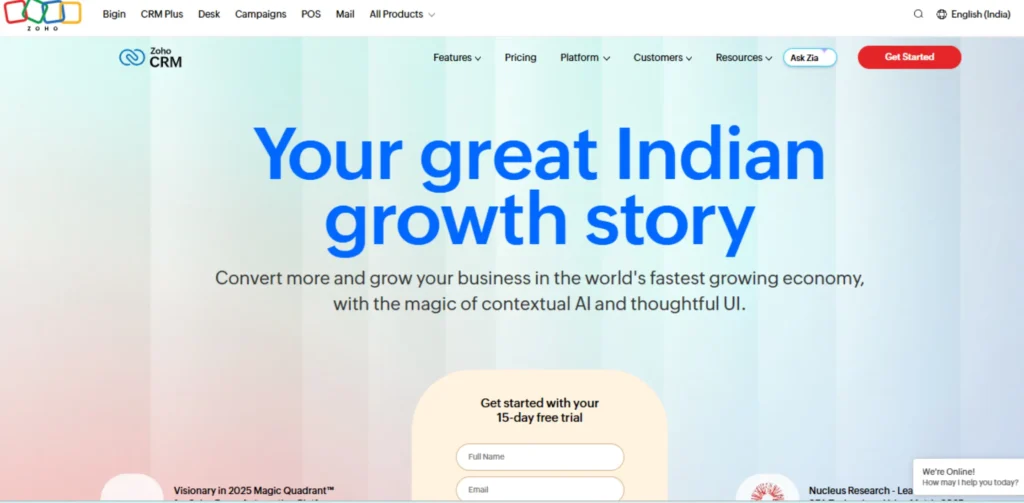
Zoho CRM provides high quality to budget conscious startups in the SaaS industry that will not give up the features. Having an AI assistant, Zia, elaborate automation processes, and integrated into the Zoho ecosystem, this platform offers the features of an enterprise at startup-friendly prices. The customization features are practically unlimited, the teams can design the system to fit exactly their processes.
Although the interface is not just as polished as the competitors, Zoho can be very smart in companies that are still in the early stages that require well-developed CRM features without spending their already tight budgets or need a large amount of venture capital.
Key Features:
- Zia AI assistant
- Workflow automation engine
- Multi-channel communication
- High-tech analytics dashboards.
Pros:
- Highly affordable pricing
- Large customization possibilities.
- Deep feature set
Cons:
- Less polished interface
- Steeper learning curve
- A small number of third-party integrations.
Best For: cost-conscious start-ups in their early stages.
Website: https://www.zoho.com/crm
3. Pipedrive
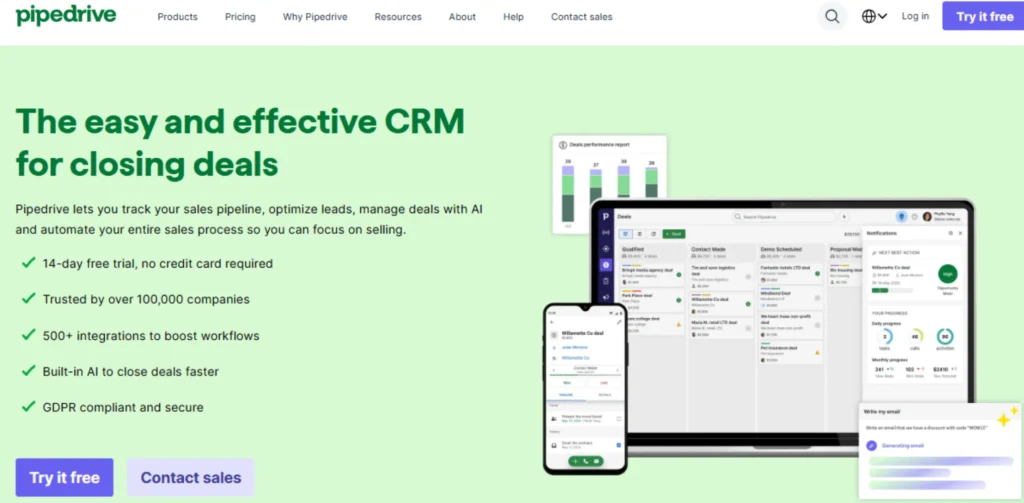
Pipedrive is best in terms of visual pipeline management, which renders intuitive and actionable deal tracking to SaaS sales teams. As one of the effective CRM Tools for SaaS Startups, the drag-and-drop interface, activity suggestions, and simple setup mechanism have made it possible to have startups up and running in hours instead of weeks. The fact that the platform is more about sales performance than marketing is what makes it the best fit for teams more concerned with deal closure and revenue generation.
Although add-ons may add extra expenses and reporting features are behind those offered by the enterprise competition, Pipedrive is more straightforward and capable of handling sales pipelines, which is why it is a favorite among either founder-led sales movements or an expanding team of SDRs in the initial scaling stage.
Key Features:
- Visual pipeline builder
- AI sales assistant
- Email integration
- Activity automation
Pros:
- Drag-and-drop user interface.
- Quick setup process
- Mobile-friendly design
Cons:
- Add-ons increase costs
- Limited marketing features
- Simple reporting functionality.
Best For: Visual pipeline teams.
Website: https://www.pipedrive.com
4. Folk CRM
Folk CRM is a next generation of relationship-based platforms aimed at early-stage crm tools for SaaS founders working on outbound sales, investor relations and building partnerships at the same time. Relationship management is painless with its AI-driven contact enrichment, automated outreach writing and Gmail and LinkedIn interconnection.
Nevertheless, email usage limits and enrichment credits may limit outreach at high volumes, and analytics are less capable than more established platforms, which Folk is most applicable to startups in pre-seed to $1M ARR before data has to be migrated.
Key Features:
- AI contact enrichment
- Computer-assisted outreach writing.
- LinkedIn integration
- Gmail native sync
Pros:
- Modern intuitive interface
- AI-assisted workflows
- Quick implementation
Cons:
- Usage caps limiting
- Limited advanced analytics
- Higher per-user costs
Best For: Starting founder-led sales.
Website: https://www.folk.app
5. Monday CRM
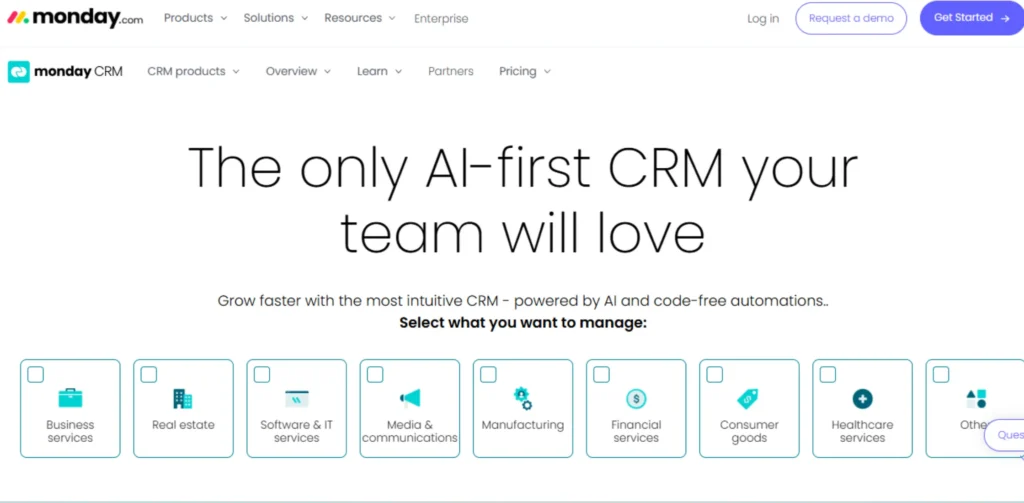
The Monday CRM revolutionizes the concept of customer relationship management by providing an unprecedented customization by allowing its highly flexible board-based interface to be tailored to any sales process. Monday, in contrast to inflexible CRM systems, enables groups to build custom workflows, an unlimited pipeline, and personalized automation with no coding experience.
Although the basic levels have restrictions on automation and the enterprise level security options cost the highest in pricing, Monday has flexibility in its usage and unlimited number of contacts model, which makes it a nice HubSpot substitute in the growing companies of SaaS that need flexibility in its operations and cross-functionality within the same platform.
Key Features:
- Customizable board system
- AI email generator
- Sales forecasting tools
- Advanced automation engine
Pros:
- Unlimited contacts were provided.
- Workflows that are very customizable.
- Cross-team work characteristics.
Cons:
- Automation caps lower tiers
- Enterprise cost.
- Customization Learning curve.
Best For: Those teams that need customization.
Website: https://monday.com/crm
6. Freshsales (Freshworks)
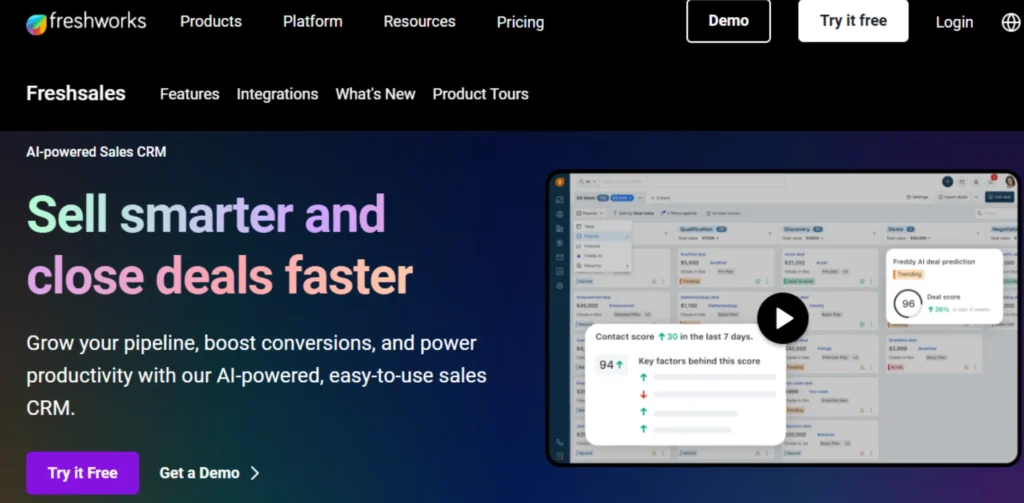
Freshsales offers a strong bundle of embedded communications and AI-driven smarts at extremely affordable prices, which makes it the best fit among cost-sensitive crm tools for SaaS startups. The phone, SMS, WhatsApp, and email features of the platform are built in, and a user should not rely on additional communication tools, whereas Freddy AI delivers deal insights and forecasts that are commonly available on the costly platforms.
Even though the integration ecosystem is less developed than HubSpot or Salesforce, Freshsales has a rich feature base, low pricing levels, and good telephony capabilities that make it a good pick when the startups are early-to-mid-stage and looking to balance value and in-built functionality.
Key Features:
- Freddy AI insights
- Built-in telephony system
- Multi-channel communication
- Predictive lead scoring
Pros:
- Budget-friendly pricing
- Free tier available
- Good communication characteristics.
Cons:
- Smaller ecosystem
- Minimal high level integrations.
- Simple marketing skills.
Best For: Low budget teams that require telephony.
Website: https://www.freshworks.com/crm
7. Close CRM
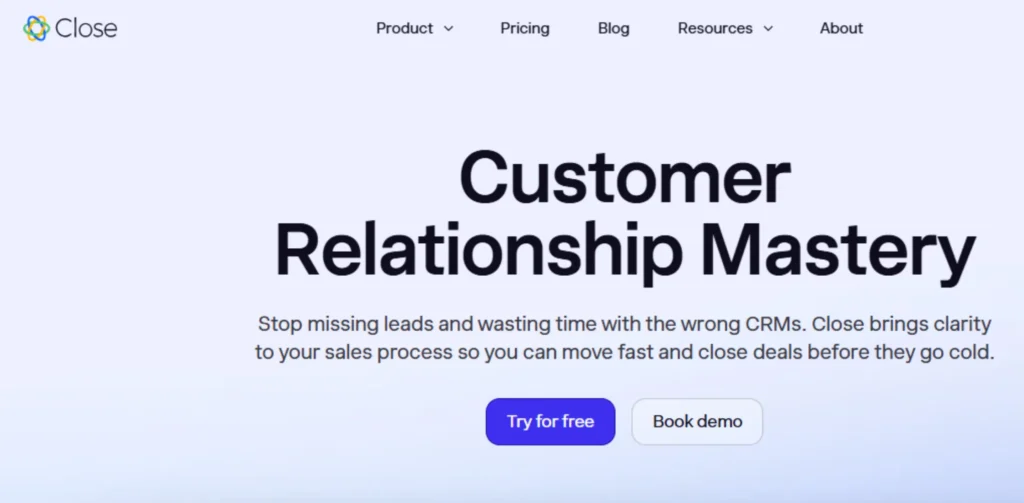
Close CRM is the company which focuses on driving the outbound-intensive sales motions with its inherent calling, SMS, email sequencing and power dialer functions which is specific to the high-velocity inside sales teams. The platform is also strong in helping SDR organizations that revolve around the trial-to-paid conversions and product-led growth strategies that are common in SaaS businesses.
The AI Call Assistant optional enables it to do the same, including transcription and follow-up recommendations, but at a higher price. Close does not have a rich assortment of marketing and customer success capabilities, but its focus on sales makes it the best fit to SaaS startups in the 250k-5M ARR scaffolding outbound sales machinery.
Key Features:
- Built-in power dialer
- Email sequencing engine
- SMS integration
- Transcription of call recording.
Pros:
- Sales-focused design
- Strong calling features
- Activity-based workflows
Cons:
- AI features cost extra
- No marketing hub
- Poor customer success resources.
Best For: SDR teams that are outbound heavy.
Website: https://www.close.com
8. NetHunt CRM
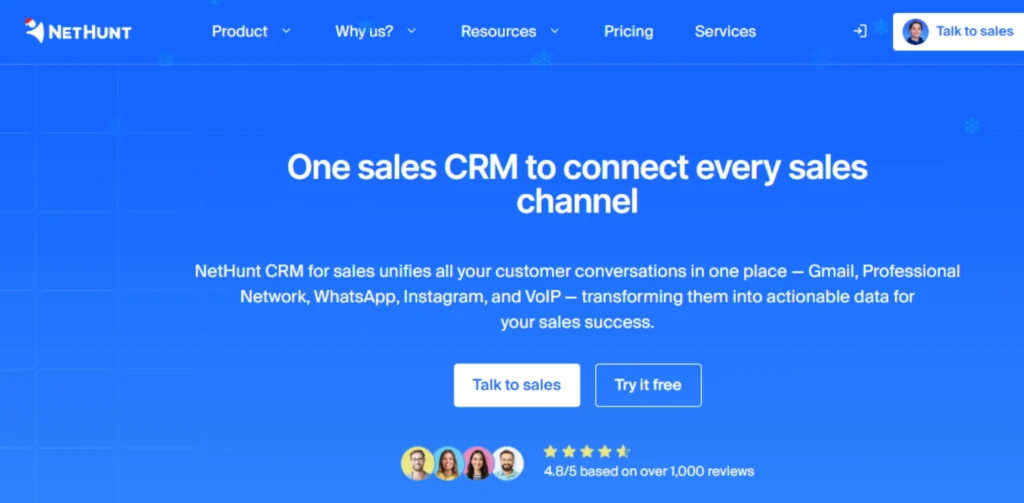
NetHunt CRM is the native application in Gmail and Google Workspace that is ideal to use with the team who are either the users of the SaaS or are focused on the inbox-based processes in the Google environment. As one of the practical CRM Tools for SaaS Startups, the Gmail-native design of the platform implies no context switching, automatic capture of emails, and smooth calendar integration that none of the existing tools seem to have been out of place.
Although the annual cost of the Business tier and higher would be opaque and can drive scaling teams to more open solutions, NetHunt has a powerful appeal to smaller startups with a heavy presence on Google Workspace, due to its deep integration with Gmail and its focus on SaaS-oriented ventures.
Key Features:
- Gmail-native operation
- Email sequence automation
- Contact enrichment
- Salesforce integration
Pros:
- Deep Gmail integration
- No context switching
- Affordable entry pricing
Cons:
- Opaque annual pricing
- Limited outside Gmail
- Smaller user community
Best For: Teams based on Google Workspace.
Website: https://nethunt.com
9. Salesforce Sales Cloud
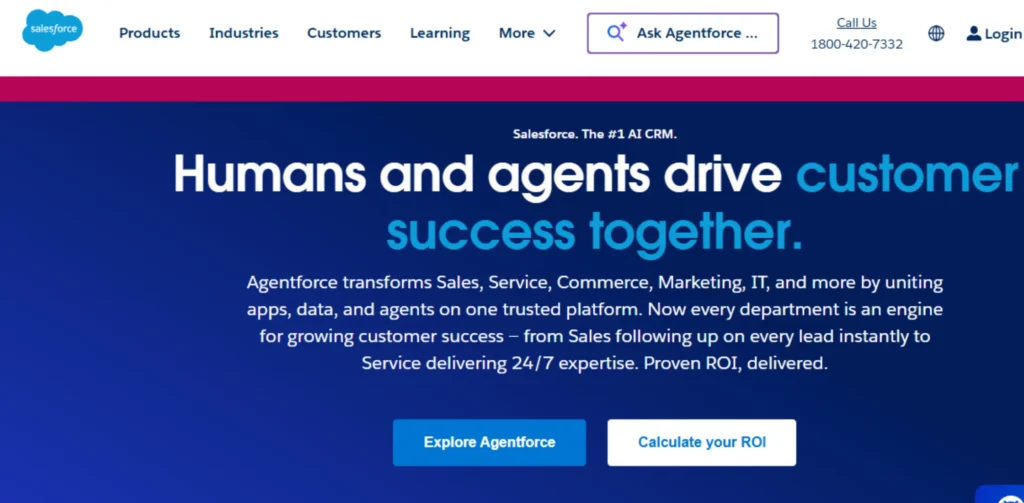
Salesforce Sales Cloud is the industry standard of best CRM tools for SaaS startups, offering unmatched customization, governance, and ecosystem depth for growth-stage companies with complex revenue operations needs. As one of the leading CRM Tools for SaaS Startups, the Einstein AI suite delivers advanced forecasting, conversation intelligence, and predictive insights that aid decision-making at scale.
Having thousands of AppExchange integrations, Salesforce is connected with virtually all business tools, making it possible to have an exhaustive RevOps infrastructure. Nevertheless, it has high implementation overhead, needs specific administrative resources, and is priced at a premium that is not affordable to start ups at the initial stages.
Key Features:
- Einstein AI forecasting
- Next generation customization engine.
- Territory management
- AppExchange ecosystem
Pros:
- Enterprise-grade capabilities
- Extensive ecosystem
- Excellent governance attributes.
Cons:
- High implementation costs
- Requires dedicated admin
- Steep learning curve
Best For: SaaS in growth and enterprise.
Website: https://www.salesforce.com
10. Zendesk Sell
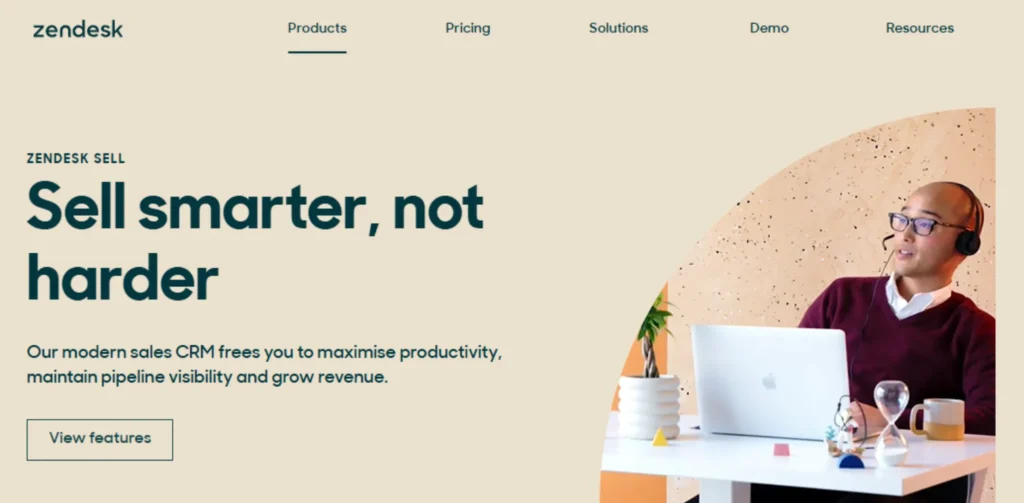
Zendesk Sell is a sales and customer-support solution designed to work in harmony with Zendesk Support and is, therefore, best suited to SaaS businesses that are executing the customer-led growth model, where being able to work together on support and sales is essential. As one of the effective CRM Tools for SaaS Startups, the platform offers visual sales pipelines, integrated calling and email, and mobile applications that are optimized for field selling.
Although it has fewer marketing automation features than HubSpot and more scaling costs than others such as Freshsales, Zendesk Sell is worth considering due to its tight support integration in the SaaS businesses in the 100k-2M ARR range where coherent customer experience is the competition advantage.
Key Features:
- Support integration
- Built-in calling
- Mobile optimization
- Deal intelligence
Pros:
- Unified customer view
- Reduces tool sprawl
- Strong mobile apps
Cons:
- Expensive at scale
- Limited marketing features
- Smaller ecosystem
Best For: SaaS Support companies.
Website: https://www.zendesk.com/sell
CRM Pricing Comparison (Free vs Paid)
| CRM Platform | Free Plan | Entry Paid Plan | Mid-Tier Plan | Enterprise Plan |
| HubSpot | $0 (unlimited) | $15/user/month | $1,600/month | $5,000/month |
| Zoho CRM | $0 (3 users) | $14/user/month | $23/user/month | $52/user/month |
| Pipedrive | No free plan | $14/user/month | $39/user/month | $79/user/month |
| Folk CRM | No free plan | $20/user/month | $40/user/month | $80+/user/month |
| Monday CRM | No free plan | $12/user/month | $17/user/month | Custom pricing |
| Freshsales | $0 (3 users) | $9/user/month | $39/user/month | $59/user/month |
| Close CRM | No free plan | $35/user/month | $99/user/month | $139/user/month |
| NetHunt | No free plan | $30/user/month | $60/user/month | Custom pricing |
| Salesforce | No free plan | $25/user/month | $100/user/month | $350/user/month |
| Zendesk Sell | No free plan | $19/user/month | $55/user/month | $169/user/month |
How to Choose the Right CRM for Your SaaS
The optimal CRM selected must be thought strategically (i.e. not just through feature checklists):
- Match to Revenue Stage: Under $500k ARR Early startups are profitable due to economical and fast-to-set up solutions whereas scaling businesses require automation and AI functionalities that enable them to achieve high growth rates.
- Consider Total Ownership Cost: Determine costs of anything over monthly subscriptions such as implementation services, training programs, customization work, continued maintenance and integration development to realize real investment requirements.
- Integration Needs should be a priority: This is because the CRM must have a native connection with key tools in your stack particularly billing, marketing systems, support systems, and analytics to prevent data silos and manual work.
- Check Vendor Stability: Research platform consistency, frequency of updates, quality of customer support, security certificates, compliance requirements and sustainability to secure your customer information and investment in the business.
You Might Like:
Conclusion
The choice of the Best CRM tools for SaaS startups in 2026 will be a compromise between the short-term demand and long-term scalability, budget limitation and the feature demand, and simplicity and sophistication. No single answer exists since the CRM that can be considered as the best CRM to have in SaaS startups is all based on the level of growth, sales momentum, technology stack and the dynamics within the team.
Companies with above-5M ARR are enterprise-ready, and they usually transition to Salesforce or HubSpot Enterprise to gain advanced governance and customization functionality. The trick is to select the platform that fits your present-day reality, at the same time, being scalable to the expected level of growth, such that your CRM investment hastens revenue instead of turning into an operational burden that puts the focus back on the primary responsibilities of product development and customer acquisition.
FAQs
Why is CRM the Best CRM tools to SaaS startups?
The Best CRM for SaaS startups has subscription analytics integration with billing systems such as Stripe, key SaaS metrics such as MRR and churn, customer success functionality to retention, and scales cheaply as you grow, and integrates easily with SaaS essentials in marketing, support, and analytics.
Is it advisable to invest in paid CRM or go with free services at the initial stage of SaaS?
Free plans with HubSpot or Freshsales may help in the initial stage of a startup to see the processes through, and only then invest in paid plans. After achieving a steady income stream, predictable customer inflow, and automated selling mechanisms.
By which means do I understand when a basic CRM is no longer sufficient and it is time to upgrade to an enterprise?
Indicating upgrades are reaching user or contact limits, advanced automation and artificial intelligence are required, complex permission structures, integration constraints, or when manual procedures are significantly decelerating growth speed, usually around $2-5M ARR in the case of the vast majority of SaaS businesses.
More important is the CRM functionality or integration?
The feature of integration frequently is more important than features since the CRM that is best in SaaS startups should integrate well with your billing system, marketing tools, support platform.
Will I be able to change the CRM platforms in the future in case my startup grows bigger than the first option?
Yes, migrations are painful, time-consuming, and may cause loss of data, thus selecting a CRM that will be able to manage 2-3 years of growth.